Table of Contents
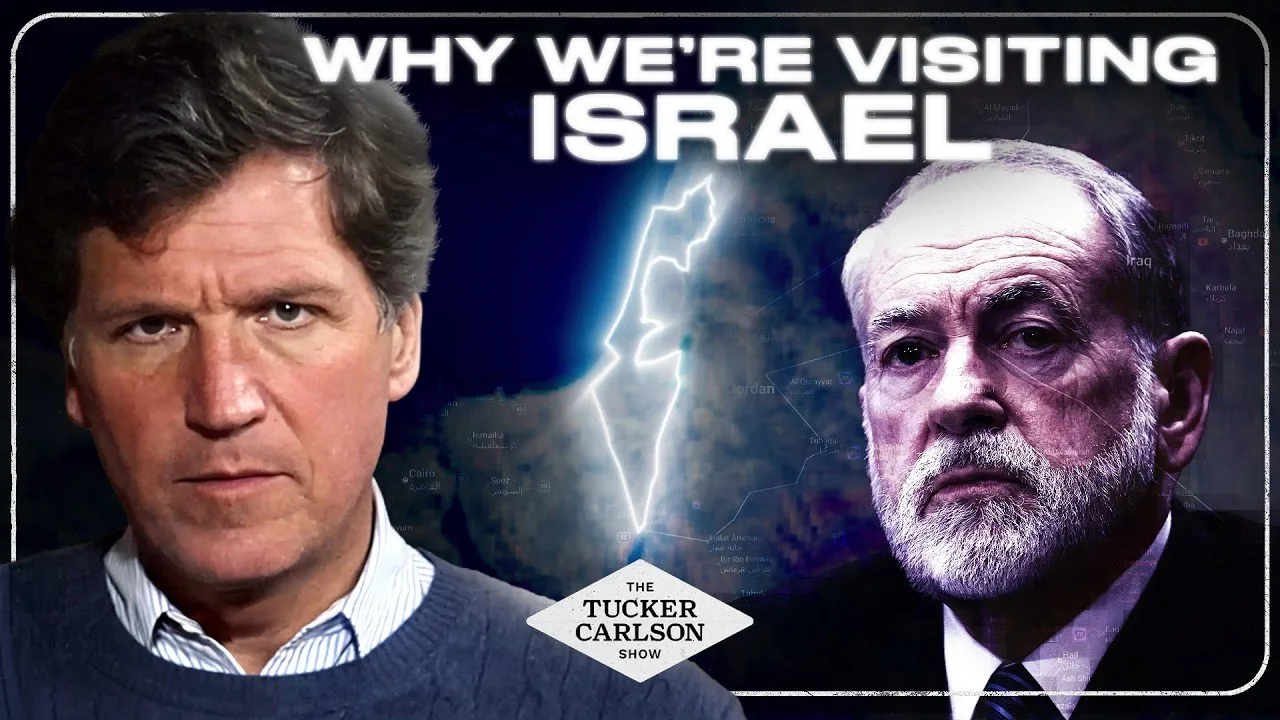
There is a distinct resonance to truth that separates it from political noise. In the current discourse surrounding the Middle East, particularly the conflict in Israel and Gaza, the conversation is often dominated by shouting, accusations of anti-Semitism, and a binary demand for allegiance. However, amidst the clamor, a vital narrative is frequently omitted: the plight of the indigenous Christian population in the Holy Land. In a recent, revealing discussion, Tucker Carlson sat down with Rev. Dr. Fares Abraham, a Palestinian American Christian minister born in Beit Sahour—the biblical Shepherds' Field near Bethlehem—to discuss the existential threat facing the world’s oldest Christian community.
This conversation challenges American assumptions about foreign policy, theology, and the moral responsibilities of the Church. It peels back the layers of geopolitical strategy to reveal the human cost of uncritical support for state actions that, according to Abraham, are systematically displacing the very people who have maintained a Christian witness in the region for two millennia.
Key Takeaways
- The Erasure of Indigenous Christians: The Christian population in the West Bank, particularly around Bethlehem, is facing extinction due to the expansion of Israeli settlements and military policies.
- Systemic Violence and Impunity: Abraham provides firsthand accounts of violence against Christians—including the shooting of his own mother—highlighting a legal system where crimes against Palestinians often go unpunished.
- The Role of American Funding: A significant portion of the settlement expansion displacing Christians is funded by American charitable donations and tax dollars, often driven by Christian Zionist theology.
- Theological Divergence: The interview outlines a sharp contrast between "Christian Zionism," which focuses on land and political Israel, and traditional Covenant theology, which centers on Jesus and a spiritual kingdom open to all nations.
- A Call for Peacemaking: Despite the trauma, the indigenous Christian response emphasizes forgiveness, non-violence, and a refusal to succumb to hatred or anti-Semitism.
The Squeeze on Bethlehem: A Geopolitical Stranglehold
To understand the current crisis, one must look at the geography of the West Bank. Fares Abraham hails from Beit Sahour, a town historically majority-Christian and the site where angels announced the birth of Jesus to the shepherds. Today, this town is being choked by what is locally known as a "ring of settlements."
Abraham describes a strategy employed by the Israeli government to acquire maximum land with minimum Palestinian presence. This involves building settlements on hilltops, seizing water resources, and constructing a network of bypass roads restricted to Israeli settlers and military vehicles. For the indigenous population, this creates a fragmented reality—a "Swiss cheese" map where Palestinians live in isolated enclaves controlled by a military regime.
Imagine you are in San Diego. And then a group of people from Mexico come to San Diego and take a piece of property... They build a fence around it... And those settlers are not friendly neighbors. They're not coming to San Diego to be neighbors. They're coming to take the land.
The Daily Reality of Occupation
The impact of these policies is not merely political; it is deeply personal and disrupts daily life. Abraham recounts the story of his cousin, who must navigate military checkpoints simply to take her children to a Christian school. The psychological trauma inflicted on children, who face guns and soldiers on their morning commute, is immense.
Furthermore, basic resources are inequitably distributed. While neighboring settlements enjoy lush lawns and swimming pools, Palestinian Christian families often wait weeks for water trucks to fill tanks on their roofs, forbidden from accessing the running water infrastructure that crosses their own land.
A Culture of Impunity: Personal Testimonies
Perhaps the most shocking segment of the interview involved Abraham’s personal history with violence. He described an incident from his childhood in 1990 when he was ten years old. While playing outside his home, an Israeli soldier stepped out of a vehicle and opened fire on the children without provocation. As they fled inside, Abraham’s mother was shot in the back.
Miraculously, she survived, but the incident illustrates a broader systemic issue: the lack of accountability. There was no investigation, no police visit, and no justice. This culture of impunity extends to settler violence as well. Abraham spoke of a friend, Salam, who was shot in the head and killed by a settler while eating dinner in his own home. No one was arrested.
Despite these atrocities, the response from the local Christian community has been remarkably consistent with the Sermon on the Mount.
I don't want to allow the atrocities and the sins that have been committed against Christians to allow bitterness to grow in our hearts. Jesus provided a better way.
This refusal to hate—to reject the "tribal war" dynamic—is a testament to the resilience of the indigenous church. They condemn violence from all sides, including Palestinian factions, but they demand that the world recognize the disparity in justice: when a Palestinian commits a crime, they face immediate retribution and collective punishment; when a settler commits a crime against a Palestinian, they are often backed by the military.
The Theological Divide: Jesus vs. The Land
A central theme of the discussion was the theological disconnect between American Evangelicalism and the indigenous church. Tucker Carlson pressed on why American Christians fervently support policies that hurt their co-religionists. The answer lies in Christian Zionism.
Abraham explains that Christian Zionism is a political-theological movement that views the modern State of Israel as the fulfillment of biblical prophecy, distinct from the Church. This theology often prioritizes the acquisition of land and political sovereignty over the ethical mandates of the New Testament. Prominent American figures often cite Genesis 12:3 ("I will bless those who bless you") as a foreign policy mandate.
Redefining the Covenant
In contrast, the indigenous Christian perspective views the Old Testament through the lens of Jesus Christ. Abraham argues that Jesus did two critical things regarding the Abrahamic covenant:
- Expanded the Scope: The promise is no longer limited to a strip of land along the Mediterranean but encompasses the entire world (Romans 4:13).
- Expanded the Meaning: The inheritance shifted from a temporary physical territory to an eternal, spiritual kingdom.
By fixating on a "pre-Christian territorial mindset," Abraham suggests that American Christians are inadvertently funding the displacement of their spiritual brothers and sisters. He challenges the notion that modern secular Israel operates by "divine right" while ignoring the moral requirements of justice and mercy that God demanded even in the Old Testament.
The American Disconnect and Political Irony
The interview highlighted a bitter irony: American Christians are the primary financiers of the very settlements driving Christians out of the Holy Land. Abraham noted that billions of dollars flow from the U.S. to support settlement enterprises, often labeled as charitable donations.
Furthermore, American politicians frequently visit Israel, praying at the Western Wall and visiting settlements to plant trees, yet fail to meet with local church leaders or visit the historic churches that mark the life of Christ. There is a deliberate blindness to the "living stones"—the people—in favor of the "dead stones" of archaeology.
This disconnect is exacerbated by a narrative that frames the conflict exclusively as "The West vs. Islam." While acknowledging theological differences with Islam, Abraham warns that framing the conflict as a cosmic war demonizes entire populations and ignores the reality that secular interventions often destabilize the region, paving the way for the very radicalism the West fears.
The False Hope of the Third Temple
Toward the end of the conversation, Carlson and Abraham touched on the controversial subject of the "Third Temple." For some Christian Zionists, the reconstruction of a physical temple in Jerusalem is a prophetic necessity.
Abraham firmly rejects this. He argues that theologically, the concept of a physical temple was rendered obsolete by the crucifixion and resurrection. The New Testament teaches that God no longer dwells in houses built by human hands but within the believers themselves through the Holy Spirit. To seek the construction of a new stone temple is to regress from the spiritual reality established by Christ.
Conclusion: A Call to Truth
The conversation between Tucker Carlson and Fares Abraham serves as a wake-up call. It asks American Christians to re-evaluate their alliances and their theology. Are they supporting a kingdom of peace, justice, and reconciliation, or are they underwriting a system of displacement and ethnic division?
The indigenous Christians of the Holy Land—"Empire Survivors" who have weathered the Romans, Crusaders, Ottomans, and British—are now on the brink of extinction. Their plea is not for hatred against Jews or Muslims, but for a just peace where they can remain in their ancestral homes. As Abraham poignantly stated, true Christianity forbids hate, but it demands the courage to speak the truth against injustice, even when it is uncomfortable.