Table of Contents
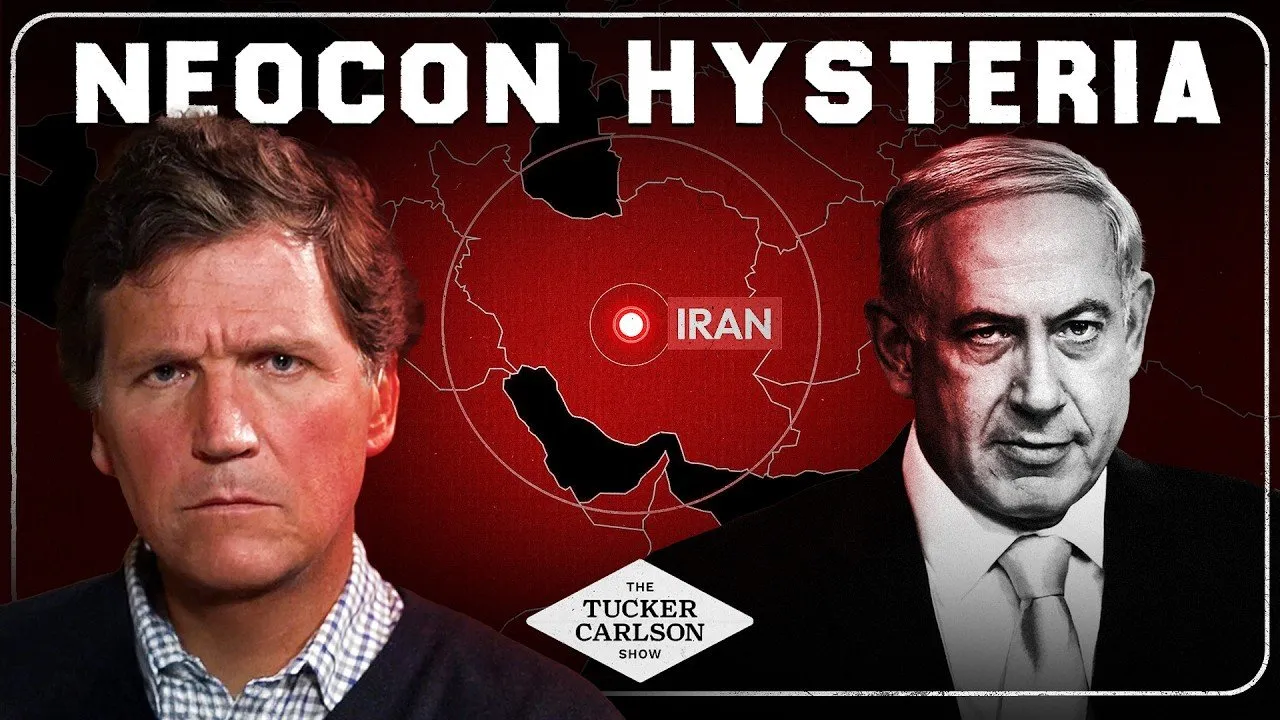
While the American public remains occupied with the spectacle of halftime shows and international sporting events, a massive geopolitical shift is unfolding in the Middle East. The largest movement of American military hardware since the 2003 invasion of Iraq is currently steaming toward the Persian Gulf. Despite significant public opposition, the momentum toward a regional conflict with Iran appears to be accelerating, driven by a complex web of foreign interests, industrial motives, and a media apparatus that seems increasingly aligned with a pro-war narrative.
Key Takeaways
- Scale of Conflict: Iran is significantly larger and more technologically advanced than Iraq, with a population exceeding 92 million people.
- Military Readiness: Current U.S. munition stockpiles are dangerously low due to recent international engagements, potentially leaving the military unprepared for a prolonged peer-level conflict.
- Geopolitical Shifts: Critics argue that certain regional allies may be seeking to leverage U.S. military power to eliminate regional rivals and shift strategic partnerships toward emerging powers like India.
- Media Unanimity: Major media outlets across the political spectrum are largely presenting a unified front in favor of military intervention, often utilizing similar rhetorical strategies.
- Technocratic Control: There is growing concern regarding the influence of intelligence agencies on domestic news coverage and the push for increased digital surveillance.
The Strategic Reality of an Iranian Conflict
The prospect of war with Iran presents a logistical and strategic challenge that dwarfs the 2003 Iraq campaign. Iran possesses a landmass six times larger than Iraq and a population nearly four times greater than Iraq had at the start of the previous conflict. Unlike the fragmented state of the Iraqi military in the early 2000s, Iran maintains a coherent, technologically advanced defense infrastructure that could facilitate a much more intense and prolonged engagement.
Munition Depletion and Peer Adversaries
One of the most pressing concerns for military planners is the state of U.S. industrial capacity. Open-source reports suggest that the United States has significantly depleted its stocks of critical munitions over the past year. In the event of an intense engagement with Iran, some analysts warn it could take up to a decade to replenish stockpiles to levels necessary for a "peer or near-peer" conflict, such as a potential defense of Taiwan.
"Our military would not be ready for like 10 years to fight a real war against a peer or near peer adversary."
The strain on the U.S. military is not merely a matter of personnel but of physical resources. Without the necessary industrial base to replace high-tech missiles and defensive systems rapidly, the U.S. risks overextending itself in a way that could compromise its global strategic posture for a generation.
The Geopolitical Chessboard and Regional Hegemony
The push for military action is often framed around the threat of a nuclear-armed Iran, a narrative that has remained consistent for nearly three decades. However, deeper analysis suggests that the primary driver may be the pursuit of regional hegemony. By removing Iran as a coherent regional power, a vacuum would be created that would leave only one nuclear-armed state in the Middle East.
Shifting Alliances: From the U.S. to India
Notably, there are signs that regional players are beginning to look beyond their traditional partnership with the United States. As American public opinion turns against foreign interventions, some argue that allies are preparing for a future aligned with India. This shift would allow for a regional structure where a single power holds dominant influence without the need for constant American oversight or approval.
Furthermore, the potential destruction of energy infrastructure in the Gulf would have profound economic consequences. A successful strike against refineries or the closure of the Strait of Hormuz could trigger a global depression, affecting the United States and Europe far more severely than the regional actors advocating for the strike.
The Role of Media and the "Uniparty" Consensus
A striking feature of the current discourse is the lack of dissent among major media organizations. Whether through traditionally conservative outlets or liberal mainstays, the narrative regarding Iran remains remarkably uniform. This "uniparty" consensus often relies on emotional appeals and the framing of conflict as a moral obligation to protect human rights, a strategy that has been utilized in nearly every major U.S. intervention over the last sixty years.
Rhetorical Strategies and Public Influence
Figures across the political landscape have adopted increasingly aggressive rhetoric. From demands to "decimate" nuclear threats to claims of imminent attacks on American soil, the goal appears to be the creation of a "psychological operation" designed to make war feel inevitable. This environment leaves little room for a nuanced discussion of the potential downsides or the lack of a "day after" plan for a post-Ayatollah Iran.
"Is it possible that there is some hostility toward the United States, the Gulf States, and Europe from the people pushing this war?"
The alignment of media interests with the military-industrial complex is a long-standing critique. Clayton Morris highlights that many members of Congress have major defense contractors in their districts, creating a financial incentive to support the massive expenditures required for a new theater of war.
Technocracy and the Intelligence State
Beyond the immediate threat of kinetic war, there is a parallel concern regarding the domestic "information world." The influence of intelligence agencies on newsroom coverage has evolved from clandestine operations like Operation Mockingbird to more overt forms of collaboration. Retired intelligence officials now serve as regular paid contributors on major networks, shaping public perception in real-time.
The Push for Digital Surveillance
The conversation regarding international conflict often serves as a precursor to increased domestic control. Technological advancements in AI, biometric scanning, and digital IDs are being tested in foreign conflict zones before being proposed for domestic implementation. This technocratic shift seeks to centralize control over information and financial transactions, often using "crisis" as a justification for the erosion of civil liberties.
The Epstein Factor and Gatekeeping
The lack of transparency surrounding high-profile cases like the Jeffrey Epstein investigation is cited by critics as evidence of a "gatekeeping" mechanism within both the government and the media. When certain voices are excluded from the conversation—even those within the U.S. Congress—it suggests a coordinated effort to protect institutional interests at the expense of public truth.
Conclusion
The United States stands at a pivotal moment. While President Trump has historically expressed resistance to "endless wars," the pressure from regional allies and the domestic military-industrial complex is immense. The risk is not just the conflict itself, but the potential for the U.S. to be drawn into a war unilaterally started by a third party. Without a clear strategy for the aftermath and a sober assessment of national interests, the country may find itself entangled in a struggle that accelerates economic decline and further depletes its global standing. The path forward requires a return to evidence-first policy and a rejection of the fear-based rhetoric currently dominating the national stage.