Table of Contents
The ongoing conflict in the Gulf involving Iran has captured global attention, yet its underlying drivers remain obscured by censorship and a lack of transparency. While many seek an immediate resolution, the geopolitical and religious stakes suggest a more protracted struggle. This war is not merely a regional dispute; it is a profound test of international power dynamics and a potential catalyst for a global crisis that the United States seems woefully unprepared to navigate.
Key Takeaways
- Shift in World Order: The era of American unipolarity is fading as China emerges as a peer competitor, challenging the U.S. monopoly on global decision-making.
- The Religious Undercurrent: There is significant evidence that ideological factions within the U.S. and Israel view this war through a theological lens, specifically aiming to rebuild the Third Temple in Jerusalem.
- Military Depletion: High-tempo combat operations are rapidly depleting critical U.S. munitions, exposing a compromised and insufficient defense industrial base.
- Risk of Global Conflict: The strategy of proxy warfare and the targeting of religious leaders risk triggering a generational, global religious conflict that could destabilize Western nations.
The Geopolitical Reality: A Post-Unipolar World
For over three decades, the United States has operated as the sole global superpower. However, that status has been eroded by the rise of China, which now rivals the U.S. in industrial output and economic scale. The fundamental question today is who defines the terms for global commerce and diplomacy. Washington policymakers often struggle to acknowledge that unilateral decision-making is no longer a viable path. By failing to seek a power-sharing arrangement with China, the U.S. risks being forced into a conflict for which it is not economically or strategically prepared.
The United States sets the rules. The United States runs the world. That's been true in the western half of the world since 1945... but that has changed over the past several years, maybe decades.
The Theological Layer: Rebuilding the Third Temple
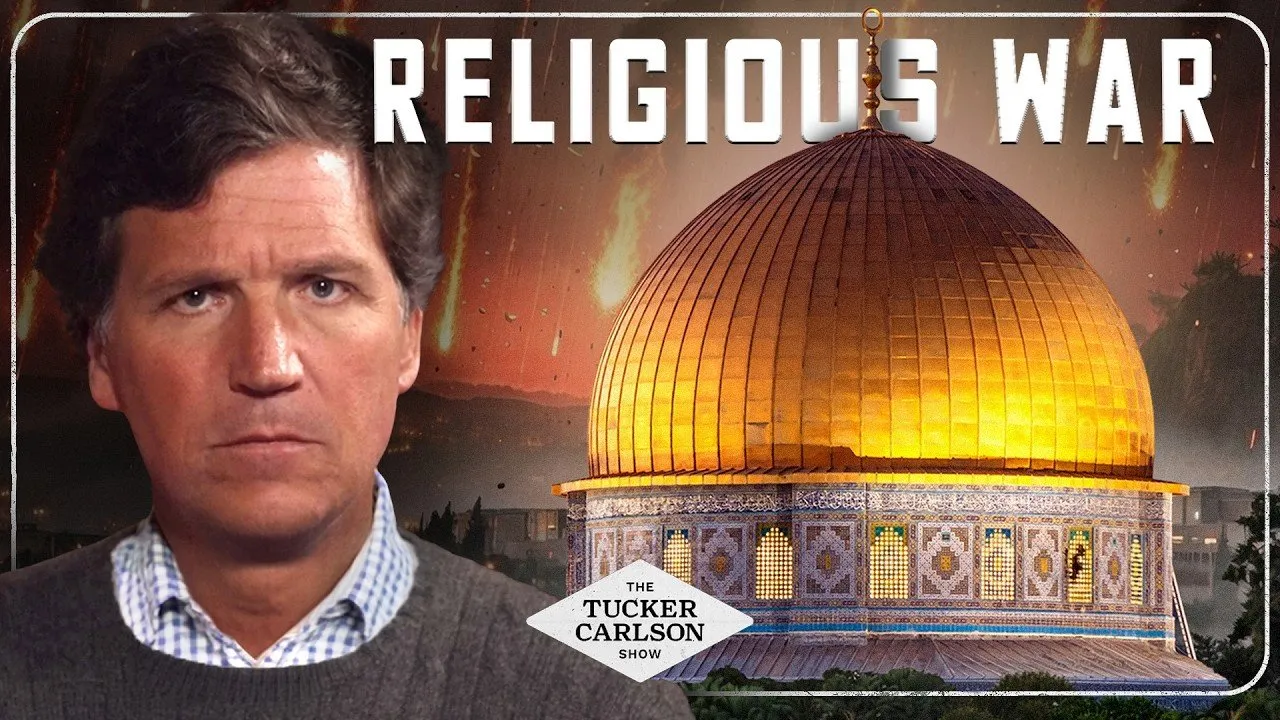
Beyond the geopolitical maneuvering lies a religious motivation that many secular Western observers have failed to identify. The site of the Dome of the Rock and the Al-Aqsa Mosque in Jerusalem—known as the foundation stone—is the focal point of a movement to rebuild the Third Temple. This objective is not limited to a fringe minority; it has surfaced in the symbols worn by combatants and the rhetoric of prominent political and religious figures.
Historical Precedents and Modern Ambitions
History provides a sobering look at attempts to reconstruct the temple. Notably, in 363 AD, the Roman Emperor Julian the Apostate attempted to rebuild it, an endeavor cut short by natural disasters and his death while invading Iran. Today, the presence of temple-related imagery on the uniforms of the Israel Defense Forces (IDF) suggests that some participants in the current conflict see the war as a vehicle to fulfill this eschatological goal.
A Contradiction of Faith
The call for a Third Temple creates a direct contradiction with core Christian theology, which posits that the need for a physical temple was superseded by the person of Jesus. When Christian leaders in the West advocate for the destruction of existing religious sites to facilitate the rebuilding of the Third Temple, they are arguably operating against the tenets of the faith they claim to represent.
Military Strategy and Munitions Depletion
The current conflict has exposed severe vulnerabilities in the American defense apparatus. High-intensity engagements in the Gulf have exhausted stockpiles of standoff weapons, such as the Tomahawk cruise missile, at a rate that the current defense industrial base cannot replenish. Analysts suggest this depletion is forcing military planners to adopt riskier tactics, such as utilizing gravity bombs that require pilots to operate within closer range of enemy defenses.
The Risk of Escalation
As stockpiles dwindle, the pressure to achieve a quick "victory" through regime change grows. However, the reliance on light-footprint strategies and the hope for a rapid collapse of the Iranian regime ignore the reality of Iran’s hardened military infrastructure. Expanding the war into Iraq or Turkey to maintain momentum risks dragging the United States into a prolonged conflict that serves the interests of global competitors, most notably China, rather than American national security.
The Danger of Religious War
The decision to target and kill religious leaders, such as the Ayatollah of Iran, during a holy period demonstrates a profound misunderstanding of the potential for global blowback. By framing this as a clash between religions, policymakers risk inciting instability within their own borders. With Islam as the fastest-growing religion in many Western nations, the potential for a domestic religious crisis is real. Rather than containing the conflict to the Middle East, the current trajectory threatens to ignite societal strife across Europe, North America, and beyond.
Conclusion
The current path—characterized by a lack of transparency, censorship of independent reporting, and the pursuit of strategically dubious objectives—poses an existential risk to the United States. We are witnessing an era where the pursuit of short-term military and theological goals may irrevocably weaken American power for a generation. The window for a "golden off-ramp"—a declaration of victory followed by withdrawal—is rapidly closing. Unless there is a return to realistic diplomacy and a recognition of the limits of American power, the world faces a generational crisis that will be felt far beyond the borders of the Middle East.