Table of Contents
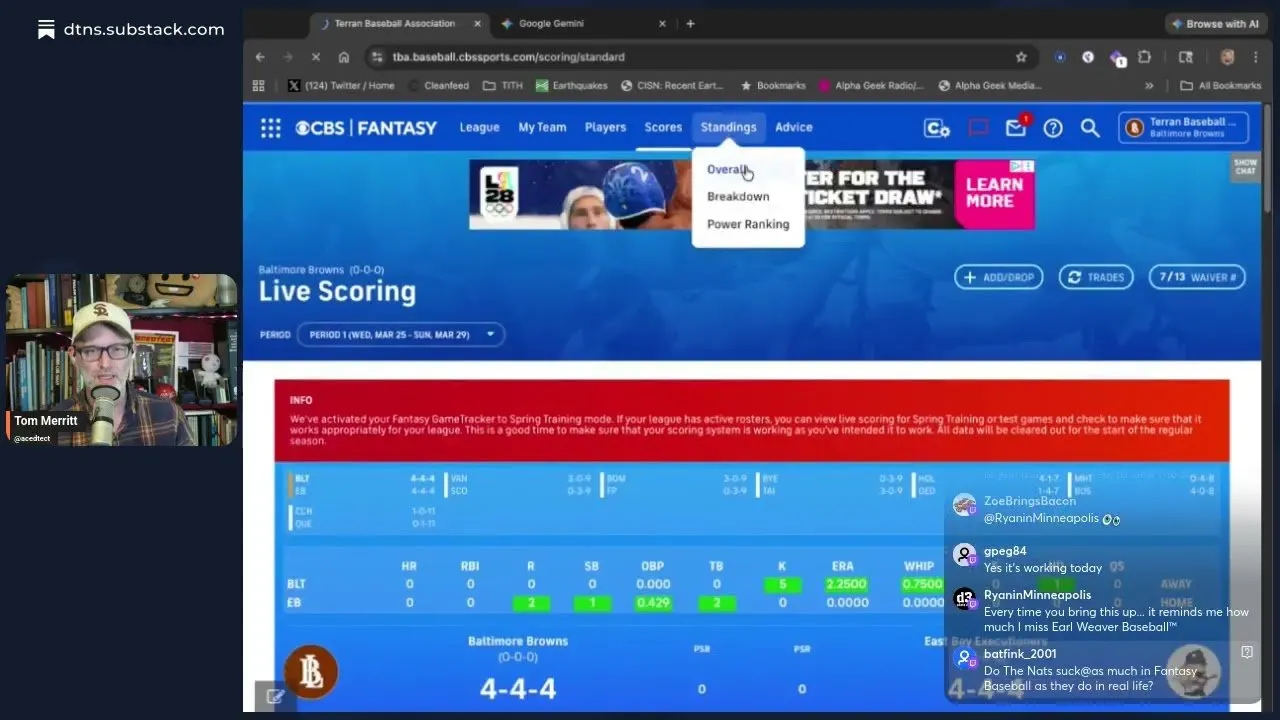
Fantasy sports participants are increasingly turning to generative AI to gain a competitive edge, sparking a debate over whether the use of advanced language models constitutes a legitimate strategy or an unfair advantage. Longtime fantasy baseball enthusiasts Tom Merritt and Ron Richards recently revealed they utilized Google's Gemini to navigate their draft in the Tan Baseball Association, a league with roots dating back to 1984.
Key Points
- Strategic Leverage: Enthusiasts are using Gemini to analyze exported CSV data, optimize roster construction, and simulate draft scenarios in real-time.
- Limits of AI: While helpful for filtering large datasets, LLMs often struggle with specific league rules, context windows, and real-time roster changes.
- The "Cheating" Question: Users argue that AI is merely an advanced tool, comparable to using a nail gun instead of a hammer, rather than a "performance-enhancing" violation.
- Human Element Remains: The unpredictability of player injuries, personal intuition, and non-linear variables like trades ensure that AI is a collaborative tool rather than an automated path to victory.
The Integration of AI in Fantasy Sports
For many veteran fantasy players, the offseason and draft period involve reconciling complex roster limitations with shifting player valuations. Merritt and Richards found that by uploading league-specific data—including free agent spreadsheets and team rosters—into Gemini, they could generate immediate, data-driven pivot strategies during the fast-paced draft.
However, the transition from manual scouting to AI-assisted management is not without friction. According to Merritt, the AI occasionally hallucinates or loses track of its own previous advice, a phenomenon commonly referred to as "context window" strain. In one instance, the AI suggested drafting a relief pitcher it had previously advised against, highlighting the necessity for human oversight.
"It’s not that they are determinative, but they’re not useless. They definitely gave me indications of... where there’s a run on relief pitchers. We need to redo our priorities. I mean, yes, I would have noticed that, but it’s the kind of thing that really clarifies it," said Tom Merritt.
Is It Cheating?
The ethical implications of using AI in recreational leagues remain a point of contention. Critics liken the use of predictive models to the use of performance-enhancing drugs in sports, suggesting that it removes the skill of the participant. Proponents, however, view it as an evolution of scouting technology—no different than a team analyzing game tape to exploit an opponent's weaknesses.
The consensus among the Tan Baseball Association members who experiment with these tools is that the AI does not guarantee success. Because baseball is defined by high variance, including unpredictable injuries and fluctuating performance trends, the AI frequently produces projections that feel overly optimistic or "sunshine and roses."
What's Next for AI-Assisted Leagues
As these tools become more accessible, leagues may need to decide whether to formalize rules regarding AI assistance. Currently, the lack of a universal advantage suggests that the "human in the loop" is still the deciding factor. Merritt and Richards plan to continue testing Gemini throughout the season, intending to use the tool for weekly matchup analysis and to identify potential trade opportunities based on roster weaknesses.
Whether AI will eventually provide a "solved" version of fantasy sports remains to be seen. For now, it serves as a sophisticated assistant that helps managers parse the overwhelming amount of statistical data generated by Major League Baseball, leaving the final, gut-based decisions firmly in the hands of the human owner.