Table of Contents
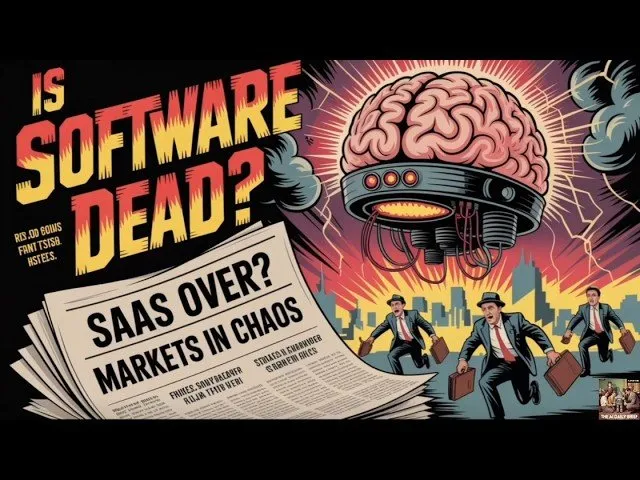
A significant shift in market sentiment is currently rattling Wall Street, as investors aggressively sell off Software-as-a-Service (SaaS) stocks amid growing fears that artificial intelligence is dismantling the sector’s long-standing business models. This downturn, described by some trading desks as a "SaaS apocalypse," reflects a deepening conviction that AI coding capabilities and autonomous agents will fundamentally alter how software is built, sold, and priced.
Key Points
- Major Market Correction: Industry giants like Salesforce, Snowflake, and HubSpot have seen year-to-date declines ranging from 21% to 36% as investors exit the sector.
- The "Seat" Crisis: The traditional SaaS pricing model based on user seats is facing an existential threat as AI allows smaller teams to achieve the output of larger workforces.
- Democratized Coding: New AI tools allow non-technical users to generate custom workflows ("vibe coding"), potentially bypassing paid subscription software entirely.
- Enterprise Inertia: Despite the panic, experts argue that large enterprises rely on complex, layered systems and compliance controls that AI agents cannot easily replace overnight.
The "SaaS Apocalypse"
The narrative surrounding AI has shifted from general optimism to specific sector disruption, triggering a fierce sell-off in software equities. While broader technology stocks like Apple remain resilient, the SaaS sector is experiencing what Jeffrey Favuza, of the equity trading desk at Jefferies, describes as "get me out" style selling.
The numbers illustrate the severity of the shift. Salesforce is down 21% on the year, Snowflake has dropped 23%, and HubSpot and AppLovin have plummeted 36% and 37% respectively. This is not merely a technical correction but a repricing based on a new fundamental belief: the moat surrounding software companies is evaporating.
"I don't think it's an overreaction. For two years, we've been talking about how AI is going to change the world... In the past few weeks, we've seen signs of it in practice." — Michael Ro, Chief Market Strategist at Jones Trading
The volatility extends beyond enterprise software. Following the release of Google’s Genie 3, a model capable of generating interactive virtual worlds, gaming stocks also took a hit. Game engine creator Unity saw 35% wiped off its stock price, while Take-Two Interactive dropped nearly 4%, driven by fears that generative AI could commoditize game development.
Why the Business Model is Breaking
The core concern is that the economics of private equity and venture capital in software are no longer viable. Traditionally, software firms could sustain high burn rates initially, banking on high margins and leverage as the business matured. Isaac Kim, a partner at VC firm Lightseed, argues that this era is over because AI threatens the longevity of the underlying product before financial engineering can pay off.
Three primary factors are driving this "great SaaS meltdown":
- Growth vs. Efficiency: The market has stopped rewarding "growth at all costs." Investors now demand immediate profitability, yet AI inference costs are squeezing margins.
- The Seat Compression: SaaS companies typically charge per user. If AI enables one employee to do the work of ten, revenue from seat licenses will inevitably collapse.
- Custom Replacements: Tools like Claude and Replit allow non-technical users to build bespoke internal tools. Y Combinator founder Chris Paik noted instances of companies building internal workflows to replace paid SaaS subscriptions entirely.
CNBC anchor Deirdre Bosa recently demonstrated this by recreating a functional version of project management tool Monday.com using Claude in under an hour. While simple tools don't equal enterprise software, they signal a lowered barrier to entry that threatens commoditization.
The Reality Check: Enterprise Complexity
Despite the market panic, industry heavyweights argue that the "death of software" is vastly exaggerated, particularly regarding large-scale enterprises. Nvidia CEO Jensen Huang has publicly dismissed the notion that AI will replace software companies as illogical.
"If you were a human or robot, would you use a screwdriver or invent a new screwdriver? I just use one... If the market already built what you want and it's good, you are wasting time and money rebuilding it for nothing." — Jensen Huang, CEO of Nvidia
The friction of displacing established systems is immense. Large corporations run on decades of layered infrastructure, including ERPs, mainframes, data warehouses, and strict compliance controls. As James Blunt noted, these organizations move based on risk tolerance, not just technical capability. An AI agent cannot simply "plug in" and replace a complex compliance workflow without introducing unacceptable corporate risk.
Furthermore, early experiments in replacing major SaaS providers have yielded mixed results. Sebastian Siemiatkowski, CEO of Klarna, who famously attempted to move away from Salesforce, later admitted that while efficiencies were found, total replacement is unlikely for most companies. Instead, the market will likely see a consolidation where fewer, stronger SaaS platforms integrate AI deeply to offer better value.
Market Implications and What's Next
The consensus emerging among nuanced observers is that while software isn't dying, the "growth story" that justified massive valuation multiples is ending. The Wall Street Journal notes that software vendors are now in the difficult position of having to disprove a negative. To survive, they must demonstrate that AI is a tailwind for their specific product, rather than a replacement.
The market is likely heading toward a bifurcation:
- Weak Software: Companies whose only moat was the code itself will be commoditized or replaced by internal AI builds.
- Strong Software: Companies with deep moats built on proprietary data, distribution, complex workflow integration, and trust will become stronger by deploying "Agent SaaS."
Ultimately, the volume of software used globally is projected to increase, perhaps tenfold, over the next decade. However, the pricing power and the identity of the vendors selling that software are undergoing a radical transformation. As Ben Thompson points out, businesses may not want to give up on software, but they increasingly need to divert budget from SaaS subscriptions to AI compute tokens, forcing a permanent rerating of the sector.