Table of Contents
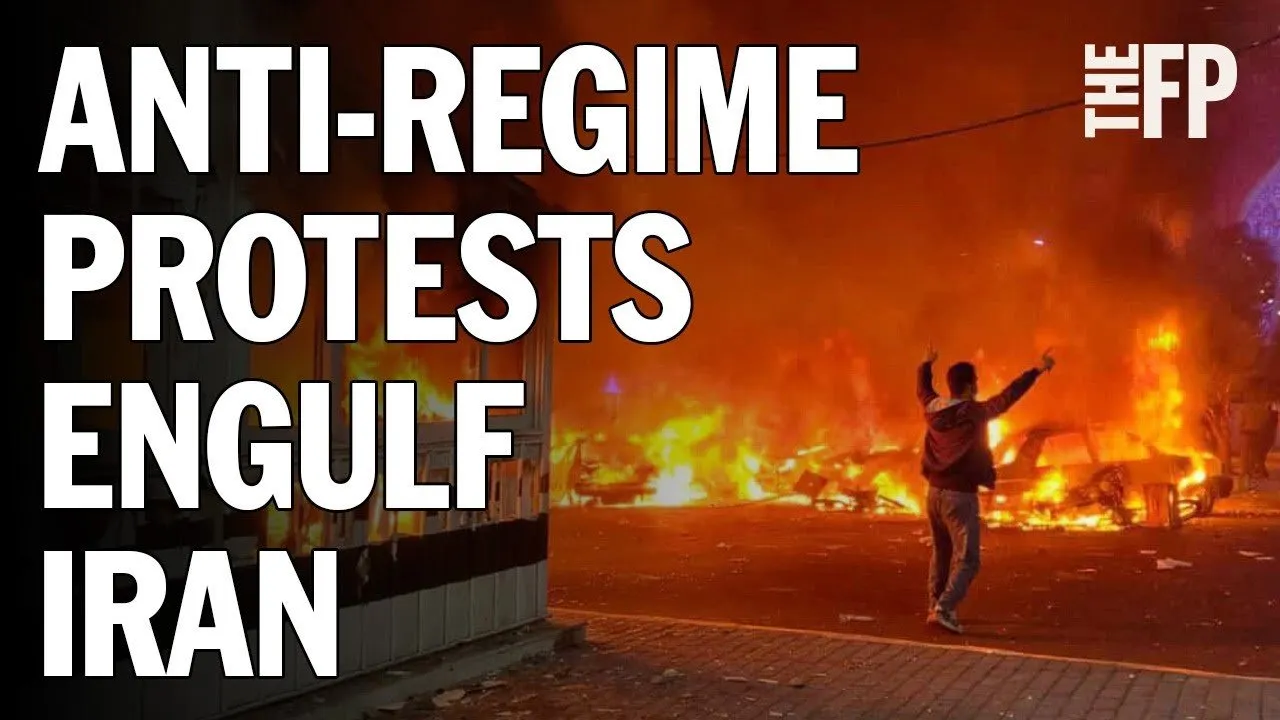
Protests are rocking Iran once again, but this time, the atmosphere on the streets of Tehran feels markedly different. Following a collapse in the national currency and a deepening economic crisis, the Iranian government has cut telephone and internet access, plunging the nation into a media blackout. While headlines point to the plummeting dollar as the catalyst, those closest to the situation argue that the economic indicators are merely the spark for a much larger, historic powder keg.
Roya Hakakian, an Iranian-American journalist and author who witnessed the 1979 revolution, describes the current mood as one of "irreversibility." The frustration has moved beyond the desire for reform to a fundamental inability to compromise with the ruling establishment. As thousands take to the streets and face violent crackdowns, the world is watching to see if this movement marks the final chapter for the Islamic Republic.
Key Takeaways
- The Base Has Shifted: Traditionally conservative "bazaar" merchants, once the financial artery of the 1979 revolution, have turned against the regime, marking a critical loss of support for the government.
- The Security Myth is Broken: The regime's inability to protect itself against recent Israeli strikes has shattered its long-standing promise of providing national security, humiliating the leadership in the eyes of the public.
- From Reform to Rejection: Unlike the 2009 Green Movement which sought vote recounts, today's protesters are calling for the complete end of the system, chanting "Death to the Dictator."
- Broad Demographics: The current uprising is not limited to students or women; it represents an egalitarian mix of socioeconomic classes and ethnicities, including Kurds and Baluchis.
- A Transitional Figure Emerges: Reza Pahlavi, the exiled Crown Prince, is gaining traction as a potential unifying figure to guide the nation through a transition to democracy.
Why This Round of Protests is Fundamentally Different
Observers who have watched Iran for decades are noting shifts in the demographic makeup and intensity of the current protests that distinguish them from the uprisings of 2009, 2017, and 2022. While the 2022 "Woman, Life, Freedom" movement was driven primarily by youth and women, the current unrest spans the entire social spectrum.
The Revolt of the Bazaaris
Perhaps the most significant development is the involvement of the "bazaaris"—the merchant class of the main marketplaces in Tehran. Historically, this group has been conservative, religious, and a pillar of support for the Islamic Republic. Their financial backing was instrumental in the success of the 1979 revolution.
"For the regime to lose its absolute most loyal base, the base that has either been supportive or quiet, this is a major change and a major blow."
When the merchant class joins the lower-income neighborhoods and the student movements, it signals that the regime has lost its economic legitimacy alongside its political standing.
A Unifying Egalitarian Movement
Previous protests were often critiqued for being segmented—students in 1999, the middle class in 2009, or the working class during fuel price hikes. Today, the lines have blurred. Ethnic Persians are protesting alongside Kurds, Baluchis, and other minority groups. The geographic spread and socioeconomic diversity suggest a national consensus that the status quo is no longer sustainable.
The Broken Social Contract: Security vs. Humiliation
For decades, the Iranian regime maintained a specific social contract with its people: in exchange for restricted civil liberties and economic hardship, the state promised absolute security and sovereignty. This promise is rooted in the trauma of the Iran-Iraq War (1980–1988), a conflict that left nearly a million dead and scarred a generation.
The regime's narrative has always been that without their iron grip, Iran would suffer the fate of its neighbors, Iraq or Afghanistan. However, recent geopolitical events have unraveled this narrative.
The Impact of the "12-Day War"
The recent conflict involving Israel, widely referred to as the "12-Day War," resulted in significant humiliation for the Iranian leadership. The precision with which opposing forces were able to target and eliminate high-ranking officials within the Islamic Revolutionary Guard Corps (IRGC) exposed the regime's military vulnerabilities.
"The one thing that this regime had always promised was that no matter what happens, we will fight for this country... What the June war proved was that that one thing they could not deliver on."
When the state failed to protect its own generals, the illusion of invincibility shattered. For the average Iranian, the realization was stark: if the regime cannot even protect itself, it certainly cannot protect the nation. This humiliation, combined with the "decapitation" of proxy leaderships like Hamas, has emboldened protesters who no longer fear an omnipotent state security apparatus.
From "Where is My Vote?" to "Death to the Dictator"
To understand the gravity of 2025, one must look at the trajectory of dissent over the last 46 years. The feminist movement in Iran arguably began on March 8, 1979—International Women's Day—less than a month after the revolution, when women marched against mandatory hijab mandates. However, for decades, dissent remained within the framework of the Islamic Republic.
During the massive 2009 Green Movement, millions marched because of a rigged election, but their slogan was, "Where is my vote?" They were asking the system to correct itself. They recognized the legitimacy of the election process but disputed the count.
That dynamic has now vanished. Since the 2022 uprising sparked by the death of Mahsa Amini in morality police custody, the chants have shifted to "Death to the Dictator" and a rejection of the entire clerical establishment. There is no longer a desire for dialogue with the Supreme Leader; the demand is for the total removal of the theocratic system.
The Search for Leadership and External Pressure
As the internal legitimacy of the regime collapses, Iranians are looking for alternatives and monitoring international reactions. Two major factors are currently influencing the psychology of the streets.
The Return of the Pahlavi Name
In a twist that would have seemed impossible decades ago, protesters are chanting the name of Reza Pahlavi, the Crown Prince and son of the Shah deposed in 1979. Pahlavi, who has lived in exile for nearly half a century, is increasingly viewed not necessarily as a monarch to be restored, but as a transitional figure.
There is a growing nostalgia for the pre-revolutionary era and a belief that Pahlavi could serve as a stabilizing force to guide the nation toward democratic elections. He represents a heritage of leadership that stands in stark contrast to the current clerical rule.
The "Trump Factor" and Western Pressure
External political shifts are also playing a role. Recent warnings from the United States regarding violent crackdowns on protesters have been heard in Tehran. The perception that the U.S. might exert tangible pressure—or that the regime faces an existential threat from external powers—has emboldened demonstrators.
Hakakian notes that for pressure to be effective, it must go beyond rhetoric. Ensuring internet access for protesters to communicate and coordinating diplomatic isolation similar to the strategies used against other failing regimes could prove vital.
Conclusion: A 150-Year Journey
The regime's response to these protests has been predictably violent, with internet blackouts and reports of armed militias being imported from neighboring Iraq to suppress dissent. However, the mood on the ground suggests that the fear barrier has been broken. The combination of economic ruin, military humiliation, and a unified social front presents the most serious threat the Islamic Republic has ever faced.
The implications of a regime collapse in Iran would be staggering, potentially stabilizing the Middle East and sending shockwaves of hope to women in neighboring Afghanistan. As Hakakian eloquently concludes, this is not just about the last few years of unrest, but a much longer historical struggle.
"For more than 150 years, Iranians have been fighting to establish the rule of law in their country... It seems to me that this journey needs to get to its final happy destination."