Table of Contents
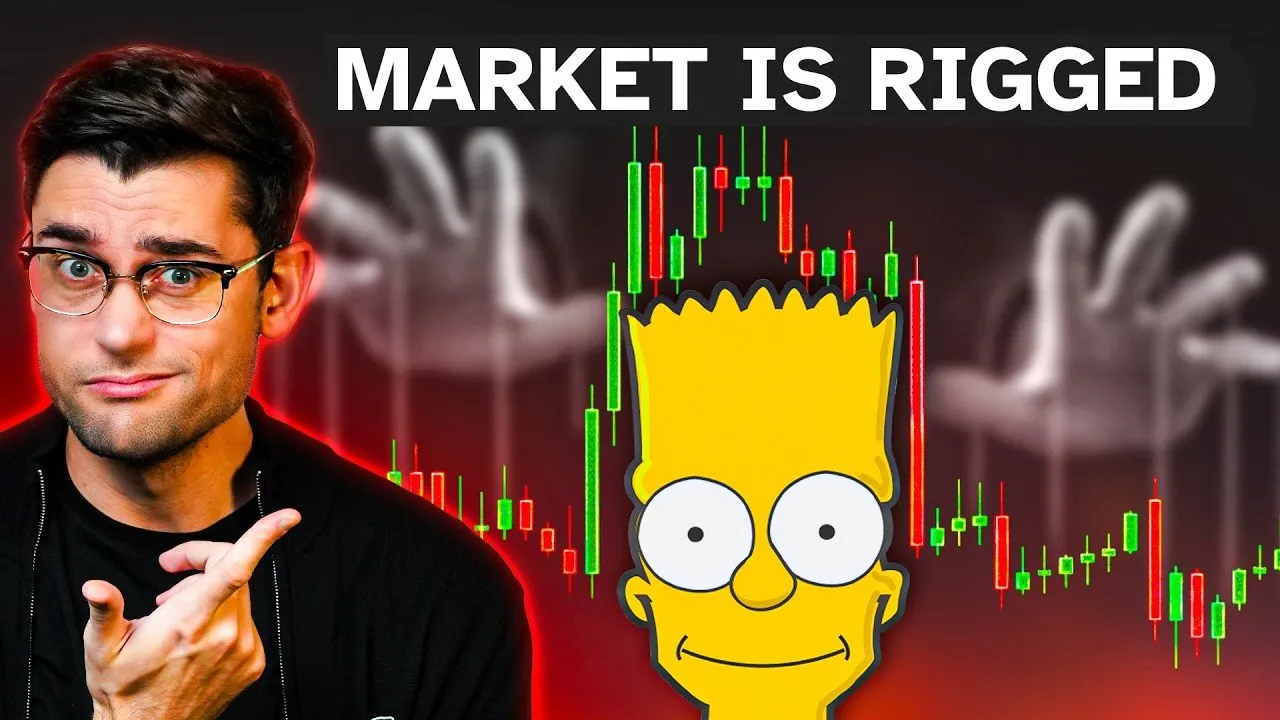
Retail cryptocurrency investors are facing heightened risks of market manipulation, characterized by specific technical anomalies known as "Bart Simpson" patterns that signal artificial price movements. These volatile chart formations, driven by liquidity gaps and regulatory immaturity, allow large-scale holders to exploit market inefficiencies at the expense of individual traders.
Key Points
- Pattern Recognition: The "Bart Simpson" chart pattern—a sharp spike, sideways consolidation, and sudden drop—often signals coordinated manipulation by "whales."
- Liquidity Issues: Crypto’s fragmented nature across multiple exchanges creates thin liquidity, allowing moderate-sized orders to significantly impact price action.
- Common Tactics: Beyond chart patterns, manipulators utilize spoofing, wash trading, and insider trading to mislead retail investors.
- Market Maturity: While improved regulation and surveillance are expected to mitigate these risks, inherent human greed suggests manipulation will persist in some form.
The Anatomy of Crypto Manipulation
Market manipulation remains a pervasive issue within the digital asset space, largely due to the sector's relative youth compared to traditional finance. Unlike the New York Stock Exchange, where liquidity is centralized, crypto liquidity is fractured across hundreds of protocols, blockchains, and exchanges. This fragmentation results in wider spreads between buy and sell prices.
These wider spreads create "air gaps" in order books. Large players, often referred to as "smart money," can exploit these gaps to push prices in desired directions with relatively little capital. The most visible manifestation of this is the "Bart Simpson" pattern. This technical formation resembles the cartoon character’s head: a sudden vertical price jump, followed by a period of choppy, sideways trading, ending with an equally sharp drop back to previous levels.
"Bart patterns are assumed to be market manipulation because this is exactly the kind of price action that you'd expect from a group of whales looking to profit off of retail investors: a big jump or drop, distribution or accumulation, and then another big drop or jump."
To distinguish between genuine volatility and manipulation, analysts point to trading volume. In a manipulated "Bart" pattern, volume typically surges during the initial pump, vanishes during the consolidation phase, and spikes again during the reversal as manipulators cash out.
Tactics and Perpetrators
While chart patterns offer visual cues, the mechanics behind manipulation are often more complex. Three primary tactics dominate the landscape:
- Spoofing: Traders place massive buy or sell orders with no intention of executing them. This creates a false illusion of demand or supply, tricking algorithms and retail traders into moving the price before the orders are withdrawn.
- Wash Trading: An entity repeatedly buys and sells the same asset to themselves to artificially inflate trading volume, making a stagnant project appear active and promising.
- Insider Trading: Individuals use privileged, non-public information—such as upcoming exchange listings or team departures—to position themselves before the news breaks.
The entities behind these moves are rarely lone wolves. They typically fall into four categories: venture capitalists maximizing returns on early bets, institutional investors leveraging their scale, elite individual traders, and occasionally, unregulated exchanges trading against their own users.
"Smart money wields far more influence on the market than dumb money. And the worst part is that the dumb money is actually pretty predictable... Smart money investors know this and pull the strings to their advantage."
Regulatory Outlook and Risk Mitigation
The prevalence of these tactics is directly tied to the regulatory framework of the crypto industry. As global standards for market surveillance tighten, the ability for bad actors to operate in the shadows is diminishing. However, offshore and unregulated exchanges remain high-risk environments for retail capital.
For investors seeking to insulate themselves from these predatory practices, experts recommend avoiding low-cap assets with low liquidity. Traders should verify that token ownership is not concentrated in a handful of wallets and scrutinize vesting schedules to predict potential dump cycles. As the market matures and liquidity deepens, the efficacy of these manipulation tactics is expected to decline, though the adversarial relationship between institutional power and retail traders will likely remain a permanent fixture of financial markets.

![URGENT: This Next Market Rotation Will Go Parabolic! [& It’ll Be Quick]](/content/images/size/w1304/format/webp/2026/03/market-rotation-parabolic-shift-forecast.jpg)