Table of Contents
The cryptocurrency landscape has shifted dramatically this week, punctuated by a series of monumental regulatory developments that have sent shockwaves through both traditional finance and the digital asset space. While geopolitical tensions in the Middle East continue to influence global oil prices and equity markets, the crypto sector appears to be decoupling, charting its own course amidst a flurry of institutional adoption and newfound legal clarity.
Key Takeaways
- Regulatory Breakthrough: The SEC and CFTC have issued a comprehensive taxonomy, explicitly classifying most major crypto assets as commodities rather than securities, effectively providing the "Clarity Act" framework the industry has sought for years.
- Geopolitical Divergence: Oil markets remain rattled by conflict in the Strait of Hormuz, with a widening $17 spread between Brent crude and WTI, highlighting the vulnerability of global energy supplies.
- Institutional Momentum: Major players like MicroStrategy have continued aggressive accumulation, while traditional giants like Mastercard are securing their foothold in the ecosystem through multi-billion dollar infrastructure acquisitions.
- Evolution of Finance: From the rise of agentic payments—where AI agents execute transactions—to the integration of tokenized deposits by regional banks, crypto is rapidly maturing into the backend infrastructure for modern global finance.
A New Regulatory Frontier
The most historic development of the week involves a 68-page rulemaking document released by the SEC and CFTC. In a move that caught many observers by surprise, regulators have effectively ended the era of "regulation by enforcement." By establishing clear categories—including digital commodities, digital collectibles, digital tools, and payment stablecoins—the agencies have provided a definitive roadmap for the industry.
Categorization and Clarity
Assets such as Bitcoin, Ethereum, Solana, and XRP have been officially categorized as digital commodities. This distinction brings them under the jurisdiction of the CFTC, removing the persistent threat of securities litigation that has hampered innovation. Notably, the guidance also clarified that activities like airdrops, staking, and wrapping assets do not inherently trigger securities law violations, provided they meet specific common-sense standards.
"We're not the Securities and Everything Commission anymore. We're going back to securities." — Chairman Paul Atkins
Geopolitics and Market Volatility
Outside of the crypto bubble, global markets are grappling with the instability stemming from the Persian Gulf. The conflict has created a clear bifurcation in the oil market. While North American WTI prices remain relatively insulated, Brent crude has experienced a sharp spike, reflecting the heightened risk to shipping lanes and the subsequent caution from global insurance providers.
The Bitcoin Decoupling
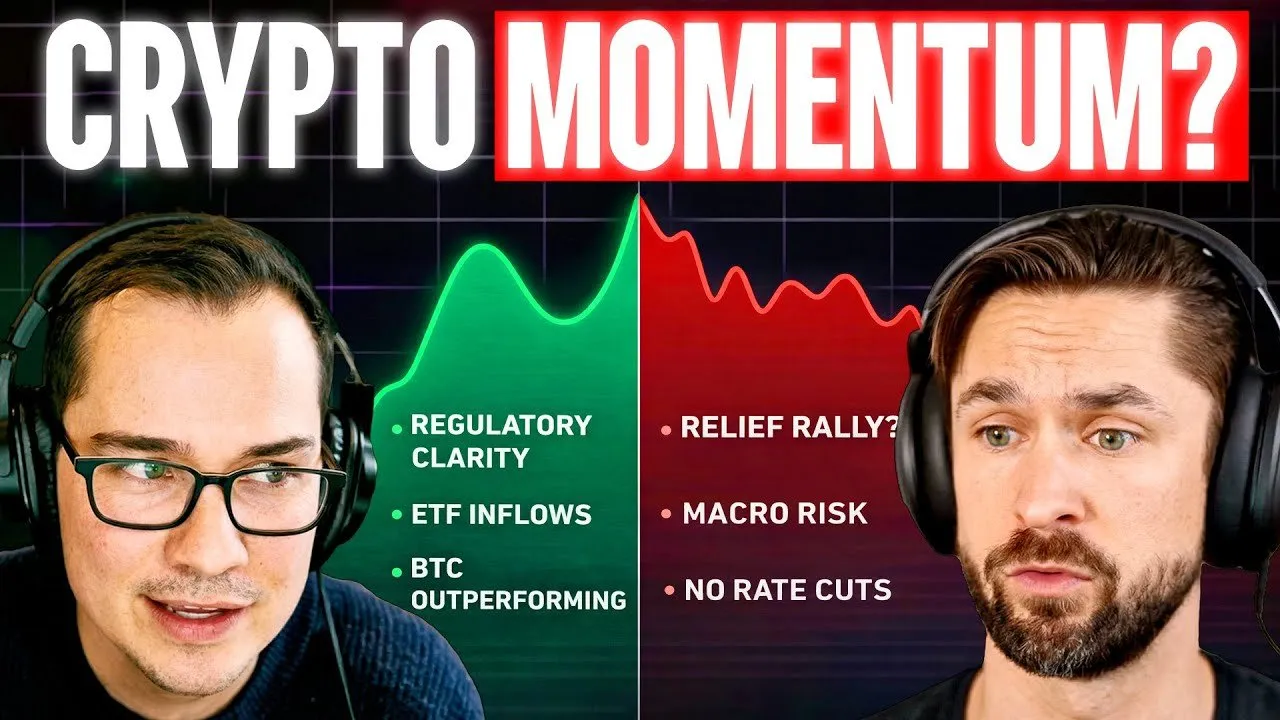
Historically, Bitcoin was often the first asset to be liquidated during geopolitical crises. This week, however, suggests a shift in narrative. Despite broader equity indices trending downward, Bitcoin has shown resilience, outperforming both gold and the NASDAQ since the onset of the latest regional tensions. Analysts remain divided on whether this signifies a fundamental regime change or a temporary relief rally, but the consistent inflows into spot Bitcoin ETFs suggest that institutional interest remains undeterred by macro noise.
The Rise of Agentic Payments
A major focus this week is the emergence of "agentic commerce"—the ability for AI agents to interact with financial systems autonomously. Innovations such as the Tempo mainnet and the MPP standard are setting the stage for a future where micropayments powered by AI could replace traditional ad-based business models.
The Dog Tag for AI
As agents become more active in the digital economy, the question of liability and identity has moved to the forefront. New developer toolkits, such as World’s "Agent Kit," provide a way to verify the human ownership behind an AI agent. This creates a necessary link between digital actions and real-world accountability, a crucial step for integrating these tools into the broader financial system.
The Institutional Land Grab
While industry participants have spent years advocating for legal certainty, traditional finance incumbents appear to have spent that time building their own defenses. The acquisition of BVNK by Mastercard for $1.8 billion serves as a clear signal: Wall Street is no longer observing from the sidelines; it is actively acquiring the infrastructure necessary to participate in a tokenized future.
"The longer TradFi waits, the more expensive it's going to get... You better do your acquisition."
This "TradFi catch-up" is further evidenced by the S&P 500 licensing its index to decentralized trading platforms like Hyperliquid, and regional banks testing tokenized deposits on L2 networks. These aren't just minor experiments; they represent the modernization of capital markets, with crypto technology serving as the essential underlying layer.
Conclusion
As we navigate this complex environment, it is clear that the regulatory tides have turned in favor of innovation. While the "four-year cycle" and macroeconomic uncertainties continue to provide reasons for caution, the structural improvements occurring within the industry—from clear asset taxonomies to high-speed finality standards on Ethereum—are laying a foundation that will be difficult to reverse. Whether we are in the midst of a sustained bull market or a tactical relief rally, the velocity of progress suggests that crypto is firmly cementing its role as the next-generation financial layer for the global economy.