Table of Contents
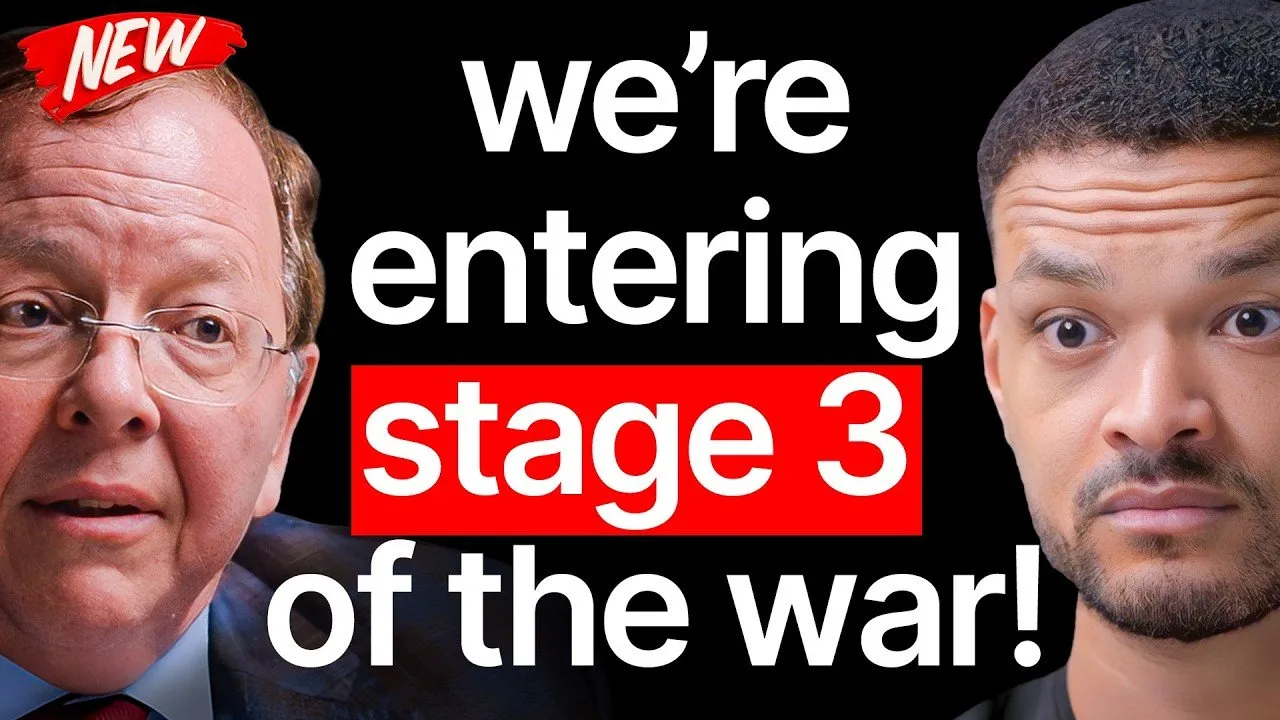
For two decades, Professor Robert Pape has simulated the trajectory of military conflicts between the United States and Iran. Having advised every White House administration from 2001 to 2024, Pape argues that the U.S. is currently trapped in a self-defeating cycle of escalation. By focusing on tactical "smart bomb" successes rather than long-term political outcomes, the United States risks repeating the strategic failures of Vietnam and Afghanistan, potentially leading to a globalized conflict that undermines American primacy.
Key Takeaways
- The Escalation Trap: Military successes, such as destroying nuclear facilities, do not equate to strategic victories if they fail to secure nuclear material or destabilize the adversary’s political structure.
- Regime Resilience: The Iranian government acts as an adaptive matrix rather than a brittle hierarchy; removing individual leaders often triggers a cycle of retaliation and results in a more aggressive successor.
- The Nuclear Risk: Because the U.S. lacks precise knowledge regarding the location of Iran's enriched uranium, current military strategies have inadvertently incentivized Iran to pursue a "North Korea-style" nuclear deterrent for survival.
- Domestic Normalization: Beyond foreign conflict, the greatest threat to American stability may be the domestic normalization of political violence, a trend that is weakening the country from within.
The Illusion of Tactical Success
Modern military doctrine heavily emphasizes the precision of air power. We observe smart bombs hitting targets with 90% accuracy, creating craters and destroying infrastructure. However, Pape contends that this creates a "mesmerizing" but false sense of control. Wars are fundamentally political, not just hardware-based. When bombs fall, they alter the political calculations of both the initiator and the target, trapping policymakers in a cycle where they must either double down or face a perception of failure.
Bombs don't just hit targets, they change politics.
The core issue in the conflict with Iran is the unknown location of nuclear material. Despite successful strikes on facilities like Natanz and Fordow, intelligence remains insufficient to track dispersed uranium. This tactical triumph masks a strategic failure: the U.S. has eliminated the regime's moderate guardrails, such as the late Supreme Leader’s religious fatwas against nuclear weapons, and replaced them with a leadership group more likely to view nuclear proliferation as their only means of survival.
The Three Stages of Escalation
Pape outlines a three-stage escalation trap that the U.S. is currently navigating. Stage one involves localized airstrikes and tactical hits. Stage two, which we have entered, involves horizontal escalation—using drones and missiles to threaten regional economic nodes, such as tourism and oil transit, to pressure coalition partners. This is designed to break the alliance between the U.S. and regional powers like Saudi Arabia and the UAE.
The Risk of Ground Deployment
Stage three involves the potential for limited ground deployments. Because the U.S. still cannot locate the missing nuclear material, the pressure to deploy the 82nd Airborne to control and search specific territories grows. Pape estimates a 75% probability that the U.S. will escalate to this level, as the alternative is accepting a political defeat—a "Hobbesian choice" that many administrations, driven by legacy concerns, are reluctant to make.
The Strategic Failure of "Wars of Choice"
A critical distinction exists between wars of necessity and wars of choice. When the U.S. was attacked at Pearl Harbor, the nation’s resolve was unified. In contrast, wars of choice are more easily exploited by adversaries who understand that America’s "soft underbelly" is its domestic politics and short-term attention span.
When we throw that first punch first, that's a war of choice. And this puts the politics in the other camp's advantage.
This reality is compounded by the global response. Competitors like China and Russia view the prospect of a prolonged American quagmire in the Middle East as a strategic gift. While the U.S. depletes its precision-guided munitions and focuses on the Middle East, China continues to accelerate its AI and industrial development in cities like Wuhan, positioning itself to replace the U.S. as the primary global economic power.
The Normalization of Political Violence
Perhaps the most concerning aspect of Pape’s analysis is his focus on the domestic front. He warns that the normalization of political violence in the United States—manifested through riots and the targeting of political figures—mirrors the volatility of the conflicts he studies abroad. This domestic decline hampers America's ability to remain a cohesive global superpower.
The most the biggest danger that we face, even bigger than Iran and all the problems we've just talked about, is the normalization of political violence in our own country.
The takeaway for policymakers and citizens alike is that security cannot be found in the pursuit of 100% control. The quest for "perfect security" has historically been the mechanism by which great powers overextend and lose their influence. As Pape suggests, sometimes the most strategic move is not to seek total victory, but to freeze a conflict, cut losses, and prioritize domestic stability over the pursuit of unachievable geopolitical objectives.
Ultimately, the path forward requires a sober reassessment of how American power is wielded. By continuing to operate within an escalation trap, the U.S. risks not only losing its regional influence but also damaging its long-term economic and social fabric. Whether Washington chooses to pivot toward diplomacy or further escalation remains the defining question for the coming years.
![Bitcoin Is on Sale [How to Buy It in 2026]](/content/images/size/w1304/format/webp/2026/03/how-to-buy-bitcoin-2026.jpg)