Table of Contents
Key Takeaways
- The conflict has reached a "Zugzwang" state, where every tactical move by the U.S. and its partners appears to worsen their overall strategic position.
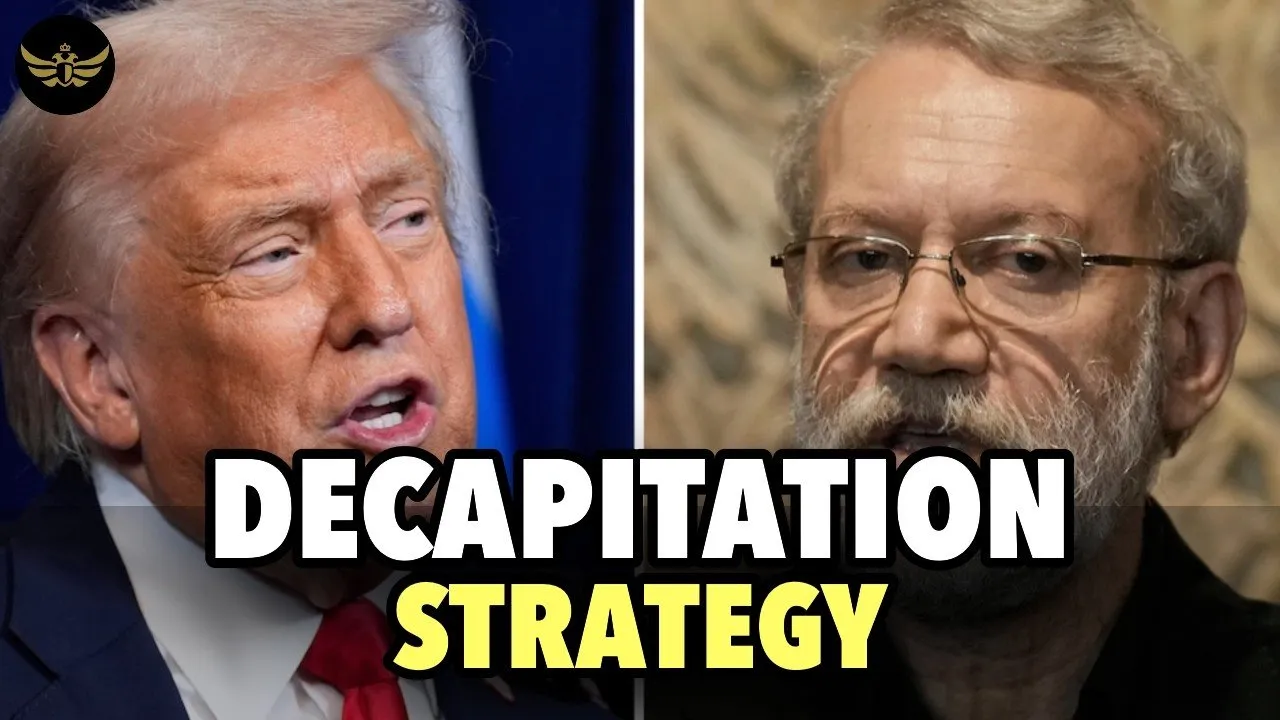
- Israel continues a decapitation strategy, targeting senior Iranian leadership, which has thus far failed to destabilize the regime or dismantle its military apparatus.
- The Strait of Hormuz remains the critical geopolitical choke point, with Iran leveraging its control to inflict global economic distress.
- U.S. military planners face a growing dilemma: the depletion of air defense interceptors and offensive munitions creates vulnerability for potential future conflicts, notably regarding China.
- Russia possesses unique mediatory leverage, yet internal U.S. political divisions and ideological constraints make a negotiated off-ramp unlikely in the near term.
The Strategic Stalemate: Defining Zugzwang
The current military engagement in Iran has persisted for over two weeks, evolving into a grinding war of attrition. Experts note that the conflict has entered a state of Zugzwang—a term borrowed from chess where every available move only leads to a deterioration of the player's position. For the Trump administration, the challenge lies in the lack of clear exit strategies. While the initial goal may have been regime change through localized strikes, the reality on the ground suggests a deepening quagmire.
The Israeli approach remains focused on decapitation strikes, attempting to dismantle the Iranian security apparatus by eliminating its leadership. However, history suggests this strategy is largely ineffective. Much like the efforts against Hezbollah in Lebanon, the elimination of one leader simply triggers the emergence of another. Critics argue that this mafia-like strategy of "taking out heads of families" does not account for the institutional resilience of the Iranian state, nor does it address the ideological resolve of its leadership.
"It is a decapitation strategy which isn't working. It didn't in the end work with Hezbollah in Lebanon either. There was lots of talk that the organization had been shattered. But what we now see is that it has reconstituted itself."
The Economic Battlefield: Strait of Hormuz
While the kinetic conflict occupies the headlines, the economic war is where the true pressure is applied. By maintaining a siege on the Strait of Hormuz, Iran has created a catastrophic economic scenario for the collective West. The disruption of global energy flows is hitting consumers worldwide, with reports already surfacing of energy rationing and surging transportation costs.
The Risks of a Maritime Blockade
For the United States, the primary objective is to force open the strait. However, the U.S. Navy appears hesitant to commit warships into a high-risk environment where they could be easily targeted. The alternative strategy—deploying ground troops—presents a "point of no return." Estimates suggest that a force of at least 100,000 heavy infantry would be required to secure the strait, a massive logistical undertaking that would likely trigger intense domestic backlash and risk the disintegration of political support for the war.
Recent troop deployments, specifically the movement of 5,000 Marines, may signal a shift toward a more nuanced, albeit dangerous, tactic: intercepting tankers to deprive Iran of oil revenue. This move essentially turns the conflict into a high-stakes game of seizure and counter-seizure, further destabilizing global oil markets and potentially pushing prices to unsustainable levels.
Munitions Depletion and Future Vulnerability
A significant, though often underreported, factor in this conflict is the depletion of sophisticated weaponry. Both the U.S. and Israel are reportedly facing critical shortages of air defense interceptors. The inability of the defense industrial base to replenish these systems rapidly means that coverage gaps are becoming inevitable.
"The U.S. has been planning and thinking about a conflict with China. The problem is that if the United States has depleted its arsenals of air defense missiles and offensive missiles to critical levels, then it is going to be very, very vulnerable."
This reality forces a difficult calculation for Pentagon planners. While they must maintain current operations in the Middle East, they are hyper-aware of the long-term threat posed by potential conflicts in the Pacific. Disclosing these vulnerabilities to the public or to Congress carries the risk of signaling weakness to adversaries, leaving the military to navigate an increasingly thin margin of safety.
The Russian Factor and the Search for an Off-Ramp
Russia remains the only actor capable of potentially mediating a resolution due to its complex leverage over Iran. However, the prospect of Russian mediation creates a profound ideological crisis for the current U.S. administration. Many within the neoconservative-leaning circles view Russia as an equal antagonist to Iran; the idea of cooperating with Moscow to end a conflict is often seen as a betrayal of core foreign policy principles.
Moreover, there is no guarantee that Tehran would welcome such mediation. Mutual suspicion defines the Russia-Iran relationship, and Iranian leaders have shown a persistent willingness to embrace martyrdom rather than engage in what they perceive as forced negotiations. This dual resistance—insurmountable domestic opposition in the U.S. and deep-seated skepticism within Iran—ensures that a negotiated exit remains a remote possibility.
Conclusion
As the conflict enters the coming months, the pressure on all participants to find a resolution will only intensify. The volatility of the global oil market acts as a ticking clock; sustained prices at extreme levels threaten not just the warring parties, but the stability of the global economy itself. Despite the desire for a swift, surgical conclusion to the Iran crisis, the evidence points toward a long, costly engagement. Without a radical shift in strategy or an unforeseen diplomatic breakthrough, the U.S. risks finding itself trapped in a conflict that may ultimately reshape its standing on the world stage.