Table of Contents
Key Takeaways
- The Shift to Hard Power: The U.S. appears to be increasingly abandoning its traditional reliance on "soft power" and diplomatic nuance in favor of direct military force and, at times, indiscriminate destruction.
- The Trap of Narrative Politics: Modern political decision-making, particularly within the Trump administration, often prioritizes immediate media-friendly "victories"—such as assassinations—over long-term strategic planning or clear theories of victory.
- Geopolitical Volatility: The lack of a coherent plan for the "day after" suggests that current military actions in the Middle East could lead to prolonged instability rather than a stable, pro-Western outcome.
- The Decline of Institutional Capacity: The U.S. displays a diminishing ability to engage in complex "worldbuilding," struggling to manage even domestic infrastructure, which limits its capacity to effectively reconstruct or influence foreign states.
The End of American Worldbuilding
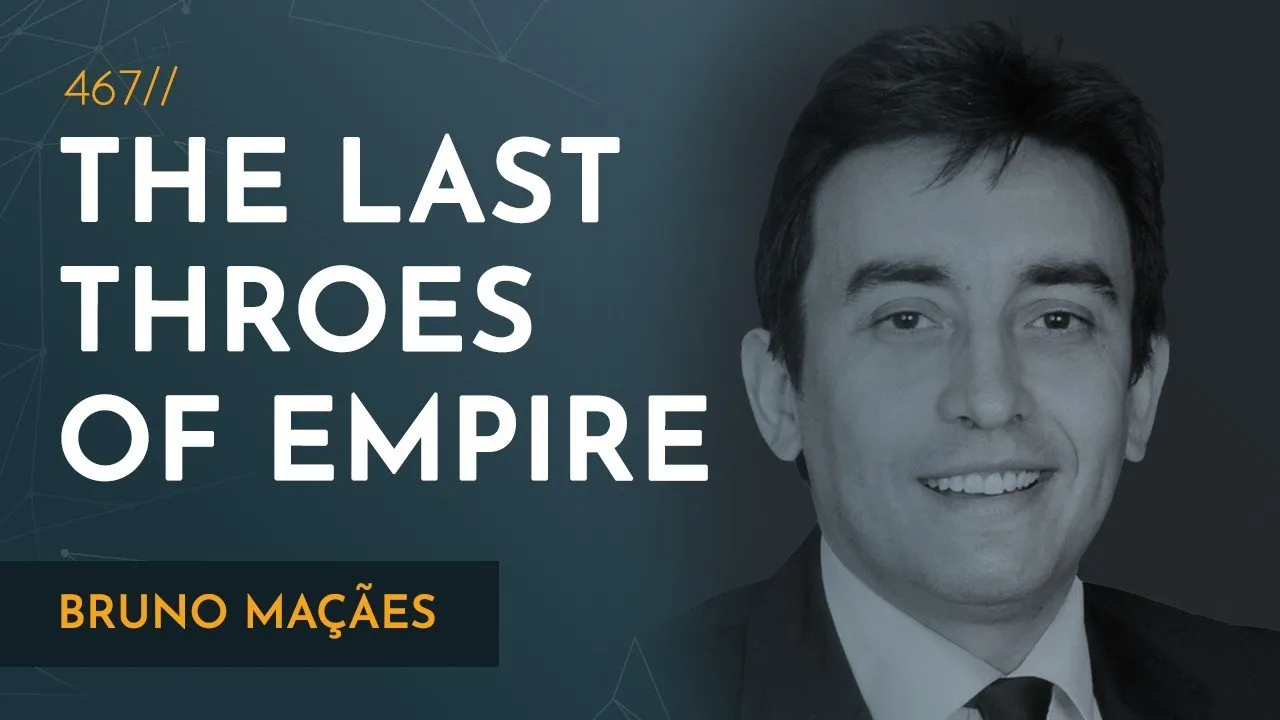
In the post-World War II era, the United States defined itself as a worldbuilder—a nation capable of creating enduring institutions, economic frameworks, and cultural spheres of influence. However, geopolitical strategist Bruno Maçães suggests that we have entered an era where this capacity is fading. The current military campaign against Iran represents a departure from this historical role, moving away from structural influence toward a reliance on raw, short-term military force.
From Strategy to Spectacle
Modern geopolitical decision-making increasingly mirrors the logic of a Hollywood narrative: a binary conflict between a "good guy" and a "bad guy." When victory is defined not by stability or institutional transformation, but by the physical removal of an adversary’s leader, the strategic objective becomes thin. Maçães notes that this shift reflects a broader decline in American political culture, where abstract concepts like economic integration or diplomatic leverage are replaced by the visceral, immediate gratification of kinetic strikes.
"In the current state of American culture, victory is expressed by killing the other guy; otherwise, it can't be expressed."
The Strategic Void in the Middle East
The bombing campaigns targeting Iran, following the collapse of nuclear negotiations, lack the clear, achievable endgame that defined previous American interventions. Unlike the post-1945 efforts to rebuild Germany and Japan, there is no vision for what Iran should look like after the current regime. This absence of planning suggests a strategy of destruction rather than construction, which carries immense risks for American interests in the region.
The Danger of Dependence
The relationship between the U.S. and its allies, specifically Israel, has evolved into one of mutual dependency. Maçães argues that the U.S. is often pulled into conflicts because it has become politically impossible for any American president to allow an ally to face an existential threat alone. This dynamic traps the administration into escalating military commitments, even when those actions contradict broader strategic goals or domestic political stability.
Domestic Fractures and the Information Environment
A significant factor complicating the current military trajectory is the volatile and fragmented nature of the American information environment. Both the administration and the public are operating in a landscape where verification is difficult and emotional narratives often override factual reality. This creates a feedback loop where the leadership can act without accountability, but the public—unaware of the actual costs or progress—remains vulnerable to propaganda.
The Reality of Political Capital
War efforts require a window of opportunity to demonstrate progress. With the U.S. heading into midterms and facing a base that is not unified in its support for the conflict, the administration lacks the high ground necessary to sustain a long-term engagement. The result is a confused policy that risks sudden, uncalculated setbacks, potentially undermining the perception of American military infallibility that has persisted for decades.
Global Implications and the China Factor
Beijing is observing these events with a critical eye. While the U.S. might view its actions as a display of strength, global observers—and potentially the Chinese leadership—may see a demonstration of overextension. By relying solely on hard power, the U.S. may actually be signaling its own vulnerability, especially if the conflict reveals deficiencies in American technological or logistic capabilities.
"I happen to believe as a philosophical premise that you don't build empires on the basis of sheer force; it just doesn't work."
The Risk of Miscalculation
If China decides to support Iran in an effort to bleed American resources, the conflict could evolve into a much deeper quagmire, similar to the Russian experience in Ukraine. The danger lies in the assumption that the adversary is a "paper tiger." When a world power abandons its rhetoric of liberal democracy to embrace a cycle of destruction, it risks losing the very soft power that once made its global leadership sustainable.
Conclusion
The current path taken by the U.S. regarding Iran marks a pivot point in modern history. By prioritizing immediate, spectacle-driven military actions over the complex, long-term work of worldbuilding, the United States risks accelerating its own geopolitical decline. Without a clear theory of victory, a focus on institutional rebuilding, and a restoration of diplomatic credibility, the current conflict may leave behind a vacuum of chaos that is as costly to the United States as it is to the region itself.
![EXPLOSIVE: Time’s Up! [The Next Big Market Move Has Arrived]](/content/images/size/w1304/format/webp/2026/03/market-volatility-geopolitical-tension-oil-prices.jpg)