Table of Contents
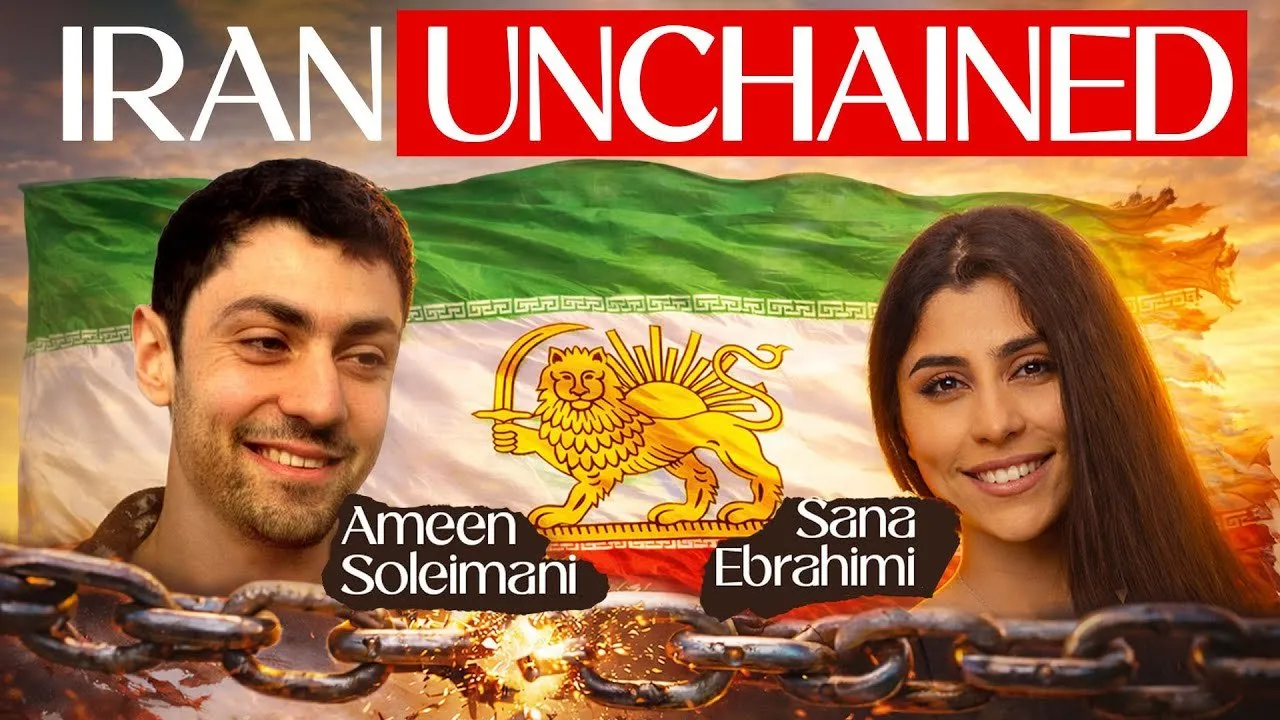
While Bankless usually focuses on financial freedom through cryptocurrency, the core ethos of the industry has always been about liberty—freedom from oppression and the ability to exit broken systems. Few places on Earth exemplify the need for this freedom more starkly than Iran. In a deviation from standard market analysis, we sat down with Iranian activists Amin Soleimani and Sana Ibrahimi to dissect the reality of life under the Islamic Republic. Their testimony provides a harrowing look at a regime that operates less like a government and more like a "terrorist mob," holding a nation of millions hostage while exporting instability across the globe.
The situation in Iran is often misunderstood in the West, clouded by effective propaganda and a general fatigue regarding Middle Eastern politics. However, the distinction between the Iranian people and the regime occupying their country is critical. As protests continue to flare up despite brutal crackdowns, understanding the mechanics of this theocracy is essential for anyone who values human rights and global stability.
Key Takeaways
- The Regime is a Theocratic Mafia: The Islamic Republic is not a normal government but an ideological vehicle for exporting Jihad, often at the direct expense of Iranian national interests and infrastructure.
- Systemic Gender Apartheid: The legal framework treats women as second-class citizens, enforcing strict dress codes and stripping them of basic rights regarding marriage, travel, and bodily autonomy.
- Information Warfare: The regime utilizes internet blackouts to hide massacres while leveraging Western academic institutions and lobby groups to sanitize their image abroad.
- A Distinct National Identity: Unlike Iraq or Afghanistan, Iran possesses a cohesive, ancient national identity and a secular population, suggesting that regime change would not necessarily lead to a power vacuum.
The Myth of the Republic and the Reality of Theocracy
To understand the current turmoil, one must first dismantle the terminology used to describe the Iranian government. While it styles itself as a "Republic," the structure of power is entirely theocratic. At the apex sits the Supreme Leader, or Ayatollah, who claims divine authority. This is not merely a figurehead position; the Supreme Leader overrides the president, the parliament, and the courts.
We are not dealing with a normal government. We are dealing with a terrorist mob. And they are armed to their teeth.
The regime’s origins in the 1979 revolution were built on a foundation of deceit. Ayatollah Khomeini promised freedom, independence, and free utilities to a populace weary of the Shah. Paradoxically, the Islamists formed a temporary alliance with Marxist factions to overthrow the monarchy. Once power was secured, the regime immediately purged their former allies, executing communists and rolling back women’s rights that had been established decades prior.
The Export of Ideology Over National Welfare
The primary goal of the Islamic Republic is not the prosperity of the Iranian people, but the export of Islamic doctrine. The regime views itself as the leader of the Muslim world, a difficult ambition given that they are Shia leaders in a predominantly Sunni world. To bridge this gap, they have latched onto anti-Zionism as a unifying mechanism, funding proxies like Hezbollah, Hamas, and the Houthis.
This ideological crusade comes at a catastrophic economic cost. Billions of dollars are funneled into nuclear programs and foreign militias while Iran’s domestic infrastructure crumbles. The country faces severe water shortages and rolling blackouts, a stark contrast to the resource-rich nation it should be.
Life Under Gender Apartheid
The term "apartheid" is rarely used lightly, but it is the most accurate descriptor for the status of women in Iran. The legal system is designed to subjugate women, enforcing compulsory hijab laws that serve as a visual symbol of submission to the state. The morality police patrol the streets, detaining and beating women for showing hair or wearing clothing deemed too short.
However, the oppression goes far deeper than dress codes. In the Iranian legal system:
- Women cannot leave the country without their husband's permission.
- A woman’s testimony in court is worth half that of a man’s.
- Men have unilateral rights to divorce and child custody.
- "Honor killings" often go unpunished or receive lenient sentences due to patriarchal consent.
The Horror of Legalized Violence
Perhaps the most disturbing aspect of this system is how religious loopholes are used to justify atrocities. There are reports regarding the execution of female political prisoners where, because it is considered a sin to execute a virgin, guards will force the prisoner into a temporary marriage—effectively a state-sanctioned rape—before carrying out the death sentence. This brutality is not an anomaly; it is a feature of a system where the "rule of the jurist" supersedes basic humanity.
They will sentence you to death for waging war against God... because you raised against Ayatollah, who has divine authority.
The Disinformation War and Western Complicity
When protests erupt in Iran, the regime’s first line of defense is an information blackout. They shut down the internet not just to prevent protesters from organizing, but to hide the scale of their violence from the world. They understand the Western news cycle; if they can suppress videos of atrocities for a few weeks, the world will move on before the truth comes out.
The Role of Western Institutions
While the regime silences its own people, it actively exploits Western freedom of speech. There is a concerted effort to infiltrate Western academia and media through "Islamic Studies" programs funded by regime-adjacent sources. This has created a class of apologists in the West—often referred to as the "Iran Lobby"—who parrot the regime's talking points.
These actors often frame protests as "Western intervention plots" or minimize them as minor economic grievances. They exploit the language of "anti-imperialism" to garner sympathy from Western progressives, creating a bizarre dynamic where American liberals inadvertently defend an ultra-conservative theocracy that persecutes women and minorities.
Why Iran is Not Iraq or Afghanistan
A common counter-argument to supporting regime change in Iran is the fear of creating another Middle Eastern quagmire. Critics point to the failures in Iraq and Afghanistan as evidence that Western intervention inevitably leads to chaos. However, Iranian activists argue that this comparison is historically and culturally flawed.
National Continuity: Unlike Iraq, whose borders were drawn by colonial powers post-WWI, or Afghanistan, which is a collection of tribes, Iran has existed as a distinct nation-state for over 2,500 years. There is a deep, unified sense of Iranian identity that transcends ethnicity.
A Secular Population: The Iranian populace is among the most educated and secular in the region. Decades of living under a theocracy have inoculated the population against religious extremism. The people are not asking for a new religious order; they are demanding a return to normalcy and integration with the global community.
I say let this land burn... provided Islam emerges triumphant in the rest of the world.
The quote above, attributed to Khomeini, illustrates the regime's lack of patriotism. In contrast, the opposition is driven by a fierce nationalism. The fear of a power vacuum is mitigated by the existence of a popular opposition movement and a diaspora that is highly successful, educated, and ready to help rebuild.
Conclusion
The protests in Iran are not merely about the price of gas or the wearing of a headscarf; they are an existential struggle for the soul of a nation. The Iranian people have demonstrated a willingness to pay the ultimate price for their freedom, returning to the streets time and again despite the certainty of violence.
For the West, the choice is between appeasing a regime that exports terror or supporting a population that shares democratic values. A free Iran would not only liberate its own citizens but would likely serve as a stabilizing force in the Middle East, ending the funding of proxy wars and opening up a massive, educated market to the world. As the regime weakens, the voice of the Iranian people is becoming impossible to ignore.