Table of Contents
The global energy landscape faces extreme volatility as conflict in the Middle East has effectively shuttered the Strait of Hormuz, a critical maritime choke point for 20% of the world’s daily oil supply. Since strikes against Iranian assets began on February 28, Brent crude has experienced erratic price swings, and analysts warn that if regional shipping remains paralyzed through the end of March, global benchmark prices could surge toward $150 per barrel. The resulting supply shock—compounded by disruptions to natural gas and fertilizer exports—has triggered emergency responses from the International Energy Agency (IEA) and raised concerns of a significant global economic downturn.
Key Points
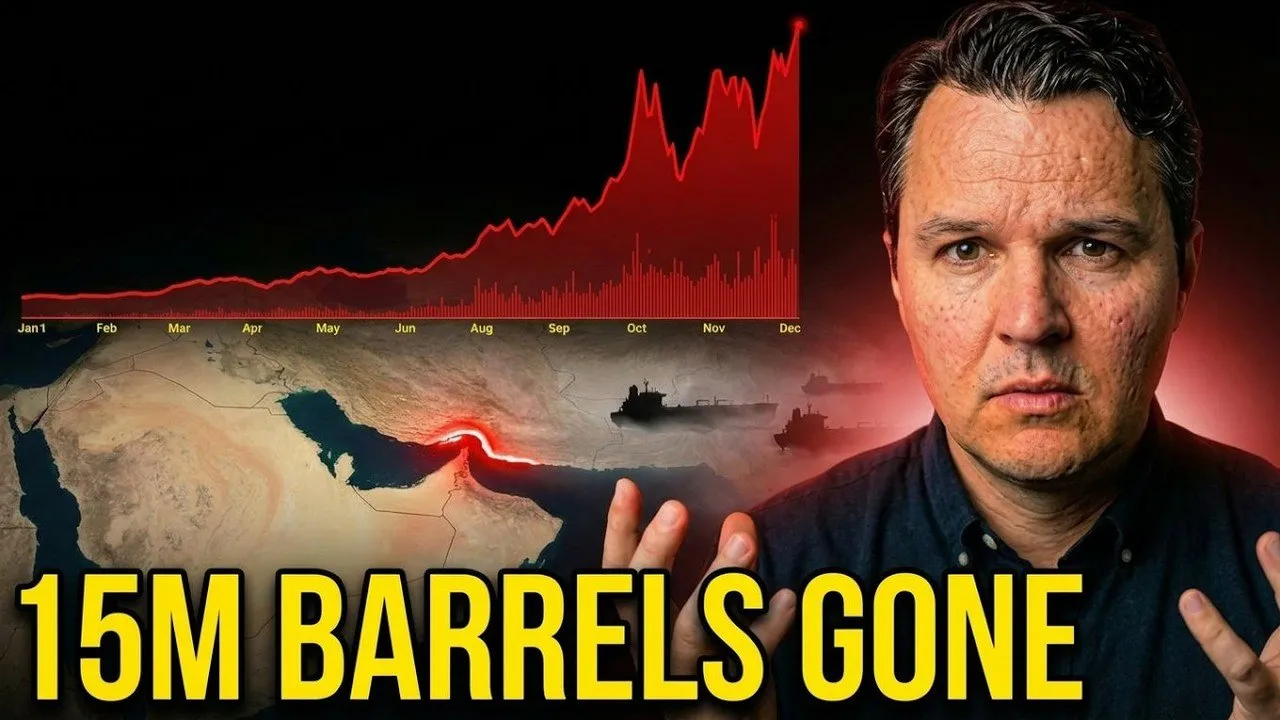
- Supply Chokehold: Shipping traffic through the Strait of Hormuz has declined by approximately 95%, removing 15 million barrels of daily exports from global markets.
- Strategic Reserves: The IEA has announced the largest emergency oil release in history, with G7 nations tapping into a combined 1.2 billion barrels, though analysts caution this covers only a fraction of total global demand.
- Inflationary Pressure: The International Monetary Fund (IMF) estimates that a 100% increase in oil prices could drive global inflation up by 4% and reduce GDP growth by 1.5%, threatening a major economic contraction.
- Market Fallout: While energy and defense sectors may see short-term gains, growth stocks, tech equities, and risk-on assets like cryptocurrencies face sustained downward pressure due to rising inflation and the potential for "higher-for-longer" interest rates.
The Anatomy of the Supply Crisis
The current disruption extends far beyond crude oil. With Iraq having cut production by 60% and major producers including Saudi Arabia, Kuwait, and the UAE reducing output due to ongoing drone and missile strikes on infrastructure, the global commodity market is in a state of flux. While some oil is being diverted through land-based pipelines—such as Saudi Arabia’s line to the Red Sea—these alternatives are insufficient to replace the volume lost from the Strait of Hormuz.
According to data from Kepler, the combination of production halts and physical threats to shipping has led to a shortfall estimated at 10 million barrels per day. Financial institutions have adjusted their forecasts accordingly, with Goldman Sachs citing $150 as a likely target if the disruption persists, while Wood Mackenzie suggests that an extended conflict could push prices toward $200 per barrel.
"There is simply no substitute for restoring access through the strait. It is the global choke point for energy and commodities," notes a report from KPMG.
Economic Implications and Policy Gridlock
The surge in energy costs has placed central banks, particularly the Federal Reserve, in an untenable position. With the U.S. economy showing signs of cooling—highlighted by the loss of 92,000 jobs in February—policymakers are struggling to balance the competing risks of a recession and runaway inflation. Analysts suggest that the inflationary impact of $150 oil would likely negate any near-term potential for interest rate cuts, potentially stalling growth in interest-rate-sensitive sectors like technology and real estate.
Despite the release of 172 million barrels from the U.S. Strategic Petroleum Reserve, the impact may be limited. JP Morgan analysts have suggested that while such policy measures provide temporary psychological relief, they fail to address the fundamental lack of transit, leaving the global market vulnerable to continued price spikes.
Market Outlook: Hedging Against Volatility
Investors are currently recalibrating portfolios to mitigate exposure to high energy costs. Industries heavily reliant on fuel, such as commercial airlines, have already seen significant sell-offs. Conversely, domestic shale producers in the U.S. are viewed by some analysts as potential beneficiaries of higher prices, provided they remain outside the immediate zone of conflict.
The crypto markets present a more complex picture. While digital assets generally trend lower during "risk-off" geopolitical events, proponents such as Arthur Hayes argue that assets like Bitcoin have demonstrated resilience compared to traditional equities. Market participants are now watching for "diplomatic signals" rather than political rhetoric. A formal ceasefire or the reopening of shipping routes would likely trigger a rapid correction in oil prices, potentially fueling a sharp recovery in growth stocks and liquidity-dependent assets.
The immediate path forward depends on the resumption of maritime traffic. As long as the current uncertainty persists, investors should anticipate continued volatility across both commodity and capital markets, with energy security remaining the primary driver of global fiscal policy.