Table of Contents
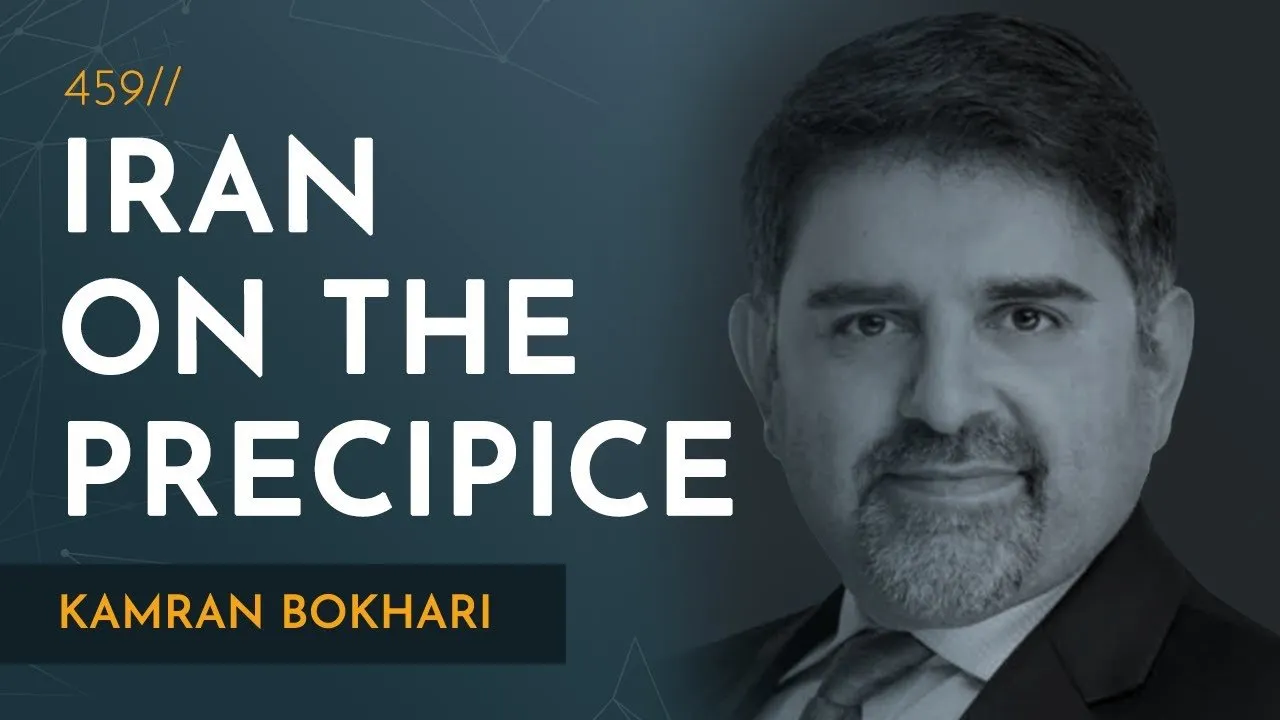
The geopolitical landscape of the Greater Middle East is currently undergoing a profound reordering, with Iran at its epicentre. A nation rich in history and strategic significance, Iran is facing unprecedented internal and external pressures. From widespread protests challenging the regime's stability to shifts in regional power dynamics, understanding the intricate layers of Iranian affairs is crucial for investors, policymakers, and global citizens alike. This post delves into the historical context, the evolving power structures within Iran, and the far-reaching implications of its current state for the region and major global powers.
Key Takeaways
- The current Iranian protests are distinct from previous uprisings, fueled by a weakened Revolutionary Guard Corps (IRGC), economic pain, and unprecedented participation from the merchant class.
- Iran's strategic culture is deeply shaped by historical threats from its western flank, driving its long-standing ambition for a contiguous sphere of influence to the Eastern Mediterranean.
- The Islamic Revolutionary Guard Corps (IRGC), once an ideological militia, evolved into a powerful, oversized parallel state, controlling vast economic sectors and security operations, but is now facing internal divisions and external challenges.
- The 2015 nuclear deal (JCPOA) temporarily provided economic respite but failed to address underlying economic issues and internal power struggles, ultimately contributing to public disillusionment.
- A potential softening of the Iranian regime is plausible, but a complete collapse is less likely in the short term due to the regime's deep-seated control mechanisms and infrastructure.
- The instability in Iran has significant ripple effects for its neighbors, including Turkey, Azerbaijan, Iraq, Afghanistan, and Pakistan, presenting both threats of refugee flows and opportunities for regional power shifts.
Historical Roots of Modern Iran
To grasp the complexities of modern Iran, one must look back centuries. The nation's borders, as we know them today, were largely solidified during the 19th-century Qajar dynasty, a period marked by territorial losses to Russia and the "Great Game" played between Russian and British empires. This era laid the groundwork for a robust civil society, culminating in the Constitutional Revolution of the early 1900s, an all-of-society movement demanding a constitution and greater representation.
The Pahlavi Dynasty and the 1953 Coup
The Pahlavi dynasty rose in the inter-war period, with Reza Shah, father of Mohammad Reza Pahlavi. Post-World War II, Iran saw a democratically elected Prime Minister, Mohammad Mosaddegh, attempt to nationalize the oil industry. This move triggered a pivotal moment: the 1953 coup, backed by the United States and Britain, which restored the monarchy's power. This event deeply ingrained anti-Western sentiment within the Iranian psyche. From the 1950s until 1979, Iran became a key U.S. ally in the Cold War containment strategy against the Soviet Union.
The 1979 Islamic Revolution: A Turning Point
The 1979 Islamic Revolution was not merely a reaction to the Shah's pro-Western policies and perceived corruption; it was a culmination of various ideological currents—Islamist, liberal-democratic, and Marxist. The Islamists, led by Ayatollah Ruhollah Khomeini, were the most organized, leveraging vast clerical networks and new technologies like cassette tapes to mobilize the masses. Crucially, the regular armed forces (Artesh) refused to fire on protesters, leading to the Shah's swift departure. This revolution fundamentally reshaped Iran's domestic structure and its regional and international relations.
"The Islamists just basically dominated the uprising."
The Evolution of Iran's Dual Military Structure: IRGC vs. Artesh
A unique feature of post-1979 Iran is its dual military structure, born out of the revolution's immediate aftermath.
Origins of the IRGC and its Rise to Power
The revolutionaries, deeply suspicious of the Artesh (the traditional army) after its role under the Shah, conducted a massive purge. Concurrently, the Islamic Revolutionary Guard Corps (IRGC) was established as an ideological militia. Initially, the goal might have been to replace the Artesh entirely, but the 1980 Iran-Iraq War forced a pragmatic coexistence. While the Artesh brought professionalism and Iranian nationalism, the IRGC provided ideological commitment. Over the eight-year war, both forces gained experience, but the IRGC emerged as the favored institution.
Post-war, the IRGC's influence expanded dramatically. While the Artesh was kept apolitical and numerically larger, the IRGC accumulated vast resources and political sway. It permeated nearly every sector of governance:
- Controlling telecommunications, industry, and oil exports.
- Engaging in sanctions busting and illicit economies, leading to widespread corruption.
- Developing Iran's ballistic missile and nuclear programs.
- Maintaining its own air force, army, and navy, paralleling the Artesh.
- Taking charge of internal security and commanding the Basij militia, a highly ideological force for crowd control.
Internal Factionalization and Weakening
Despite its monolithic public image, the IRGC has become increasingly factionalized. Its leadership, while ideologically conditioned, has also become pragmatic and wealthy through its economic activities. This has led to internal dissent, with some commanders questioning the heavy ideological script dictated by the clerics, especially as sanctions crippled the economy.
"The IRGC evolved into multiple camps, multiple factions and became too big for its own good."
The period between 2003 and 2011-2013 marked the peak of IRGC power and influence, particularly with the U.S. withdrawal from Iraq and the Arab Spring. However, this peak was followed by a gradual weakening. The Israeli dismantling of IRGC proxy networks in Syria and Lebanon, the targeting of its commanders, and the inability to defend Iran from Israeli reprisals severely damaged its credibility, both domestically and among the elite. The forced appointment of an Artesh general to head the joint chief of staff—a position previously held by the IRGC—signified a notable shift in power dynamics.
Unraveling Iran's Foreign Policy and Regional Ambitions
Iran's strategic culture is deeply rooted in historical grievances and a perceived need for defensive depth.
Historical Imperatives and Regional Expansion
From ancient empires to modern conflicts, threats to Persia have historically emerged from its western flank. This historical shadow drives Iran's strategic mindset: to push its sphere of influence far out to the Eastern Mediterranean, creating a contiguous zone of control. This imperative fuels its cultivation of Hezbollah, support for the Assad regime in Syria, and backing of various Shiite militias in Iraq, especially after the 2003 U.S. invasion removed Saddam Hussein, opening a pathway for Iranian expansion.
Confrontation with the West and Nuclear Ambitions
The 1979 revolution and the subsequent U.S. embassy hostage crisis set the stage for long-term hostility with the United States. Iran's anti-Western stance and its declared commitment to exporting the revolution, coupled with its support for groups like Hezbollah and Hamas, cemented its adversarial role. The pursuit of a nuclear program, while a potential bargaining chip for sanctions relief, is also seen as a strategic imperative to counter perceived threats and project power in a volatile region.
The Nuclear Deal and its Aftermath
The 2015 Joint Comprehensive Plan of Action (JCPOA) emerged from Iran's financial strain. The regime recognized it could no longer sustain its aggressive foreign policy and maintain domestic calm simultaneously. The deal offered sanctions respite, but crucially, it did not require Iran to mothball its nuclear program entirely, merely delaying certain activities. Domestically, the deal created high expectations among the Iranian public for economic improvement, hopes that were largely dashed by the Trump administration's withdrawal from the agreement in 2018 and the re-imposition of crippling sanctions. This failure to deliver tangible economic benefits further eroded public trust and fueled internal struggles between pragmatic factions seeking economic reform and the IRGC's entrenched economic interests.
The Latest Protests: A Catalyst for Change?
The current wave of protests engulfing Iran is distinct from previous uprisings, signifying a critical juncture for the regime.
A Shift in Dynamics
Unlike earlier protests (e.g., 1999 student protests, 2009 Green Movement, 2017/2019 economic protests, 2022 Amini protests), the current unrest is unfolding against the backdrop of a severely weakened regime. Key factors distinguishing this wave include:
- Weakened IRGC: Following its strategic setbacks against Israel, the IRGC's credibility and internal security capabilities are significantly diminished.
- Economic Catastrophe: The precipitous devaluation of the Rial (from 11,000 to 1.45 million to the dollar since 2011, with a sharp drop in late 2024) has brought unprecedented economic pain.
- Merchant Class Involvement: For the first time, the influential merchant community (Bazaar) has joined the protests, acting as organizers. This group has historically steered clear of direct confrontation, signifying the depth of economic despair.
- Nationwide Scope: Protests are reported across all provinces, involving people from diverse socio-economic backgrounds, including smaller towns.
The immediate spark for the latest wave was the dramatic plunge of the Rial, pushing the merchant class onto the streets. This comes after years of public alienation, exacerbated by the government's mishandling of crises like COVID-19 and the election of hardliner Ebrahim Raisi, followed by the nationwide protests in 2022-2023 triggered by the death of Mahsa Amini under morality police custody.
Regime Weakness and Response
The regime, while critically weak, possesses extensive coercive apparatuses developed over 46 years. Its response to protests has involved significant casualties, with official numbers of "terrorist" deaths around 2,000, which is widely believed to be a severe understatement. The question now is not merely survival or collapse, but rather a long-term process of "regime decay."
"The regime has never been this weak."
Internal debates within the regime acknowledge the need for change, but there is deep disagreement on its nature and extent. Any concessions could be seen by the public as a sign of weakness, potentially accelerating demands and risking a loss of control.
Geopolitical Ripples: Iran's Neighbors and Regional Stability
Instability in Iran would send shockwaves far beyond its borders, impacting its neighbors and altering regional power dynamics.
Threats and Opportunities for Regional Actors
Iran's neighbors are watching the crisis with a mix of concern and strategic calculation:
- Turkey: Worries about potential refugee flows and the expansion of Kurdish militancy along its eastern border. However, a weakened Iran also presents an opportunity for Turkey to expand its influence in the South Caucasus and Levant, filling the power vacuum.
- Azerbaijan: Eyes the potential for reform-minded ethnic Azeris in Iran to gain influence, leading to a friendlier regime in Tehran and opening direct connectivity to the Middle East.
- Iraq: Its Shiite militias and government, largely influenced by Iran since the fall of Saddam, face uncertainty without a strong patron. This could empower Iraqi Kurds and Sunnis, potentially reigniting internal struggles.
- Afghanistan: The Taliban regime, a fellow theocracy, observes Iran's struggles with concern, fearing that chaos and public agitation could spill over. It also sees opportunities to work with Sunni rebel groups in Iran's border regions.
- Pakistan: Deals with a significant Baloch insurgency on its border, whose militants often find sanctuary on the Iranian side. Iranian instability could exacerbate this issue.
- Turkmenistan: A closed society, it nonetheless faces concerns about instability spilling over its southern border, affecting its desire for isolation.
The fate of Iran will not remain confined within its geographical boundaries; its reverberations will reshape the broader Middle East and Central Asia.
Navigating Uncertainty: Pathways for Iran's Future
The future of Iran is fraught with uncertainty, with various potential pathways for the regime and the state.
Scenarios for Regime Transition
Kamran Bokhari outlines several hypothetical scenarios, emphasizing the distinction between the "regime" (ruling structure) and the "state" (hardware, institutions):
- Managed Regime Decay: The regular armed forces (Artesh) step in, refusing to fire on protesters, thereby creating a security vacuum. This pressure could lead to a managed transition where the supreme leader is replaced by a figurehead, a reformist government strengthens, and the IRGC is gradually absorbed into the Artesh. This would require an understanding with the United States for sanctions relief.
- Preservation of the State: If the regime cannot be preserved, the regular military might declare martial law, appoint a temporary government, and lift social restrictions. This would necessitate a negotiated understanding with the U.S. for sanctions relief to avoid total collapse.
- Outright Chaos: The worst-case scenario involves the inability to salvage the situation, leading to widespread chaos with different ethnic groups and rival regime factions clashing, threatening the coherence of the state itself.
Any U.S. intervention, even limited strikes against IRGC bases, carries immense risks. While theoretically weakening the IRGC's crowd control, it assumes precise intelligence and predictable outcomes, which are rarely guaranteed in such complex environments. The U.S. generally seeks to avoid chaos in a country of 93 million people with diverse ethnic groups and potential for a nuclear program, preferring a managed transition that ensures stability.
Key Factors to Watch
To discern the direction Iran is heading, several critical elements require close observation:
- The Artesh: Their actions will be pivotal. Do they remain loyal to the clerics, or do they side with the people, acting as the ultimate guarantor of either the regime's stability or the state's integrity?
- The IRGC: Will its internal divisions deepen, leading to a breakup or alignment of certain elements with the Artesh?
- U.S. Policy: How will the U.S. calibrate its approach? Will it pursue back-channel negotiations, limited intervention, or adopt a more hands-off stance?
- The Supreme Leader and Basij: The succession plan for the supreme leader and the role of the ideologically zealous Basij militia will be crucial.
- External Actors: The involvement of regional players (e.g., Kurdish groups, Israel) and their potential for intervention or exploitation of the crisis will significantly influence outcomes.
Conspiracy theories abound, including scenarios where U.S. strikes are seen as choreographed to stabilize the regime by rallying nationalistic sentiment. While seemingly far-fetched, such narratives highlight the deep mistrust and complex calculations at play.
Conclusion
Iran stands at a precipice, with its future trajectory uncertain but undeniably transformative. The interplay of historical grievances, internal power struggles, economic hardship, and external pressures has created a highly volatile environment. While a quick collapse of the regime seems unlikely due to its entrenched control mechanisms, the process of decay is palpable. The choices made by internal actors—particularly the military—and the strategic responses of external powers will determine whether Iran navigates towards a managed transition, descends into chaos, or finds an unexpected path forward. Understanding these intricate dynamics is not just an academic exercise; it is essential for comprehending the future of global geopolitics.