
Table of Contents
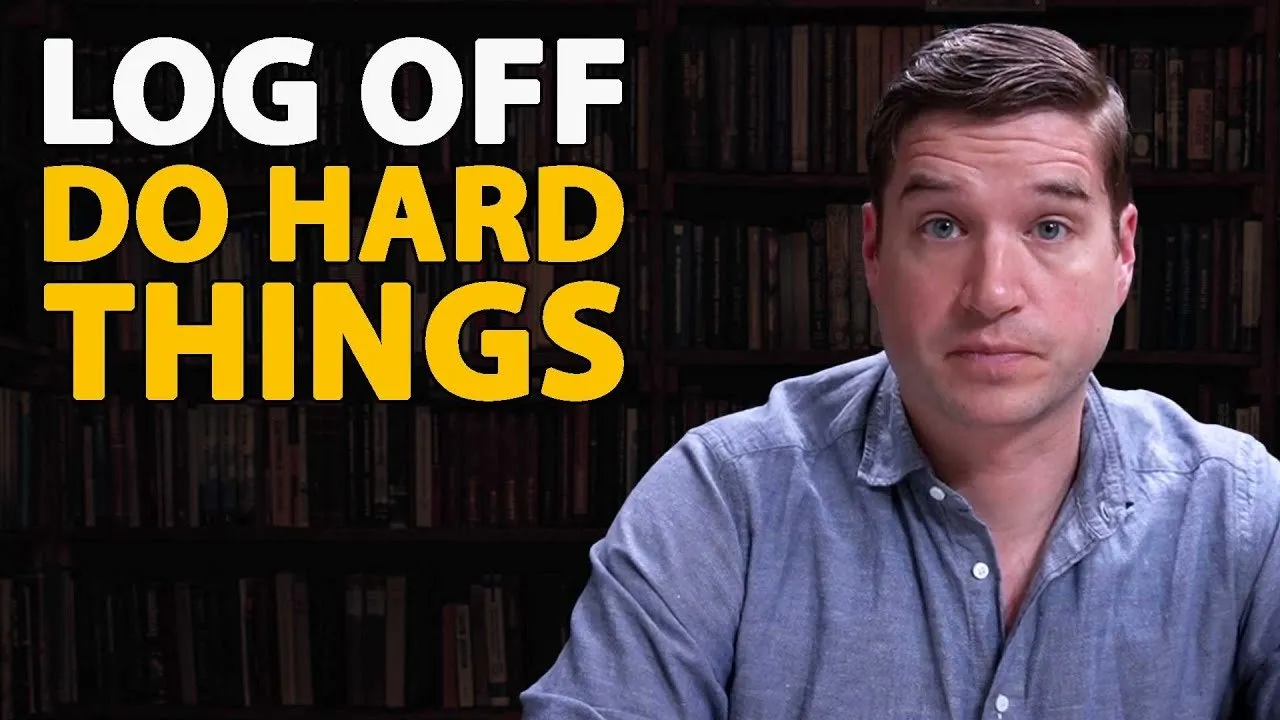
We possess an evolutionary instinct to pursue difficult, impressive goals. This drive, rooted in our paleolithic history, once helped us impress our tribe to secure resources and mates. Today, that ambition remains a powerful engine for satisfaction, but the digital age has complicated how we channel it. The internet offers two diverging paths: it can provide virtual tribes that support legitimate growth, or it can hijack our ambition with "pseudo-excellence"—a performative version of success that prioritizes optics over substance. By understanding the difference between looking successful online and actually building a life of depth, we can reclaim our drive from the noise of the internet.
Key Takeaways
- Pseudo-excellence creates a trap: Social media often promotes the performance of greatness (complex routines, aesthetics) rather than the actual work required to achieve it.
- True excellence is a process: Authentic success is defined by involved engagement and alignment with personal values, not just external rankings or accolades.
- Digital tools require boundaries: To perform deep work, you must actively manage communication channels rather than letting them dictate your day.
- AI is a specific utility, not magic: Despite the hype, current generative AI is best viewed as a productivity aid for mundane tasks like summarization and pattern finding.
The Rise of Pseudo-Excellence
The internet has given rise to a phenomenon that performance coach Brad Stulberg calls "pseudo-excellence." This occurs when individuals become more concerned with the performance of greatness than the habits and mindsets required to actually be great. We see this manifested in influencers who promote 4:00 AM wake-up calls, cold plunges, and elaborate supplement regimens.
While these routines appear disciplined, they often serve as a distraction. There is a distinct difference between being a world champion at having a morning routine and being the best you can be at a specific craft. The former is an elaborate dance designed for social media engagement; the latter requires mundane, consistent effort that rarely looks exciting on Instagram.
This performative culture is dangerous because it hijacks our natural ambition. When we feel insecure or lost, the structure of a 50-step morning routine offers a false sense of control. It feels safer to succeed at a checklist of wellness hacks than to risk failure in a pursuit that actually matters, such as writing a book or building a business.
Pseudo excellence is more about the elaborate dance. Actual excellence is about caring deeply and doing the thing that matters to you.
The Aesthetic of Effort
Much of this online content plays on our "lizard brain." For example, fitness influencers often use their physiques to sell productivity or lifestyle advice. However, this creates a false correlation. A muscular physique may be the result of steroids or genetics rather than the specific 3:00 AM meditation routine they are selling. When we conflate the aesthetic result with the advice being given, we fall into a trap of mimicking behaviors that do not lead to actual competence or mastery.
Defining True Excellence
If pseudo-excellence is about performance, true excellence is about "becoming." It is not merely an objective standard or a ranking, but a process of involved engagement. It requires caring deeply about a pursuit that aligns with your core values. This shift in mindset—from looking good to being good—changes how we approach our daily efforts.
Authentic excellence often looks boring from the outside. The best researchers, writers, and athletes generally do not have 47-step morning routines. They have simple, repeatable habits that allow them to focus entirely on the fundamentals of their craft. They prioritize rest and renewal, understanding that longevity requires a sustainable pace, not the "grindset" mentality of working 18-hour days.
The Role of Vulnerability
Pursuing true excellence requires vulnerability. Unlike the safety of a checklist, stepping into the arena of a chosen craft means risking failure. Whether it is powerlifting, coding, or gardening, the value lies in the struggle. The process teaches patience, resilience, and how to handle discomfort. These internal qualities are the true rewards of excellence, far outweighing external validation or social media likes.
Excellence is not a standard. It's a process of becoming... it is involved engagement, caring deeply about worthwhile pursuits that align with your values and goals.
5 Protocols to Tame Digital Overload
To pursue excellence, one must create the space to do the work. However, modern knowledge work is plagued by constant communication. Recent data suggests the average worker receives over 100 emails and 150 chat messages daily, leading to hundreds of interruptions. To fight back against this chaotic environment, we can implement five specific protocols.
1. Eliminate Threads
Digital threads are productivity poison. Any conversation that requires more than one back-and-forth response should be moved to synchronous communication. Instead of emailing back and forth ten times, pick up the phone or visit someone’s office. A three-minute conversation can resolve what would otherwise drag on for days, eliminating the need to constantly check your inbox for replies.
2. Relocate for Deep Work
Scheduling focus time is good; moving physically is better. When you need to perform deep work, go to a specific location—a conference room, a coffee shop, or a library—where you do not have access to Wi-Fi or messaging tools. This physical change signals to your brain that it is time to focus and removes the option of "quickly checking" email.
3. Batch Group Discussions
Implement "docket clearing" meetings. Instead of sending emails the moment a thought occurs, add the item to a shared document (a docket). Hold a brief meeting two or three times a week to run through the list. This practice can eliminate the vast majority of internal email traffic and ad-hoc meetings, as issues are resolved in batches rather than continuously.
4. Create Processes
We often rely on ad-hoc messaging because we haven't established a process. For any recurring task, define the "Four W's": Who is doing it, What they are producing, Where they will put it, and When it will be done. Spending time upfront to structure the work prevents the cascade of "checking in" messages later.
5. Reduce Active Projects
Communication volume is directly tied to the number of active projects. By limiting work-in-progress—working on fewer things at once—you naturally reduce the overhead of coordination. It is better to keep a project in a "holding pattern" where it generates no messages, rather than having it active but stalling, where it continues to generate anxiety and emails.
A Realistic View of Artificial Intelligence
Amidst the conversation about digital distraction, there is also the looming narrative of AI revolutionizing work. While billions are being invested in generative AI, it is crucial to separate the hype from the utility. Outside of computer programming, where the impact is undeniable, the current value of Large Language Models (LLMs) is remarkably niche.
When we strip away the marketing, the primary practical use cases for generative AI in the current moment are mundane but useful:
- Pattern Finding: Analyzing large data sets to find correlations humans might miss.
- Summarization: Compressing long meeting transcripts or documents into digestible bullet points.
- Drafting Boring Text: Generating first drafts of slides, emails, or self-reviews that are necessary but low-value.
- Clarifying Complexity: Translating dense bureaucratic text (like parking regulations) into plain English.
This is not to say AI won't change the world, but currently, it serves best as a support tool rather than a replacement for human ingenuity. It can handle the "boredom" of administrative tasks, potentially freeing us up to pursue the true excellence that requires human judgment, creativity, and deep care.
Conclusion
The internet is a tool that can either amplify our ambitions or dissipate them into meaningless performance. Pseudo-excellence offers a quick dopamine hit—the feeling of being productive without the progress. True excellence, by contrast, asks us to step away from the performance, disconnect from the constant chatter of the inbox, and engage deeply with the difficult, rewarding work right in front of us. By curating our digital inputs and establishing strict boundaries around our communication, we can reclaim the cognitive space necessary to master our crafts and build a life of substance.


)