Table of Contents
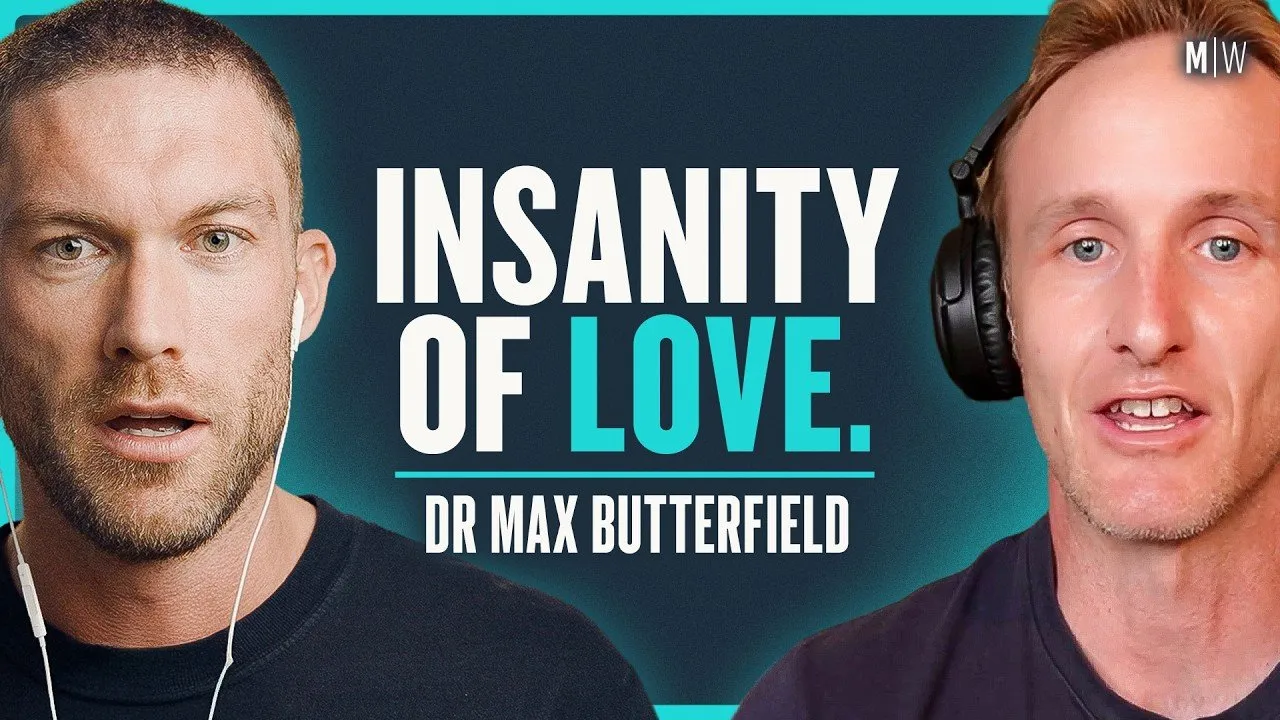
In an era defined by high-speed digital communication, it is ironic that our ability to form deep, meaningful human connections seems to be eroding. Dr. Max Butterfield, a scholar of experimental and clinical psychology, argues that our modern landscape has made us experts at performance but amateurs at intimacy. From viral Olympic grand gestures to the toxic cycle of internet-fueled rumination, the path to a healthy relationship is often obscured by our own psychological blind spots. Navigating this landscape requires more than just advice; it demands a fundamental shift in how we regulate our emotions and interpret the signals of those around us.
Key Takeaways
- Emotional Regulation is Primary: Before attempting to "fix" a relationship or make grand gestures, you must first manage your own internal state to avoid projecting dysregulation onto others.
- The Trap of Grand Gestures: Large, performative actions often serve the person doing them rather than the recipient, and are frequently perceived as a sign of instability rather than true affection.
- Rumination as a Pattern: Rumination is often a self-reinforcing habit; disrupting your daily environment and routines is a more effective way to break the cycle than simple willpower.
- The Value of Direct Communication: Moving away from passive-aggressive "shadow sentences" toward clear, forthright communication is essential for building trust and avoiding misinterpretations.
The Anatomy of a Failed Gesture
Modern romance is often distorted by the influence of romantic comedies and social media performance. When an individual attempts to "win back" a partner through a grand, public spectacle, the result is frequently the opposite of their intent. Dr. Butterfield notes that whether such actions are planned or impulsive, the underlying issue is often a lack of self-regulation. By using a crowning professional achievement to solve a personal relationship failure, the individual is effectively broadcasting their internal chaos to the world.
"This is not a situation where you want to try harder. This is a situation where you want to try better."
When someone is in a state of emotional dysregulation, their attempts to "try harder" often come across as cloying or even threatening to their ex-partner. Instead of pursuing the relationship with intensity, the healthier approach is to pump the brakes, project calm, and approach the situation with the patience one would use to coax a frightened animal out from under a car.
Breaking the Cycle of Rumination
Rumination—the compulsive act of cycling through negative thoughts—is a trap that keeps many people stuck in past mistakes. Evolutionary psychologists suggest that while rumination may have historically helped our ancestors avoid repeated dangers, in the modern world, it often becomes a self-reinforcing loop that rewards us with a twisted form of stimulation.
Chipping Away at Negative Loops
Because the human mind naturally abhors uncertainty, we often collapse complex, ambiguous situations into catastrophic narratives just to feel a sense of "closure." To combat this, Dr. Butterfield suggests a multi-faceted approach:
- Pattern Interruption: If you habitually check your phone or ruminate in a specific room, change your physical routine. Go to a coffee shop or leave your phone in another room to force a cognitive reset.
- Self-Argumentation: Challenge the certainty of your negative thoughts. Ask yourself, "What is the most gracious interpretation of this situation?" rather than assuming the worst-case scenario.
- Physical Outlets: Engaging in strenuous exercise can serve as a meditative practice, providing the brain the space it needs to process emotions without being consumed by them.
Navigating Modern Communication
The rise of therapy-speak and the fear of "cancellation" have created a culture of extreme caution, leading people to hide their true feelings behind passive-aggressive remarks or "shadow sentences." This culture of indirectness prevents genuine dialogue, as people worry more about how their words will be screenshotted and misconstrued than about expressing their actual needs.
True intimacy requires the bravery to be straightforward. Developing the skill to articulate your feelings without oversharing—and without the expectation that your partner should have to decode your hidden messages—is the cornerstone of adult relationships. In an environment where the most gracious interpretation is rarely the default, actively choosing to extend grace to others can protect both your own mental peace and the health of your connections.
The Power of Intellectual Humility
One of the greatest challenges in modern discourse is the tendency to move from debating an idea to attacking a person. When someone expresses a perspective that falls outside of established norms, the internet is quick to resort to ad-hominem labels. Dr. Butterfield emphasizes that true progress—both in research and in personal relationships—requires the ability to separate the person from the idea.
"Ideas can be wrong. Ideas can be debated. People can be wrong and people can be debated. But so often it turns personal."
By shifting our focus toward understanding the underlying mechanisms of behavior rather than assigning moral blame, we can create more room for empathy. Whether it is understanding the complexities of intra-sexual competition or the reality of ovulatory shifts in relationship dynamics, the goal should be to seek truth through evidence rather than searching for social validation in an echo chamber.
Conclusion
Ultimately, the internet acts as a pressure cooker that rewards extreme, performative communication while punishing nuance and vulnerability. Achieving emotional maturity involves recognizing that there is no "magic spell" for relationships; there is only the consistent practice of self-regulation, honesty, and a willingness to adapt. By focusing on direct communication and accepting that ambiguity is a permanent fixture of life, you can cultivate the resilience necessary to build lasting connections in an increasingly complex world.