
Table of Contents
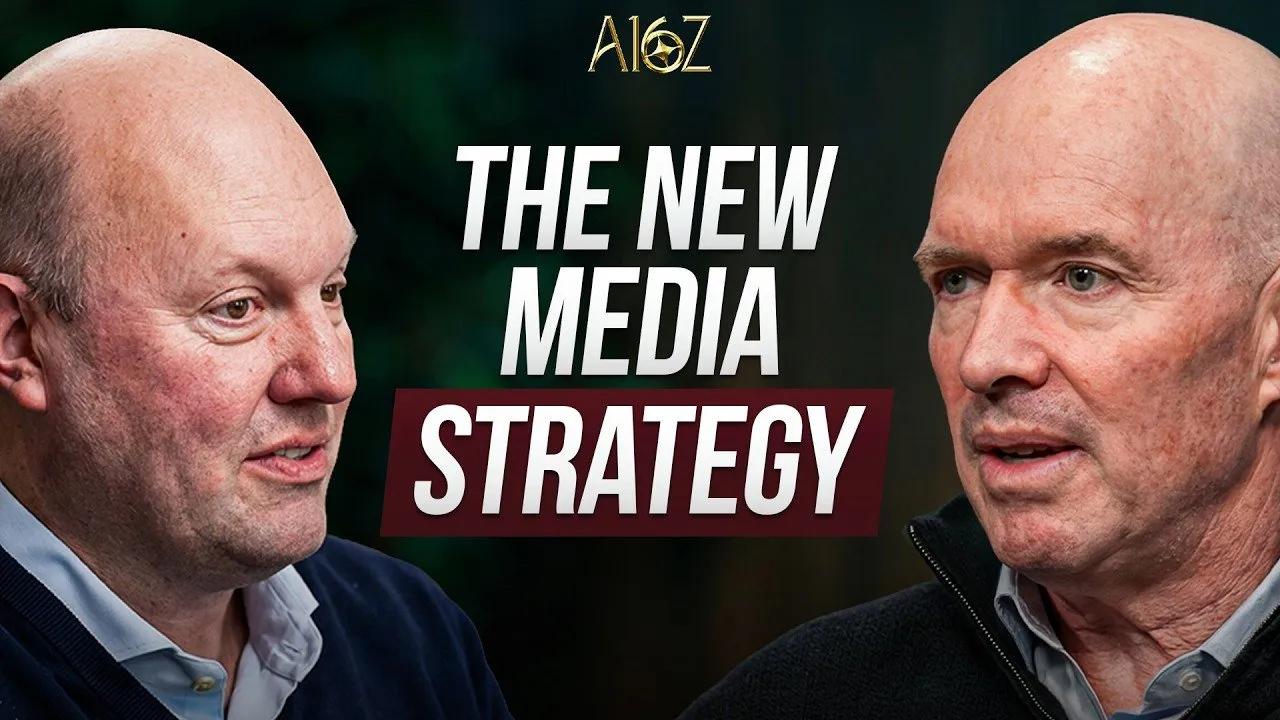
The rules of engagement for corporate communication have shifted permanently. In the era of legacy media, the goal for a firm was often to remain neutral, polished, and safe—a practice that frequently led to synthetic, forgettable branding. Today, that approach is a liability. According to Marc Andreessen and Ben Horowitz, the new media landscape demands a completely different strategy: one centered on authenticity, speed, and the willingness to be interesting rather than inoffensive.
Key Takeaways
- Offense over Defense: In new media, the best protection against misinterpretation is to "flood the zone" with your own authentic voice rather than reacting to headlines.
- The Death of the Sound Bite: Long-form content, such as podcasts and essays, allows for the necessary context that short-form media lacks, protecting public figures from the "sound bite" traps of the past.
- Speed is Strategic: Borrowing from military maneuver warfare, the "OODA loop" (Observe, Orient, Decide, Act) dictates that speed is a competitive advantage; those who move fastest control the narrative.
- Direct-to-Audience Engagement: By building owned media channels, organizations can bypass traditional gatekeepers and speak directly to their core audience, whether they are founders, investors, or talent.
The Shift from Defensive to Offensive Communication
For years, venture capital firms and large corporations operated under a defensive mandate: minimize risk, keep results private, and avoid upsetting the mainstream press at all costs. Ben Horowitz notes that this culture was born from existential threats—the fear that a single misinterpreted article could damage a firm's reputation beyond repair.
However, the technological landscape has transformed. The monopoly once held by a handful of publications has been replaced by a decentralized ecosystem of podcasts, blogs, and social platforms. In this new world, trying to appease everyone is a losing strategy. As Horowitz observes, the old world of corporate branding was defined by a desire to be unobjectionable, which ultimately resulted in boring, plastic communication. The new mandate is simple: care about being interesting.
Old media is defense-oriented. In new media, offense is always better than defense. When in doubt, flood the zone.
The Power of Long-Form Content
Public figures often find themselves in trouble when their ideas are compressed into short, decontextualized snippets. The internet, paradoxically, offers both the "viral post" and the long-form deep dive. Andreessen argues that long-form conversations—such as hour-long podcasts or detailed essays—provide a level of protection that short-form media cannot.
By providing the full context of an argument, leaders can bypass the "moral panics" that historically followed five-second television sound bites. This approach fosters a deeper connection with an audience, allowing them to understand the logic, assumptions, and human identity behind a company's leadership.
Mastering the OODA Loop: Speed as a Strategy
In military theory, the OODA loop is a framework for decision-making that prioritizes speed to disrupt an opponent's psychological footing. Marc Andreessen identifies this as a critical component of modern media success. Organizations that operate on slow, bureaucratic editorial timelines inevitably find themselves chasing the news rather than making it.
Winning the Cycle
Because the modern media cycle is rapid, those who can observe, orient, decide, and act within a shorter timeframe than their competitors can effectively control the narrative. This speed forces competitors to revert to a defensive, reactive posture, essentially inducing a "psychological breakdown" in their ability to lead the conversation.
Oral vs. Written Culture in the Digital Age
The internet functions as both an oral and written culture, and success requires knowing which mode to employ. Short-form, rapid-fire platforms like X (formerly Twitter) operate largely on the principles of oral culture—bursty, emotional, and reactive. Conversely, long-form platforms like Substack or dedicated podcasting channels serve as the modern equivalent of written, analytical culture.
If it’s on the internet, it’s a viral internet post.
Understanding these distinctions is vital. A common mistake among traditional businesses is "cross-posting" the same message across every platform. To be effective, content must be native to the medium, leveraging the strengths of each—whether that is the intellectual depth of a long-form discussion or the rapid, triggering nature of a viral post.
Building a Media-First Organization
The evolution of the "New Media Team" at 816Z highlights a pivot toward treating media as a product. Rather than relying on outside firms, the team recruits experts who intimately understand the "vibe and taste" of specific platforms. This strategy includes "Launch as a Service" offerings and founder-led initiatives that help companies build their own audiences.
Ultimately, the goal is to provide companies with the superpowers necessary to punch above their weight class. By focusing on direct-to-audience communication and embracing the "Joe Rogan CEO" archetype—someone capable of holding a multi-hour, nuanced discussion—firms can build authentic brands that withstand the noise of the digital era.
Conclusion
The transition from legacy media to the new media paradigm is not merely a change in channels; it is a fundamental shift in philosophy. To succeed today, leaders must move past the desire to please the masses and instead focus on being authentic, interesting, and rapid in their execution. While the internet can be a caustic environment full of anonymous critics, the ability to communicate directly and deeply with one's core audience is an unparalleled advantage that, if navigated with confidence, defines the new standard of leadership.
![Bitcoin: An Unfortunate Pattern [Update]](/content/images/size/w1304/format/webp/2026/03/bitcoin-unfortunate-pattern-update.jpg)
![The Last 4 Times This Happened Markets Crashed [History Repeating?]](/content/images/size/w1304/format/webp/2026/03/strait-of-hormuz-oil-market-crash-risk.jpg)
