
Table of Contents
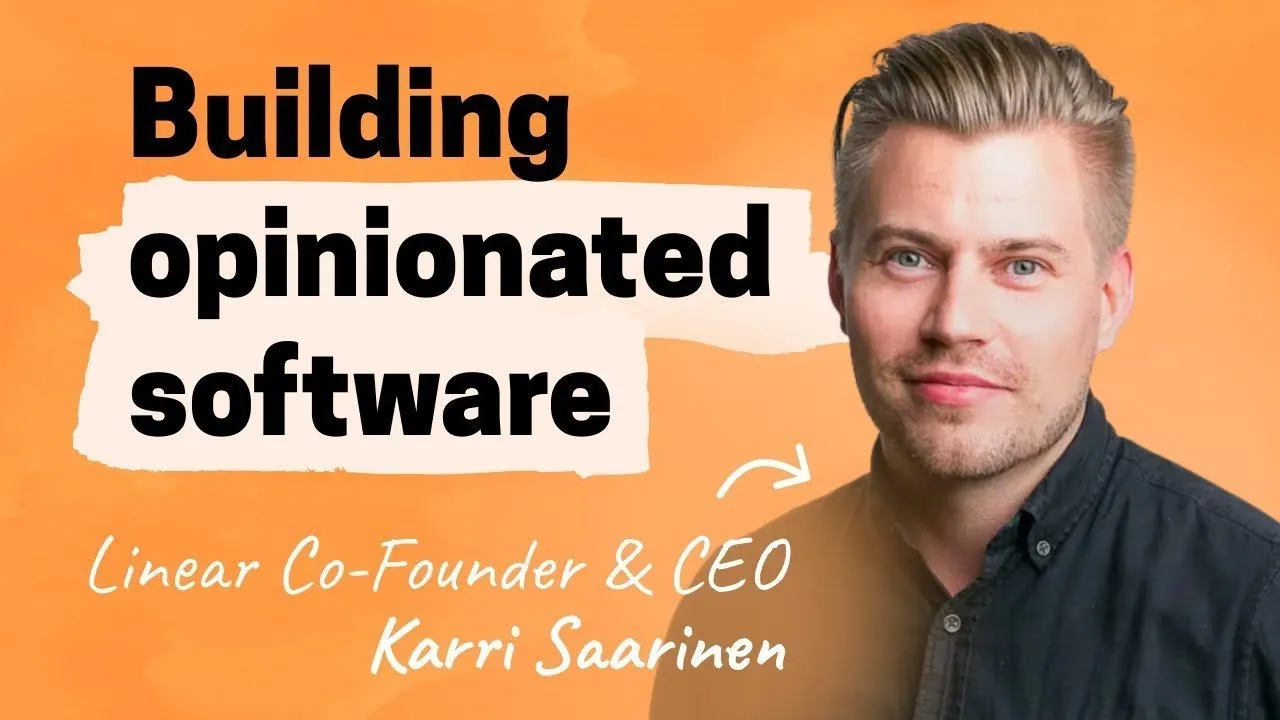
In the crowded landscape of productivity software, Linear stands out as an anomaly. It is widely considered the fastest-growing and most beloved issue-tracking tool in the world, used by high-growth companies like Ramp, Vercel, and Mercury. Yet, the way Linear operates contradicts almost every standard best practice in Silicon Valley. They run no A/B tests, set no metric-based goals for features, and operate a 50-person company with only one product manager. Co-founder and CEO Karri Saarinen, formerly of Airbnb and Coinbase, has built a culture that prioritizes taste, craft, and focus over velocity and data-driven management. The following deep dive explores how Linear operationalizes quality and why their counter-intuitive methods are redefining how modern software is built.
Key Takeaways
- The "One PM" Model: Linear operates with a single Head of Product. Instead of relying on product managers, they hire engineers and designers with strong product sense who act as "Project Leads."
- Opinionated Software: Rather than building flexible tools that require endless configuration, Linear builds "opinionated" software that provides optimized defaults for users.
- Craft Over Metrics: The company rejects A/B testing and engagement metrics. Decisions are guided by intuition, taste, and qualitative feedback rather than data dominance.
- Paid Work Trials: Hiring involves a mandatory paid work trial where candidates act as mini-contractors, gaining access to the codebase and Slack to solve real problems before joining.
- Focus on the "Main Quest": Linear ruthlessly avoids "side quests"—distractions and low-value opportunities—to maintain focus on their core mission and quality standards.
Operationalizing Quality: The "No PM" Approach
Perhaps the most striking aspect of Linear’s organizational structure is the near-total absence of Product Managers (PMs). For a company of its scale, conventional wisdom dictates a hierarchy of PMs to manage backlogs and coordinate teams. Linear rejects this. Instead, they rely on a single Head of Product to set the high-level direction, while the execution responsibility falls to the makers.
The Project Lead Role
In the absence of PMs, Linear utilizes a "Project Lead" model. This is not a permanent job title but a temporary assignment given to an engineer or designer for the duration of a specific project. This approach forces makers to own the scope, communication, and decision-making processes that are usually offloaded to a manager.
This structure requires a specific hiring bar. You cannot simply hire for technical skill; you must hire engineers who possess "product sense"—the ability to understand the "why" behind a feature and make user-centric judgment calls. By removing the middle layer between the builder and the user, Linear reduces friction and ensures that the people writing the code are intimately connected to the user experience.
my belief is that like any domain or industry the more it matters the more the design matters... as you built the 100 like thousand like different email clients any email client now has to be like pretty good... the bar is so high so I think like today it's almost like a very basic thing now pretty much from the very beginning you need like pretty high level design that people to even like pay attention
The Linear Method: Opinionated Software and Cycles
Linear’s product philosophy is codified in what they call "The Linear Method." At its core is the belief that productivity software should be opinionated. Many tools compete on flexibility, allowing teams to configure workflows in infinite ways. The downside of flexibility is that teams spend more time managing the tool than doing the work.
Good Defaults Over Infinite Choice
Karri argues that flexibility often leads to chaos. Linear provides strong defaults—specific ways workflows should happen—so that users don't have to reinvent the wheel. By offering a standardized, optimized path, Linear allows teams to focus on their actual output rather than the meta-work of configuring their issue tracker.
Working in Cycles
To combat the fatigue of an infinite backlog, Linear utilizes "Cycles" (similar to Sprints but without the scrum overhead). Cycles run on an automated schedule, creating a natural rhythm of focus. The psychological benefit is significant: it allows teams to ignore the infinite list of potential tasks and focus solely on what matters for the current week or two. If priorities shift, the cycle provides a "save point" to justify why certain tasks were delayed, maintaining team morale and focus.
Prioritizing Craft Over Metrics
In an era where "data-driven" is the ultimate compliment, Linear takes a "data-informed, intuition-led" approach. They do not set numeric goals for feature launches (e.g., "this feature must increase retention by 5%"). They believe that product development is a mix of magic and science, where science is the understanding of the customer problem, and magic is the creative solution.
The "Build and Polish" Workflow
Linear’s dedication to craft does not mean they delay shipping until perfection is achieved. Their process is surprisingly iterative:
- Ship Internally Fast: Teams are encouraged to merge rough versions of features into the production environment quickly, hidden behind feature flags visible only to employees.
- Private Beta Testing: Features are then rolled out to a select group of customers (often just 3-10 companies) who opt-in to provide feedback on "janky" early versions.
- The Polish Phase: Genuine craft happens after the utility is proven. Before a general release, the team conducts design reviews and focuses on the "paper cuts"—the small UI/UX details that elevate a product from good to great.
This approach prevents the paralysis of perfectionism while ensuring that the final public release meets an incredibly high standard of quality.
A Unique Hiring Strategy: The Paid Work Trial
To support a culture of high autonomy and low management, Linear maintains an exceptionally high bar for talent. Their primary mechanism for verifying this talent is the paid work trial.
Instead of relying solely on whiteboard interviews, Linear brings final-round candidates on as temporary contractors for 1 to 5 days. Candidates are given access to the real codebase, Slack, and Notion. They are assigned a vague problem statement and asked to scope and build a solution.
This process serves two purposes:
- Verifying Scope: It tests whether an engineer can handle ambiguity and manage their own time—critical skills in a company with few managers.
- Mutual Due Diligence: It allows the candidate to assess the company's code quality and culture. Because startup environments can vary wildly, this transparency helps candidates make informed decisions, reducing turnover.
Strategic Growth and the "Main Quest"
Linear’s growth strategy has been defined by restraint. They spent a full year in private beta, curating their initial user base through a waitlist survey. Rather than opening the floodgates, they onboarded cohorts of users based on the tools they were migrating from (e.g., GitHub Issues or Jira). This allowed them to fix bugs for specific use cases before expanding to the next segment.
The Spectrum of Product-Market Fit
Karri views Product-Market Fit (PMF) not as a binary switch that gets flipped, but as a map of conquered territory. A company might have strong PMF with early-stage startups but zero PMF with Fortune 500 enterprises. Linear focused intensely on winning the startup segment first, becoming the default choice for founders, before slowly expanding their feature set to accommodate scale-ups.
Avoiding Side Quests
A recurring theme in Linear’s strategy is the gaming analogy of the "Main Quest" versus "Side Quests." Opportunities constantly arise—integrations, partnerships, or new product lines—that seem attractive but ultimately distract from the core mission. Linear’s leadership ruthlessly cuts these side quests to ensure the team remains focused on the primary objective: building the best issue tracking system for software teams.
Conclusion
Linear proves that there is no single "correct" way to build a successful SaaS company. While the industry defaults to A/B testing, aggressive sales targets, and heavy management layers, Linear has succeeded by doubling down on taste, trust, and autonomy. By treating software as a craft and respecting the user's time through opinionated design, they have built a product that doesn't just function, but generates genuine affection from its users. As Karri Saarinen advises, sometimes you have to "go slow to go fast"—taking the time to build the right foundation allows for greater velocity and quality in the long run.



)