
Table of Contents
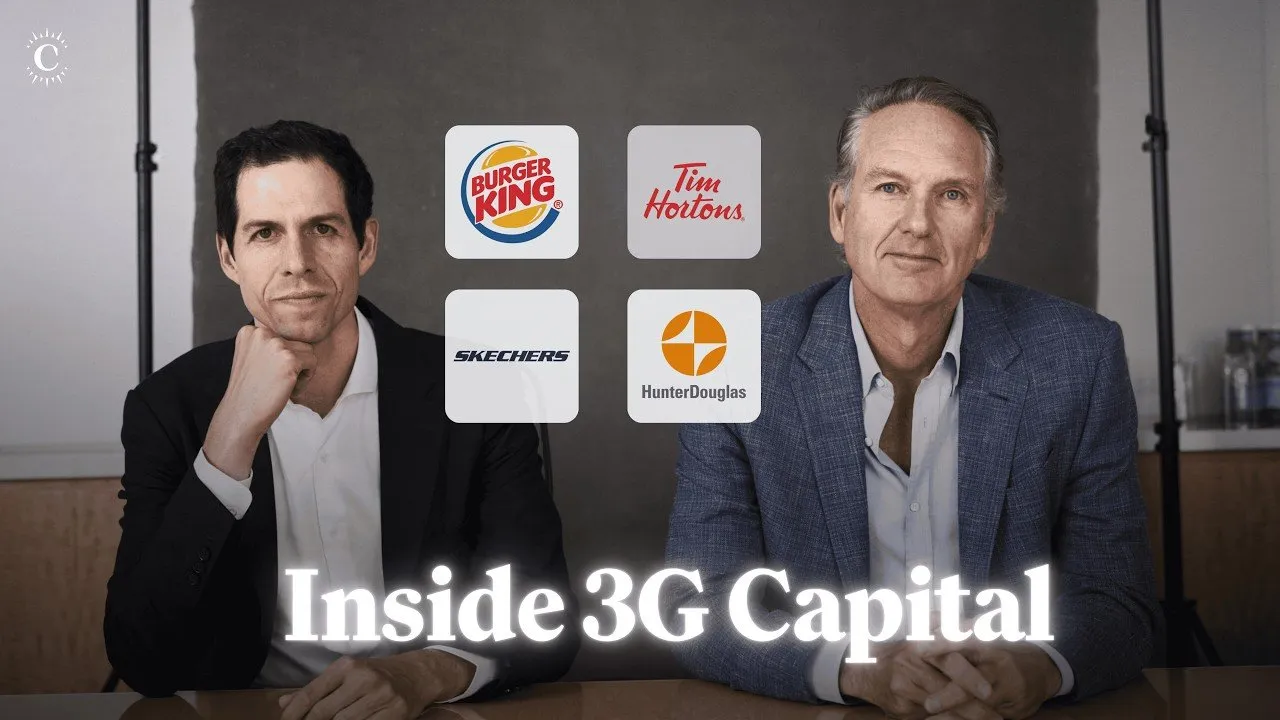
3G Capital stands as one of the most distinctive and widely discussed firms in the private equity landscape. Known for overseeing iconic consumer brands like Burger King, Tim Hortons, and Heinz, the firm operates on a philosophy that sharply contrasts with the diversification strategies typical of modern asset management. Instead of building a broad portfolio to hedge risk, 3G concentrates deeply, often raising capital for a single investment per fund.
In a rare and candid conversation, co-managing partners Alex Behring and Daniel Schwartz pulled back the curtain on the firm’s secretive operations. From their roots in Brazil to their operator-led takeovers of global giants, they detailed a strategy built on extreme focus, radical meritocracy, and an obsession with business durability. Their approach offers a masterclass in how aligning incentives with ownership can transform good companies into efficient, high-growth powerhouses.
Key Takeaways
- The "One Investment" Strategy: 3G raises funds specifically for single deals, driven by the belief that truly great businesses and exceptional CEOs are incredibly rare resources.
- Operators, Not Just Investors: The partners view themselves as operators first. They do not just allocate capital; they step in to manage the business, often placing their own partners in C-suite roles.
- Radical Meritocracy: The firm ignores tenure and age, frequently placing young talent in massive roles—such as appointing Daniel Schwartz as CEO of Burger King at age 32—provided they demonstrate ownership and results.
- Owning the Customer Relationship: A primary investment criterion is the ability to avoid disintermediation. They favor brands that sell directly to consumers over those vulnerable to private label disruption by retailers.
- Ownership as Culture: The famous "Zero-Based Budgeting" method is less about cost-cutting and more about instilling an ownership mindset where every manager treats company capital as their own.
The Philosophy of Extreme Concentration
Modern portfolio theory generally dictates that investors should diversify to mitigate risk. 3G Capital takes the opposite approach. Their model is predicated on the idea of raising capital with the specific intention of making just one investment per fund. This strategy originated from their Brazilian roots and the realization that the traditional private equity model often dilutes focus.
According to Behring and Schwartz, the logic is simple: there are only a handful of truly great businesses in the world, and even fewer actionable ones. By committing meaningful amounts of their own money alongside their partners—what they term "house capital"—they eliminate the pressure to deploy funds into subpar assets just to fill a portfolio.
We have this luxury of only having to find one great business at a time. If you're investing your own capital... you want to be really patient and wait until you find that great business.
This "all eggs in one basket" approach fundamentally alters the psychology of the firm. It necessitates a rigorous analysis of the downside. When the entire fund relies on a single asset, capital preservation becomes the primary filter. This discipline means 3G often passes on deals where the upside is attractive but the downside risk is murky. It forces a level of diligence that a diversified firm might not require.
Investment Criteria: Avoiding Disintermediation
Over the last two decades, 3G’s definition of a "great business" has evolved, particularly in response to technological disruption. While they historically favored simple, predictable industries, their modern thesis centers heavily on who owns the relationship with the end customer.
The Private Label Threat
The firm is wary of businesses that can be disintermediated by retailers. They cite the rise of private labels, such as Costco’s Kirkland Signature, as a massive disruptive force in the Consumer Packaged Goods (CPG) sector. If a retailer owns the customer relationship, they can easily swap a name-brand product for a house brand.
In contrast, 3G seeks businesses where the brand serves as the destination. If a customer wants a Whopper, they must go to Burger King. If they want Hunter Douglas blinds, they seek out a specific dealer. This direct connection creates a moat against the commoditization that plagues many legacy consumer goods companies.
Simplicity and Durability
The partners jokingly admit they are not suited for "high IQ" businesses or complex tech startups. They look for industries that have existed for decades and will likely exist for decades more—burgers, shoes, and window shades. This simplicity allows them to focus on execution rather than technological speculation.
We're just not well suited to manage businesses that require high IQ. We stick to good, relatively easy to understand, well-moated businesses.
The Operator-Investor Hybrid Model
What truly sets 3G apart is their operational involvement. Unlike private equity firms that monitor from the board level, 3G partners often step into the CEO or CFO roles of the companies they acquire. Alex Behring ran a major railroad in Latin America at age 30; Daniel Schwartz ran Burger King in his early 30s. This creates a seamless alignment between shareholders and management.
Centralize the "What," Decentralize the "How"
The 3G operating system relies on a specific leadership dynamic. The senior leadership and the board determine the "what"—the strategic goals, the financial targets, and the broad direction. However, the "how"—the execution—is decentralized. This autonomy allows talented operators close to the ground to solve problems creatively without being micromanaged, provided they hit their targets.
Misconceptions About Zero-Based Budgeting
3G is famously associated with Zero-Based Budgeting (ZBB), a method where every expense must be justified from scratch each period rather than basing budgets on the previous year's spend. While critics often view this purely as a ruthless cost-cutting mechanism, Schwartz argues it is actually a tool for transparency and culture building.
ZBB is designed to give managers visibility into where money is going and to encourage them to treat that money as if it were their own. It is about allocating resources to growth rather than waste. However, the partners admit that ZBB is not the primary driver of their returns; revenue growth and operational improvements play a far larger role in their success stories like Restaurant Brands International (RBI).
Radical Meritocracy and Talent Development
Perhaps the most controversial and effective aspect of the 3G model is its approach to talent. The firm operates on a pure meritocracy, disregarding age and tenure in favor of results and ambition. This often results in placing people in their late 20s or early 30s in executive roles that would typically be reserved for veterans with decades of experience.
Forged in Fire
The firm actively recruits young, hungry talent—often fresh from MBA programs or other firms—and tests them with immediate, high-stakes responsibility. This "sink or swim" environment is supported by mentorship from senior partners who have navigated similar paths. The logic is that a hungry, intelligent owner will outperform a tenured manager who lacks skin in the game.
We’re willing to give them shots way earlier than they get elsewhere. Both more responsibility and more economics.
This strategy was put to the test during the acquisition of Tim Hortons. At the time, negative press highlighted that Burger King was "run by children," casting doubt on whether such a young team could manage a Canadian institution. The team had to work tirelessly to prove that their youth was an asset—signaling energy and a long-term commitment—rather than a liability.
Case Studies in Execution
Burger King: Brand vs. Business
When 3G acquired Burger King in 2010, they identified a massive discrepancy: the brand was ubiquitous, but the business was struggling. They recognized that the "brand was bigger than the business." The acquisition thesis relied on fixing operational inefficiencies and, crucially, repairing relationships with franchisees. By shifting away from owning restaurants to a franchise-heavy model, they improved cash flow and aligned incentives, allowing the business to catch up to the power of the brand.
Skechers: A Growth Play
The recent investment in Skechers surprised many market observers. Unlike the turnaround story of Burger King, Skechers was already a high-performing, fast-growing company—the third-largest sneaker brand in the world. This deal highlights 3G’s flexibility; they are not strictly turnaround artists. They recognized a durable trend (the "casualization" of footwear) and a dominant market position, partnering with the founders to support continued double-digit growth rather than stripping costs.
Conclusion
3G Capital remains an anomaly in high finance. By refusing to diversify, treating investment capital as their own, and blurring the lines between investor and operator, they have built a track record that few can rival. While their methods—particularly their intensity on costs and youth-focused hiring—draw criticism, the results speak to the efficacy of true alignment.
Ultimately, the 3G model is a lesson in the power of ownership. Whether it is a CEO managing a railroad or a district manager running a burger chain, the firm believes that businesses thrive only when the people running them feel the weight and reward of ownership. As Behring and Schwartz look toward the future, their focus remains on finding those rare, durable businesses where they can plant deep roots and operate for the long haul.

)