Table of Contents
For over a decade, the financial technology sector has been obsessed with solving the small business lending puzzle. We entered this era with a bold promise: to provide universal access to capital through digital innovation. Yet, as we look back, the core challenges of business longevity and financial resilience remain stubborn. While technology has undeniably accelerated the speed of funding, it has also introduced new complexities regarding transparency, predatory lending, and the "expertise gap" facing entrepreneurs. Industry leaders are now shifting their focus toward a more holistic view of small business health, proving that true innovation in lending goes far beyond algorithms and artificial intelligence.
Key Takeaways
- The Shift from Access to Resilience: Industry experts are moving away from simple "growth capital" models, focusing instead on financial tools that help small businesses manage cash flow cycles and maintain operational longevity.
- Transparency and Information Asymmetry: A significant gap remains between the availability of capital and the owner's ability to understand the true cost of that capital, necessitating better financial education and data transparency.
- The Role of Vertical SaaS: Specialized software providers are gaining an edge by embedding lending products directly into the platforms businesses use daily, allowing for more nuanced, industry-specific underwriting.
- Human-AI Collaboration: While AI automates data cleaning and administrative toil, human intervention remains critical for evaluating edge cases, ensuring ethical decision-making, and providing strategic financial coaching.
The Evolution of the Lending Landscape
Ten years ago, the dream was simple: digitize the application process to ensure every small business could get funding within minutes. Today, while that goal is largely a technical reality, the broader outcomes are mixed. Many small businesses continue to fail within the five-to-ten-year mark, suggesting that capital alone isn't a panacea for operational struggles.
Addressing the Information Asymmetry
A primary concern among lenders today is the lack of clarity surrounding complex financial products like merchant cash advances. Entrepreneurs often focus on daily payment amounts rather than the effective Annual Percentage Rate (APR). Experts argue that innovation must now pivot toward leveling the playing field.
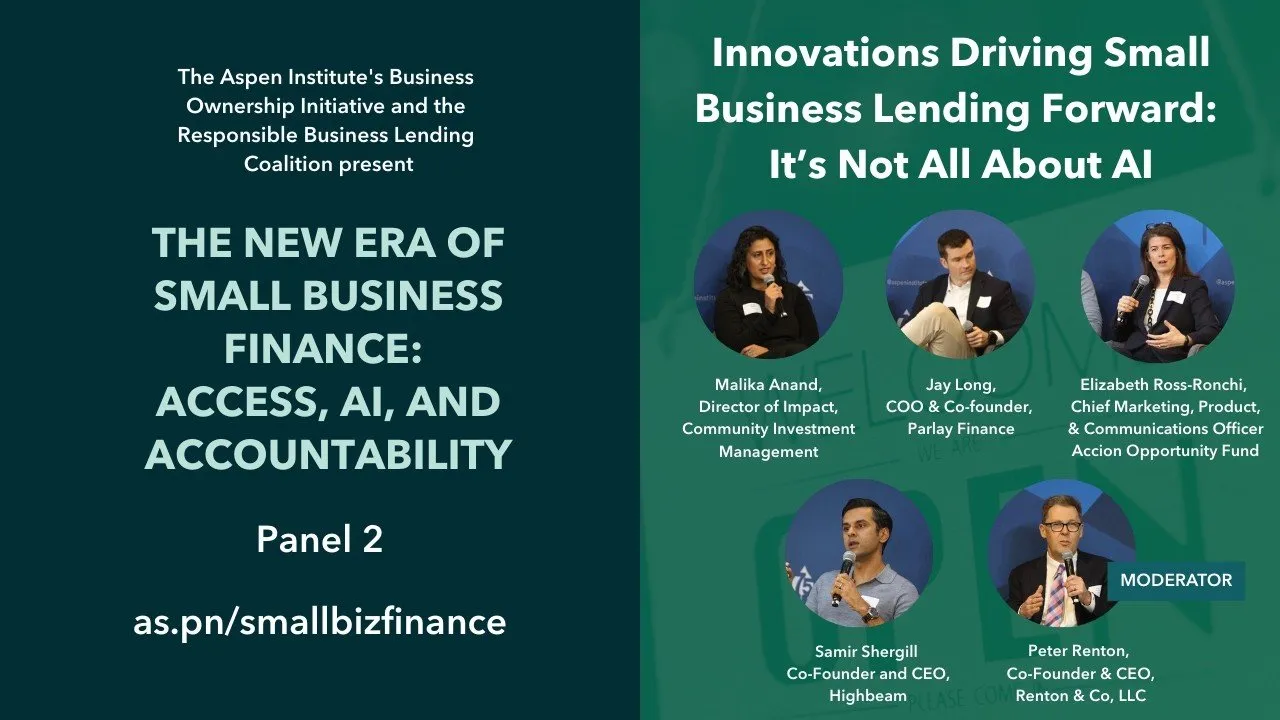
FinTech has not fundamentally transformed how small businesses make financial decisions. There is a still large expertise gap on what is the rate here? Is this a good product for you? Should you take this money? — Samir Shergill, Co-founder and CEO of High Beam
Integration of Lending and Learning
Leading organizations like the Accion Opportunity Fund are proving that capital should never be decoupled from education. By integrating technical assistance directly into the application process, lenders can turn a loan decline into a growth opportunity, providing tailored modules that help owners fix underlying cash flow issues before reapplying.
The Rise of Vertical Integration
Generalist banking models are facing pressure from vertical SaaS platforms—software companies that specialize in specific niches like restaurants (Toast) or consumer brands (Shopify). These platforms hold a distinct advantage: they understand the specific business drivers of their customers.
Predictive Power Through Data
By monitoring sector-specific metrics, such as return rates or first-order profitability, these providers can assess risk with much greater precision than a traditional bank relying solely on static, month-end accounting data. This trend challenges the "one-size-fits-all" approach to credit, forcing traditional institutions to either adapt their data sources or risk losing market share to specialized competitors.
Beyond the AI Hype: Practical Applications
While artificial intelligence is the current industry buzzword, experts are careful to distinguish between theoretical potential and actionable utility. The most significant improvements in lending today aren't necessarily coming from generative AI, but from machine learning models that excel at cleaning, categorizing, and interpreting unstructured data.
The "CFO in Your Pocket" Vision
The next frontier is the development of AI agents capable of acting as an outsourced CFO. These tools aim to assist small business owners with real-time treasury management and cash flow planning. By automating the "accounting loop," these systems help founders move from reactive crisis management to proactive strategic planning.
We’re seeing with AI is if you can remove the majority of the work that takes time that, in turn, builds in cost, you can suddenly expand reach effectively. — Jay Long, Co-founder and COO of Parlay
Navigating Ethics and Bias
As the industry adopts machine learning to streamline underwriting, the risk of automating historical bias is a top-of-mind concern. Governance is no longer an optional back-office function; it is a core component of the modern lending product strategy.
The Human-in-the-Loop Requirement
Responsible lenders are maintaining a strict boundary: AI may assist in the preliminary stages of data gathering and analysis, but significant underwriting decisions require human oversight. This hybrid approach ensures that "edge cases"—businesses that don't fit the standard data profile—receive fair consideration rather than an automated rejection.
The models are only as skilled as the questions you ask it. I think it's worth underscoring that making bad decisions faster or incurring unconscious bias... might incur risk. — Jay Long, Co-founder and COO of Parlay
Conclusion
The future of small business lending is moving away from the simplistic goal of speed and toward the more complex, sustainable goal of financial wellness. By combining the raw power of AI-driven data analysis with a commitment to transparency and human-centered financial coaching, the industry is finally beginning to move the needle on business longevity. The winners in this new landscape will be those who view themselves not just as lenders, but as partners in the long-term success of the entrepreneurs they serve.