
Table of Contents
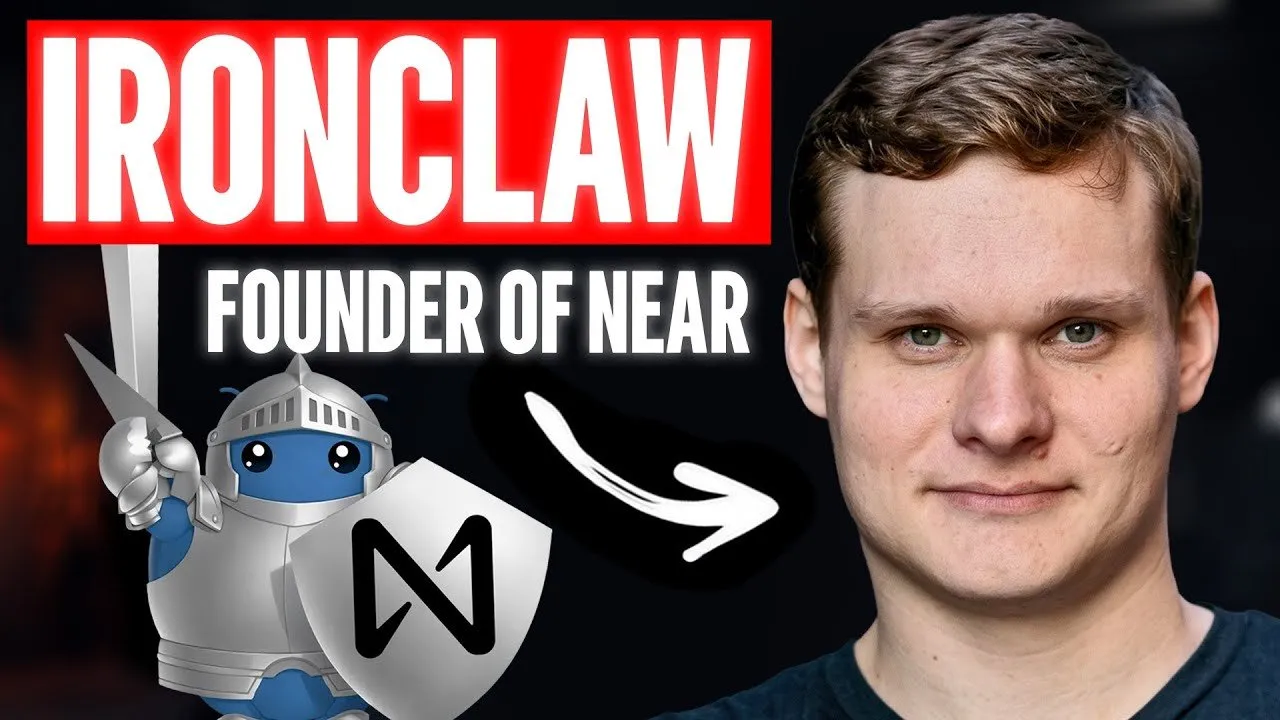
Artificial intelligence has shifted from a novelty to a daily necessity, yet many users find themselves in a state of frustration. Despite the immense potential of tools like OpenClaw or ChatGPT, they often feel clunky, insecure, and ultimately unhelpful as autonomous employees. Illia Polosukhin, co-founder of the NEAR Protocol and a co-author of the seminal Attention Is All You Need paper, believes the missing link between AI capability and genuine utility is a combination of user ownership and secure infrastructure.
Key Takeaways
- The Security Gap: Sending raw API keys and personal data to centralized AI providers creates massive vulnerabilities that current workflows fail to address.
- AI as an Operating System: We are transitioning to a future where AI acts as the primary interface for computing, requiring blockchain-based infrastructure for identity and trust.
- The Utility Bottleneck: Agents are currently limited by lack of context and trust; by isolating data in secure enclaves (like IronClaw), users can safely grant agents the permissions they need to be productive.
- Governance for Agents: Just as humans operate within legal frameworks, future autonomous agents will likely rely on blockchain-based governance to remain aligned with human values and goals.
Why AI Agents Feel Useless Today
The primary barrier preventing AI agents from functioning like high-level assistants is a fundamental lack of trust. Most users are hesitant to grant an agent full access to their Notion files, emails, or crypto wallets because these models are prone to "judgment lapses." If an agent makes a mistake, it can be catastrophic—deleting critical data or exposing private credentials.
Polosukhin argues that the current "playground" era of AI feels like giving a child the keys to a high-performance vehicle. The agents possess vast knowledge, but they lack the architectural guardrails necessary to operate safely in a real-world environment. Without these constraints, users are forced to manually oversee every task, which defeats the purpose of automation.
"It's actually insane that we're doing that. Somewhere in Anthropic and OpenAI logs, they have everybody's access keys, API keys, and bearer tokens to access your Gmails and your Notions." — Illia Polosukhin
The Case for Sovereign AI Infrastructure
To move beyond the "toy" phase, AI needs an operating system that prioritizes user sovereignty. Current centralized platforms allow companies to dictate system prompts and monitor user interactions, creating a potential for bias and mass surveillance. The solution, according to Polosukhin, lies in user-owned AI.
The Role of Confidential Computing
By leveraging confidential computing—specifically hardware-based Trusted Execution Environments (TEEs) and multi-party computation (MPC)—users can run AI inference without the model provider or hardware host ever seeing their private data. This creates a "shield" that ensures data remains private, even when the agent is performing complex, internet-connected tasks.
Blockchain as the Root of Trust
Blockchains provide the missing coordination layer for this new digital ecosystem. They offer a global registry for identity, a secure marketplace for hardware compute, and a mechanism for upgradability. Unlike centralized software updates controlled by a single corporation, blockchain-based governance allows for broader, more transparent agreement on system upgrades, effectively fixing the "root of trust" at the protocol level.
Shifting from Automation to Autonomy
As agents evolve, the relationship between human and machine will likely shift from simple, reactive automation to proactive, autonomous agency. This doesn't mean agents will act randomly, but rather that they will operate as "autonomous businesses" governed by defined missions and smart contracts.
Defining Routines and Success Criteria
The path to utility isn't about giving agents total freedom, but about creating structured routines. Instead of asking an agent to "be an assistant," users will define specific workflows—such as analyzing OKR bottlenecks or managing weekly research—governed by clear success criteria. When these tasks are easily verifiable, they can be scaled across a decentralized swarm of agents.
Market Economies for Organizations
Polosukhin suggests that organizations will eventually mirror market economies. When employees and agents can execute tasks 100x faster, the traditional hierarchy becomes a bottleneck. Companies will likely move toward a model where goals are posted, and agents (or contractors) compete to solve them, ensuring that the most capable and efficient processes receive the highest rewards.
Navigating the Future of AI Development
For those looking to build in this space, the value is shifting away from pure code and toward formulating the right questions. Because AI can now execute complex tasks, the competitive advantage belongs to those who understand how to define frameworks and verify outcomes.
The culture gap between the AI industry and the crypto ecosystem remains, fueled by skepticism on both sides. However, as the need for open-source, private, and sovereign AI systems grows, this divide is beginning to shrink. By prioritizing "social diplomacy"—bringing together researchers, investors, and builders—the industry can build a resilient infrastructure that empowers individuals rather than centralizing control.
The future of AI is not merely about more powerful models, but about more secure and accountable systems. By combining the raw intelligence of large language models with the trust-minimized, self-sovereign architecture of blockchain technology, we can finally unlock the true potential of AI agents, transforming them from unpredictable tools into reliable, high-level partners.




%20%7C%20NEAR%20Founder%20on%20IronClaw)