Table of Contents
Hyundai Motor Group has confirmed plans to commence mass production and sales of its specialized mobile platform, MOBED (Mobile Eccentric Droid), as early as the first quarter of this year. Speaking at CES, company executives outlined the strategic shift from conceptualization to commercial readiness, highlighting the platform’s potential to revolutionize last-mile delivery and mitigate labor shortages through advanced robotics.
Key Takeaways
- Commercial Launch: Hyundai prepares to sell the mass-production ready MOBED platform in Q1, following its initial concept unveil in 2022.
- Hybrid Engineering: The platform utilizes a "wheel-leg" mechanism to combine the stability of wheeled robots with the terrain adaptability of legged machines.
- Strategic Collaboration: Hyundai’s Robotics Lab continues to exchange technology with subsidiary Boston Dynamics while maintaining distinct development timelines.
- Sector Expansion: Executives hinted at potential collaborations with Samsung to integrate mobility with service applications, such as industrial cleaning, to address workforce deficits.
From Concept to Commercialization
Following its concept debut in 2022, the MOBED platform has moved rapidly toward market viability. The unique design addresses a fundamental engineering trade-off in robotics: the energy efficiency of wheeled movement versus the obstacle-clearing capability of legged locomotion. By utilizing an adjustable wheelbase and steering angles, the robot keeps its payload platform flat and stable, even when traversing uneven urban terrain.
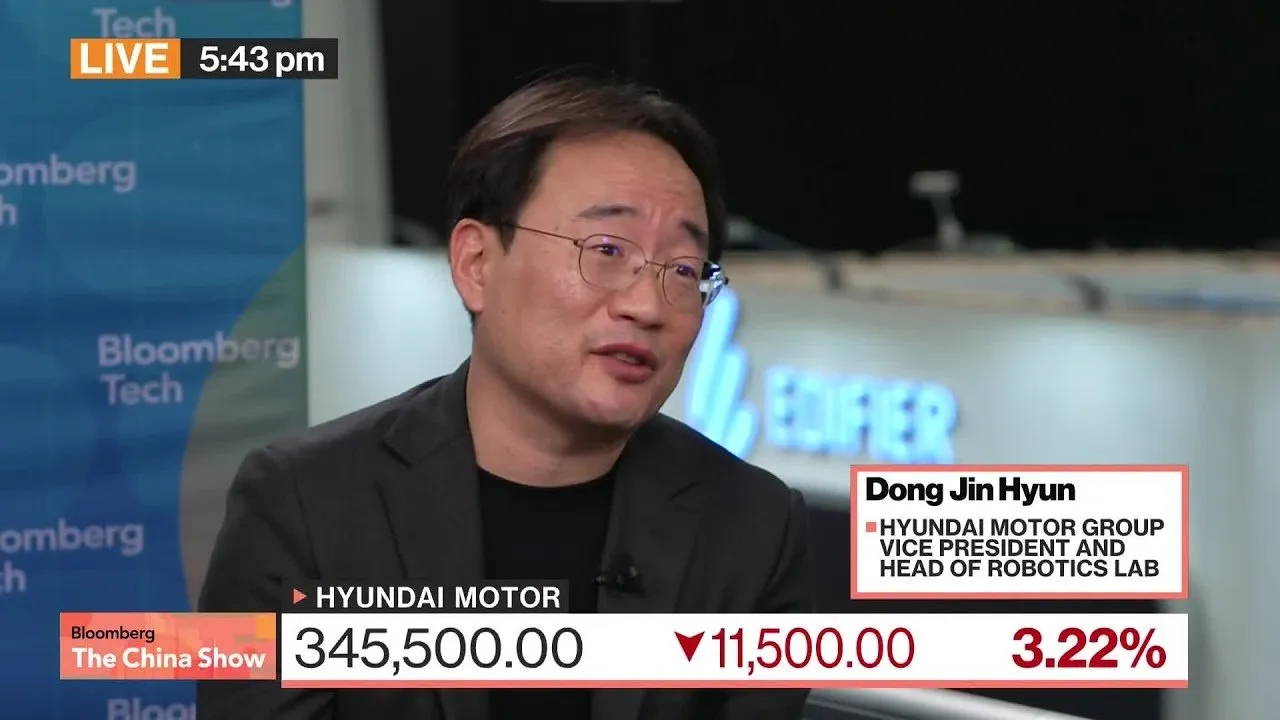
According to Hyundai’s Vice President of the Robotics Lab, the demand for a versatile, energy-efficient solution accelerated the timeline for mass production. Unlike traditional legged robots which consume significant power to maintain balance, MOBED prioritizes energy conservation while retaining the ability to navigate obstacles.
"In 2022, we unveiled the concept of MOBED. Right after that, a lot of people asked us to prepare for mass production. Right now, we have brought the mass-production ready product... and we have a plan to sell in the first quarter of this year."
The platform is designed as a "mounting label" system, meaning the core mobility unit can accept various upper-body payloads. This modularity allows third-party developers to adapt the robot for specific "door-to-door" delivery services, surveillance, or specialized equipment transport using autonomous navigation algorithms.
Navigating the Global Robotics Race
While Hyundai accelerates its hardware deployment, executives acknowledged the fierce competition posed by the Chinese market. The company notes that Chinese competitors benefit from a massive domestic market size and a rapid adoption rate of Artificial Intelligence (AI) tools, which elevates the "average level" of engineering output.
However, Hyundai differentiates its strategy by focusing on creating specific, successful use cases rather than just raw volume. The goal is to establish proven "success stories" in robotic applications that can be scaled globally.
Humanoids and Boston Dynamics
Regarding the broader trend toward humanoid robots, Hyundai maintains a synergistic relationship with Boston Dynamics, which it acquired in 2020. While the two entities share research data and technological breakthroughs, they operate on different development cycles. Hyundai views the humanoid form factor as the eventual convergence of two distinct technologies: mobility and manipulation.
"The first problem is mobility; the second problem is manipulation. Mobility plus manipulation can be a humanoid... As an engineer, that kind of thing will happen someday because a lot of engineers are trying their best. We just follow up [with the] state of the art right now."
Addressing Labor Shortages Through Automation
The strategic push into robotics is driven largely by demographic shifts, particularly in South Korea, where labor shortages are becoming acute. Executives discussed high-level interactions, including visits by Hyundai Motor Group Executive Chair Euisun Chung to Samsung, exploring how mobility platforms could merge with service appliances.
This potential collaboration could see Hyundai’s autonomous mobility technology combined with functional hardware, such as industrial cleaners. By automating repetitive tasks like continuous floor cleaning, the companies aim to alleviate workforce pressure in the service sector.
As the first quarter progresses, industry analysts will be watching the adoption rates of the MOBED platform to see if the hybrid wheel-leg design can successfully bridge the gap between experimental robotics and practical, revenue-generating commercial tools.