Table of Contents
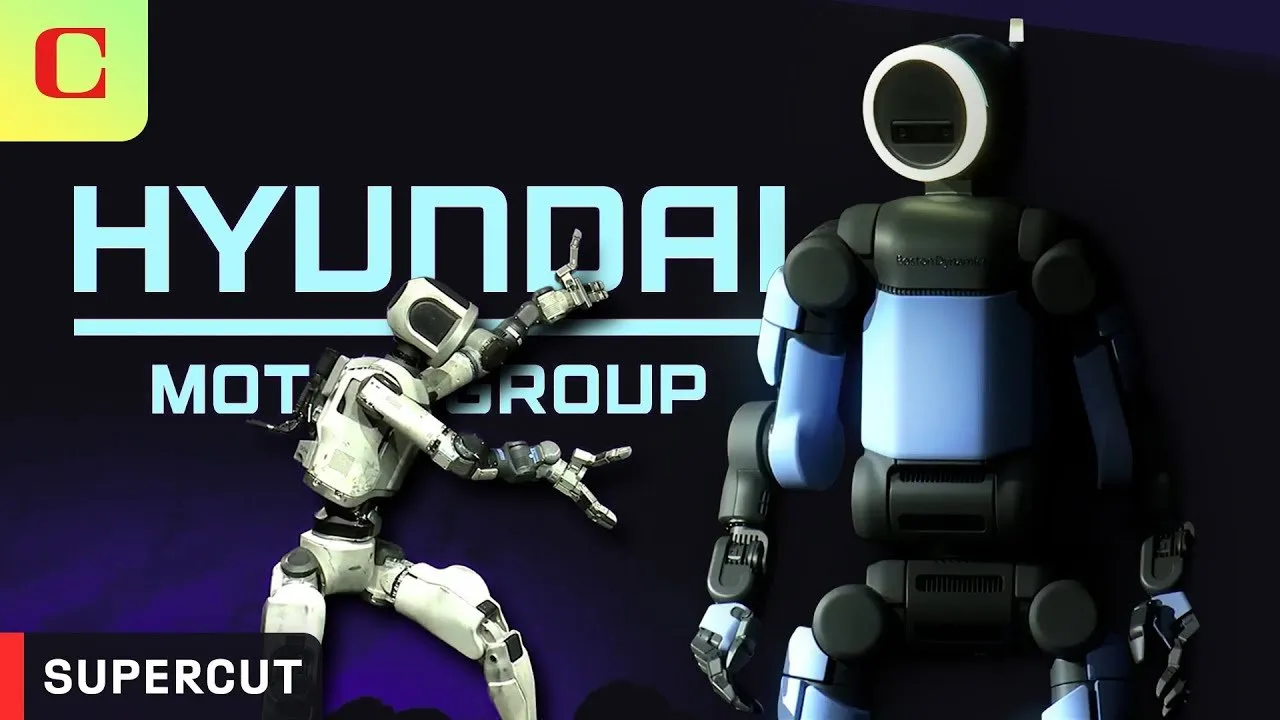
Boston Dynamics, in partnership with parent company Hyundai Motor Group, has officially unveiled the production-ready generation of its Atlas humanoid robot, marking a decisive shift from research and development to large-scale commercial deployment. The announcement included a comprehensive roadmap for industrial integration, featuring plans for a new manufacturing facility capable of producing 30,000 units annually and a confirmed supply allocation for Hyundai facilities through 2026.
Key Takeaways from the Unveiling
- Mass Production Goals: Hyundai Motor Group plans to construct a dedicated factory capable of manufacturing 30,000 Atlas robots per year.
- Commercial Specs: The new enterprise-grade Atlas features 56 degrees of freedom, a 110-pound lift capacity, and autonomous battery swapping for continuous operation.
- Deployment Timeline: The entire 2026 supply is allocated to Hyundai and strategic AI partners, with wider commercial availability opening in 2027.
- Data-Driven Training: A new "Data Factory" center opening this August will utilize Hyundai’s global manufacturing network to train robotic skills at scale.
Transitioning from R&D to Real-World Application
For over a decade, Boston Dynamics has been synonymous with viral videos of agile robots, but the commercial viability of humanoid systems has remained a challenging hurdle. According to company leadership, recent breakthroughs in artificial intelligence provided the "missing piece" required to move Atlas out of the lab and into active industrial environments.
The vision presented is a general-purpose humanoid designed to drop into existing facilities without requiring infrastructure changes. Unlike previous iterations that strictly mimicked human motion, the new commercial Atlas prioritizes efficiency. The robot utilizes 360-degree joints to perform movements impossible for humans, optimizing tasks in tight manufacturing spaces.
"Atlas doesn't have to move like a person does, and we're looking for the most stable, efficient way to get up... We can pick the best parts of what nature has to offer and do better in others."
While the robot demonstrated on stage was a research prototype used to validate systems, executives revealed that the finalized product version is currently in production at Boston Dynamics' headquarters. This generation is described as the "simplest" and most robust robot the company has ever built, designed specifically for the rigors of factory work.
Technical Specifications and Capabilities
The enterprise-grade Atlas offers significant upgrades over its predecessors, targeting durability and autonomy. The robot is fully electric, moving away from the hydraulics of earlier models, and features a water-resistant design capable of withstanding industrial washdowns and operating in temperatures ranging from -4°F to 104°F.
Key performance metrics include:
- Strength and Reach: Capable of lifting 110 pounds and reaching up to 7.5 feet.
- Dexterity: Human-scale hands equipped with tactile sensing in fingers and palms for precise manipulation.
- Autonomy: Equipped with 360-degree cameras for situational awareness and safety.
- Endurance: Dual swappable batteries provide approximately four hours of operation, with the robot capable of navigating to a station and swapping its own batteries autonomously.
The system is powered by the Orbit platform, a fleet management software that allows robots to share intelligence. Once a specific skill is learned by one unit, it is instantly propagated across the entire fleet.
The "Data Factory" and Manufacturing Strategy
The most significant revelation regarding the business strategy is the depth of integration with Hyundai Motor Group. The automotive giant is not merely a customer but a manufacturing partner. The companies are establishing the Hyundai Robotics Metal Plant Application Center, set to open this August. This facility will serve as a "cornerstone" for gathering real-world operational data to train humanoid skills.
"No company has more real world factory data than Hyundai Motor Group... This data creates better training, better training creates safer, smarter robots, and smarter robots create better factories for people."
This "Data Factory" approach aims to create a virtuous cycle where global manufacturing data refines the AI models, which in turn improves robot utility. Production capacity is being scaled aggressively, with a target of 30,000 units annually to serve industrial, commercial, and eventually home markets.
Global Rollout and Future Outlook
The roadmap for Atlas is structured and exclusive in its early stages. The entire production run for 2026 has already been claimed by Hyundai Motor Group and an unnamed new AI partner. External customers will gain access to the technology starting in 2027.
Looking further ahead, the companies outlined a phased deployment strategy. By 2028, a global rollout will commence within the Hyundai network, with Atlas performing high-precision sequencing tasks. By 2030, the robots are expected to handle complex assembly duties alongside human workers.
Boston Dynamics and Hyundai emphasized that this technology is designed to alleviate human workers from dangerous and repetitive labor rather than replace them entirely. As the pilot programs expand within Hyundai's "Metaplant" in America, the industry will be watching closely to see if the ambitious production targets and efficiency claims hold up under the demands of daily manufacturing operations.