Table of Contents
At this year’s Consumer Electronics Show (CES) in Las Vegas, the narrative surrounding robotics shifted significantly from futuristic novelties to practical, AI-driven home assistants. While manufacturers like LG, Zeroth, and Switchbot showcased humanoid prototypes designed to tackle complex household chores like laundry, the consensus among industry experts suggests that a fully autonomous, general-purpose robot remains a distant reality due to current mechanical and safety limitations.
Key Points
- Shift in Focus: Robotics companies are moving away from concept art toward functional humanoids capable of complex tasks, with "doing the laundry" serving as the primary benchmark.
- The AI Factor: New prototypes rely heavily on generative AI and "world models" to learn from observation and massive video datasets rather than pre-programmed maps.
- Form Factor Debate: The industry is split between full bipedal humanoids (like Zeroth’s Jupiter) and wheeled assistants (like LG’s AI agent and Switchbot’s S10) regarding safety and practicality.
- Immediate Future: Specialized, single-purpose robots and interoperable smart home ecosystems are likely to precede the arrival of a "do-it-all" humanoid butler.
The Push for the General-Purpose Humanoid
The overarching theme at CES was the integration of advanced artificial intelligence with improved actuators to create robots that can navigate the unstructured environment of a human home. Unlike factories, which offer standardized environments, homes present unique, chaotic variables that require robots to possess a "world model."
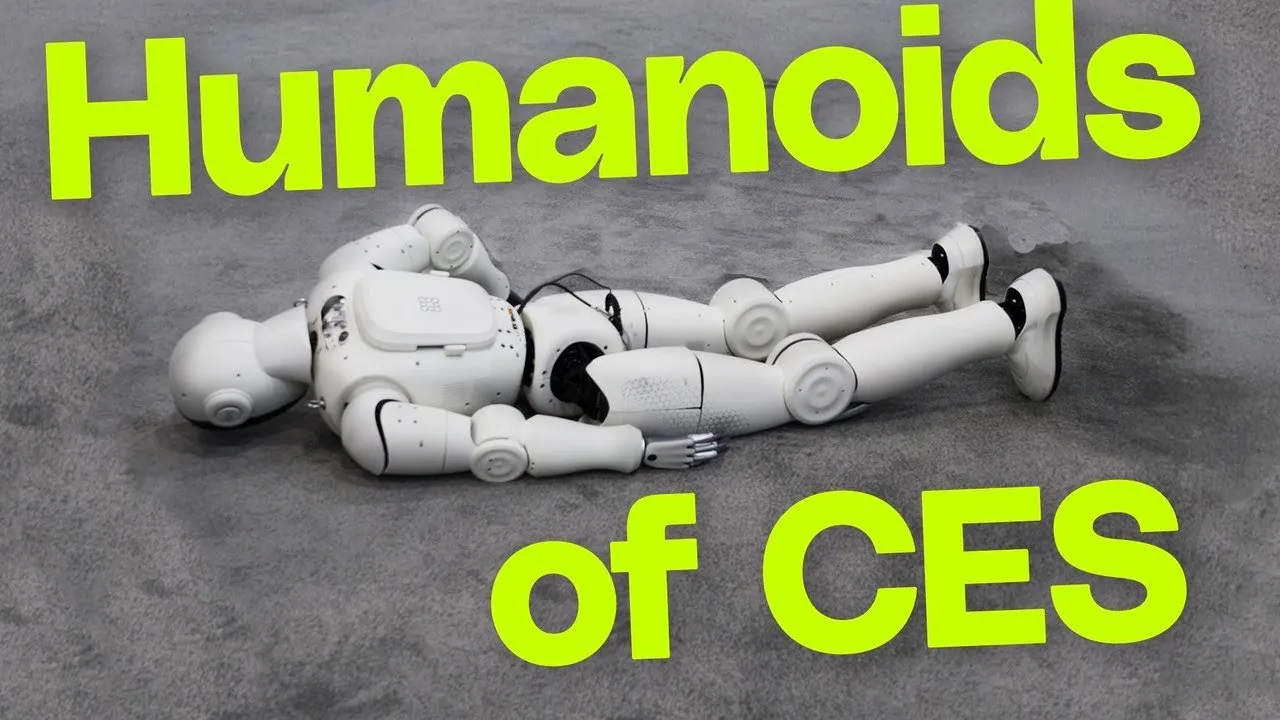
Leading this charge is Zeroth, a company that debuted its full humanoid robot, Jupiter. Weighing 170 pounds, Jupiter represents the ambitious end of the spectrum: a bipedal robot designed to mimic human movement to perform human tasks.
"Every home is different. It's not like a factory... actually, we need the world model that we cannot pre-train or we cannot give a third party maps to them. He can only sense the world and decide by themselves," said Renjay Guo, CEO of Zeroth.
To overcome the training deficit, Zeroth is employing unconventional learning methods. Jupiter is designed to learn by observing humans, using teleoperation via devices like the Apple Vision Pro, and ingesting vast amounts of video data from social media platforms like YouTube and TikTok to understand how physical tasks are performed.
Design Philosophies: Legs vs. Wheels
While Zeroth pursues a bi-pedal human likeness, established electronics giants are taking a more conservative, safety-focused approach. LG showcased its smart home AI agent (referred to in demonstrations as "Cloyd"), which utilizes a wheeled base rather than legs.
LG’s approach prioritizes the orchestration of the smart home ecosystem over brute-force physical labor. In demonstrations, the robot communicated directly with appliances—setting oven temperatures or deploying robot vacuums—acting as a conductor for the home rather than a manual laborer. While it demonstrated the ability to fold laundry, the process was notably slow, and the robot appeared more akin to a mobile appliance than a human substitute.
Similarly, Switchbot introduced the One Row H1 (S10), a sub-$10,000 "budget" humanoid on wheels. Hihou Lynn, Switchbot’s COO, revealed that the company is training thousands of units in simulated environments to handle basic tasks. However, live demonstrations highlighted significant limitations; while the robot could transport items to a washing machine, it lacked the discretion to distinguish between laundry and a child’s stuffed toy.
The Dexterity Barrier
The primary bottleneck preventing these robots from "graduating" from concept to consumer product is dexterity. Wi Robotics showcased Alex, an upper-body humanoid specifically engineered to solve the "hand problem." Despite focusing entirely on dexterity and safe interaction, current prototypes still struggle with nuanced tasks, such as opening a bottle of laundry detergent.
This limitation suggests that while the AI "brain" of these robots is advancing rapidly, the mechanical "body" still lacks the fine motor skills required for meaningful household utility.
Evolution Over Revolution
Given the safety concerns and technical hurdles of full humanoids—highlighted by Jupiter’s instability and heavy weight—some manufacturers are opting to evolve existing form factors rather than reinventing the wheel.
Roborock introduced the Saros Rover, a concept robot vacuum equipped with legs, allowing it to climb stairs and navigate obstacles that trap traditional vacuums. By adding mobility to a specific, proven device, Roborock aims to increase utility without the complexity of a general-purpose android.
"In the future, I would say less devices in your home... just a several and they can cover all of the household tasks," stated Tuan Gang, President of Roborock.
Dreame offered perhaps the most practical solution to the laundry dilemma with the Laundry Robot Z1. Resembling an oversized vacuum with a manipulator arm, it is a single-purpose bot designed exclusively to find, sort, wash, and dry clothes. This represents a shift toward "specialized intelligence" rather than general humanoid intelligence.
What’s Next for Smart Homes
Despite the excitement generated at CES, the consensus indicates that humanoid robots are not ready for immediate consumer adoption. The high cost, slow operation speeds, and safety risks pose significant barriers to entry.
The immediate future of home automation likely lies not in a single bipedal robot, but in a synchronized network of smarter, single-purpose machines. As appliances become more interoperable and capable of communicating with one another, the "smart home" itself will effectively become the robot, orchestrating chores quietly in the background without the need for a humanoid interface.