
Table of Contents
In the era of machine learning and rapid automation, a dangerous philosophy has taken root in Silicon Valley: techno-utopianism. This is the belief that if you simply feed enough data to an algorithm and give it an objective, it will inevitably do the right thing. However, algorithms often fail to understand long-term effects, human intent, or the nuance of how people respond to change. This disconnect highlights a critical responsibility for modern product managers: defining the boundary between what technology should solve and where human judgment is required.
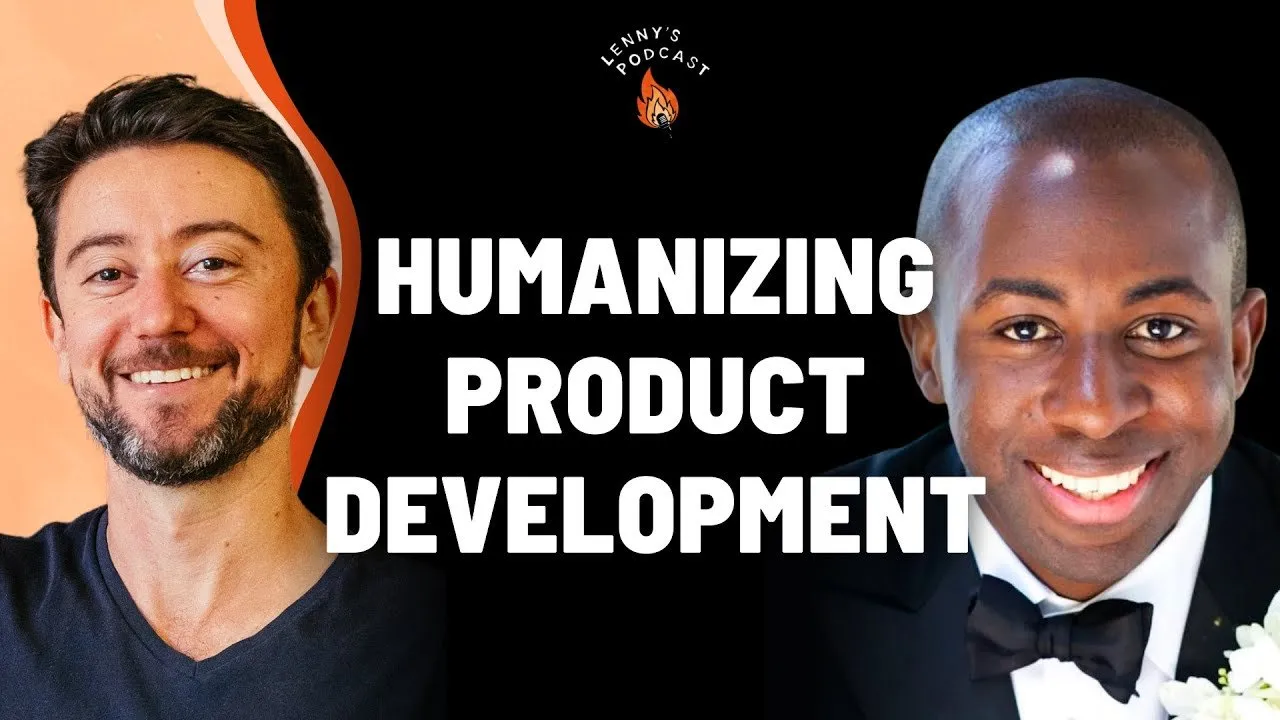
Adriel Frederick has spent his career navigating this exact intersection. As the VP of Product at Reddit, and formerly a leader at Lyft and Facebook (Meta), Frederick has built some of the world’s most ubiquitous products. His journey from Trinidad and Tobago to the heart of Silicon Valley offers a masterclass in human-centric product development, the mechanics of growth, and the importance of operational control in algorithmic systems.
Key Takeaways
- Algorithms need human guardrails: Machine learning excels at optimization but fails at strategy. Product managers must design "human-in-the-loop" systems to interpret intent and manage constraints.
- Diversity is an efficiency hack: Teams with heterogeneous backgrounds solve global problems faster because they can internalize user friction without needing extensive external research.
- Innovation teams face "organ rejection": To succeed, R&D units must be positioned as core to the company’s mission, ensuring their wins are viewed as collective success.
- Focus on the marginal user: Real growth comes from identifying the specific friction points stopping the "next most likely" user from converting, rather than relying on superficial hacks.
- The PM as a "damper": In high-controversy environments, a leader’s role is to buffer the team from external noise while validating legitimate criticism through direct user contact.
The Fallacy of Techno-Utopianism
There is a prevailing sentiment in tech that algorithms can replace operational decision-making. The reality, however, is that while algorithms are powerful tools for amplification, they lack the context necessary for strategic governance. Frederick argues that the primary job of a product manager working on algorithmic products is to determine exactly what the machine is responsible for versus what the human is responsible for.
Operational Control as a First-Order Requirement
When building complex marketplaces, such as Lyft’s ride-sharing network, the temptation is to let the pricing model run on autopilot. However, an algorithm instructed solely to "maximize market share" might logically drop prices to zero—achieving the objective while destroying the business. It requires a human to input constraints regarding profitability and strategic intent.
Frederick experienced this friction firsthand when a sophisticated pricing model proved difficult to adjust during real-world crises, such as snowstorms in Chicago. The lesson was clear: operational flexibility must be a core design requirement, not an afterthought.
"I think it's really important for product managers to play that role... figuring out what the algorithm should be responsible for, what people are responsible for, and the framework for making decisions."
Effective product design treats machine learning as a "power tool" rather than a replacement for the worker. The interface should provide humans with the information required to make judgment calls—such as responding to a competitor’s move or a weather event—while the algorithm amplifies that intent across millions of individual transactions.
Diversity as a Competitive Advantage
Diversity in tech is often discussed in terms of corporate social responsibility, but Frederick frames it as a massive efficiency advantage for building global products. Growing up in Trinidad and Tobago, a melting pot of ethnicities and religions, gave him a distinct perspective on technology usage that many Silicon Valley natives lacked.
Escaping the Monoculture
When Frederick joined Facebook as its first Black product manager, the company was focused on global expansion. His background allowed him to intuitively understand behaviors that baffled others. For instance, in the U.S., the assumption was "one person, one phone number, one device." In the Caribbean and many developing markets, people frequently swapped SIM cards, shared expensive devices among family members, or changed numbers to use prepaid plans.
A team composed entirely of people from similar backgrounds would need weeks of research panels to uncover these behaviors. A diverse team can identify these friction points in a 15-minute meeting.
"An argument that might take two weeks to resolve because you have to go recruit a panel of users... we kind of knock out in 15 minutes because we're just throwing it back and forth with each other."
When a team represents the demographic reality of the user base, empathy becomes intrinsic rather than academic. This allows for faster iteration and the avoidance of blind spots that can hinder international growth.
The Mechanics of Growth: Lead Bullets vs. Silver Bullets
Having led growth teams at Facebook and Lyft, Frederick debunks the myth of "growth hacking" as a series of clever tricks. While hacks can provide a temporary spike, sustainable growth is the result of grinding down friction on core actions. He subscribes to the philosophy of "lead bullets"—a volume of small, hard-won improvements—over the elusive "silver bullet."
Understanding the Marginal User
To diagnose product health, Frederick recommends analyzing the "marginal user"—the person who wants to use the product but is failing to convert. He suggests looking at the worst-case scenario: a user on a feature phone with a slow Edge connection in a rural area. This extreme use case exposes every flaw in the system, from language localization errors to latency issues.
Once the flaws are visible, the product team can prioritize. You may not be able to fix the user's slow internet connection, but you can fix the localization or the registration flow. Solving for the marginal user expands the total addressable market by lowering the barrier to entry.
The Portfolio Approach to Experimentation
In mature product organizations, experimentation often drifts toward "laziness," where teams run countless small tests to eke out 0.02% improvements because they are low-risk. Frederick advocates for a portfolio approach to product bets:
- Cannonballs (20% of effort): Massive, fundamental changes to the product that require significant investment. Early in a startup's life, this might be 100% of the work.
- Lead Bullets (80% of effort): Iterative refinements and friction reduction on core flows.
Without "cannonballs," a company risks optimizing a local maximum while missing larger structural opportunities.
Structuring Innovation and R&D Teams
At Reddit, Frederick leads "Reddit X," an internal R&D group focused on long-term bets. Integrating an innovation lab into a mature company often leads to "organ rejection," where the main organization views the new team with resentment or skepticism. Frederick outlines three pillars for successful internal innovation:
- Core Mission Alignment: The R&D team cannot be viewed as a "playground." Its work must be visibly critical to the company’s long-term survival.
- Shared Success: When the R&D team wins, the whole company must feel like they won. Incentives should be aligned so there is no "us vs. them" mentality.
- Democratized Innovation: It is dangerous to signal that "all innovation happens in the R&D team" while everyone else does "maintenance." The R&D team should simply be viewed as having the capacity for different timelines of innovation, not exclusive rights to it.
Leadership: Empathy and Crisis Management
Leading product at companies like Facebook, Lyft, and Reddit means operating under constant public scrutiny. Frederick views the role of a leader in these environments as a "damper"—a stabilizing force that prevents the team from getting too high on hype or too low on criticism.
Validating Criticism Through Direct Experience
It is easy to dismiss bad press as noise, but effective PMs must separate hyperbolic headlines from valid user pain. During his time at Lyft, when drivers were protesting pay structures, Frederick didn't just look at data; he drove the car.
During one shift, he drove 15 minutes to pick up a passenger named Rick, only to drive him on a two-minute trip. The fare did not cover the pickup time, yet the service was vital for Rick, an elderly man who feared breaking his hip walking. This experience validated the drivers' complaints about unpaid pickup time while highlighting the essential utility of the service. It proved that the pricing model needed to change to support both the driver's livelihood and the rider's accessibility.
Conclusion
The evolution from an individual contributor to a product executive requires a shift from technical competence to organizational design. It demands the empathy to "take off your own shoes" before trying to walk in someone else's. Whether it is humanizing an algorithm, structuring a diverse team, or navigating a PR crisis, the core of product management remains unchanged: it is not about the code, but about how the technology serves the people on the other side of the screen.
By rejecting techno-utopianism and embracing the messy reality of human behavior, product leaders can build systems that are not only efficient but resilient and genuinely useful.


)