Table of Contents
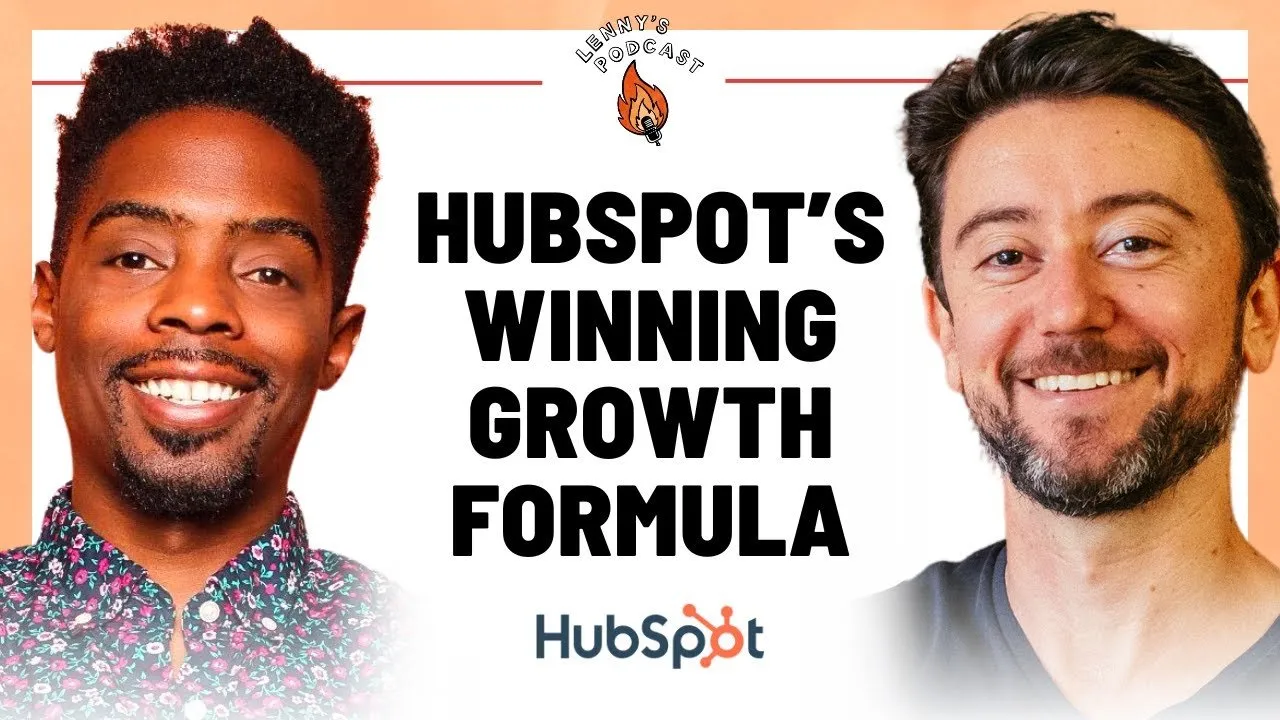
HubSpot is often cited as one of the most successful SaaS growth stories in history, currently valued at over $30 billion. While the company is famous for inventing "inbound marketing," its transition into a product-led growth (PLG) juggernaut was neither accidental nor immediate. It required a fundamental shift in how the organization viewed value creation, customer acquisition, and accountability.
Chris Miller, HubSpot’s VP of Product for Growth and AI, has been central to this evolution. Starting as an individual contributor and rising to lead both Growth and AI teams, Miller offers a unique perspective on how HubSpot operationalizes customer obsession. From the early days of "scraping knees" to building sophisticated growth loops, the company’s strategy relies on a mix of relentless curiosity and a willingness to solve problems that others overlook.
Key Takeaways
- PLG is not synonymous with self-service: True product-led growth uses the product to drive revenue while treating human sales intervention as a strategic backstop, not a crutch.
- Aggressive ownership drives innovation: HubSpot’s early growth team succeeded by taking radical accountability for orphaned parts of the user journey, such as the pricing page.
- Diversity of channels is survival: Relying on a single growth engine (like SEO) is dangerous; companies must constantly experiment with new channels, such as micro-apps and AI tools.
- Sponsorship outweighs mentorship: Career acceleration often comes from finding advocates willing to spend political capital on you, rather than just offering advice.
- Resilience is a core PM skill: In growth, failure is the default state. Success requires the resilience to weather 70-80% of experiments failing.
The Aggressive Origins of HubSpot’s Growth Team
HubSpot’s shift toward product-led growth began with a small, aggressive team willing to ask for forgiveness rather than permission. In the early stages, the vast majority of subscription revenue was sales-driven. The concept of "self-service" existed, but it wasn't a primary focus until the growth team identified a massive inefficiency: the pricing page.
At the time, the pricing page was effectively an orphaned asset. No engineering team was actively committing code to it. Miller and his team recognized that this neglect was a bottleneck. They approached the owners, took over the repository, and immediately redesigned the experience to focus on discoverability, desirability, and usability.
"That attitude of sort of saying that like every problem is our problem and like radical accountability and like ownership mentality helped us find opportunities that maybe the business wasn't explicitly asking us to solve."
This initiative created a step-function change in the business's funnel physics. It proved that customers were willing to transact without a heavy sales touch if the friction was removed. This "radical accountability" became a hallmark of HubSpot’s growth culture—identifying problems that fell between the cracks of traditional org charts and solving them to gain leverage for the entire business.
A Pragmatic Approach to Product-Led Growth
There is a common misconception that Product-Led Growth (PLG) means eliminating the sales team entirely. Miller argues for a more nuanced, hybrid approach. At HubSpot, PLG is defined by the product's role in the go-to-market strategy, not merely the absence of humans.
The Hybrid Model
In a mature PLG model, the product does the heavy lifting of attracting, engaging, and converting users. Humans serve as a "backstop" for complex cases—such as large-scale data migrations, security reviews, or customers transitioning from non-consumption (e.g., spreadsheets) who need guidance.
Attempting to force every customer into a touchless self-service funnel is often customer-hostile. If a buyer needs reassurance about an enterprise implementation, forcing them through a digital-only checkout is a friction point, not an optimization. The goal is to maximize efficiency while respecting the buyer's preferred purchasing motion.
Common PLG Mistakes
Transitioning to a product-led model is fraught with challenges. Companies often make the mistake of treating PLG as a quick fix rather than a long-term R&D investment. Common pitfalls include:
- Under-resourcing: Hiring a "Head of Growth" without providing engineering resources, design support, or data access.
- Impatience: expecting immediate liquidity from growth investments, whereas PLG acts more like planting seeds for durable, efficient expansion.
- Poor Data Hygiene: Attempting to run sophisticated experiments without a foundation of clean, accessible user data.
Operationalizing Customer Obsession
Many companies claim to be customer-obsessed, but few operationalize it when business metrics are on the line. HubSpot’s strategy involves "giving value before extracting value." This philosophy underpinned their original inbound marketing strategy (free content) and has seamlessly transitioned into their software strategy (free tools).
By offering robust free products—not just crippled trials—HubSpot builds trust. When users eventually hit the limits of the free tools, the upgrade path becomes a logical next step rather than a forced sales conversation. This approach creates a macro-loop: attract users with value, engage them with the product, and delight them enough to create advocates who bring in the next wave of users.
The Mid-Market Advantage
HubSpot’s commitment to the mid-market also protects its product integrity. In enterprise software, companies often fall into the trap of building bespoke features for a few high-paying clients, essentially holding the roadmap hostage.
"Playing in the mid-market I think affords us to be able to do that... there's no single customer who can hold us hostage."
By serving a massive volume of mid-sized customers, HubSpot’s revenue is distributed. This financial structure allows the product team to focus on improvements that benefit the largest number of users, rather than bending to the will of a single whale client.
The DNA of a Successful Product Leader
Transitioning from an individual contributor to a VP requires a specific set of character traits. For Miller, success in product management—specifically growth—comes down to three core attributes: relentless curiosity, resilience, and coachability.
Resilience in the Face of Failure
Growth is a game of volume and failure. If a team is running experiments correctly, 70% to 80% of them will fail to produce a significant win. A PM who cannot handle that level of negative reinforcement will struggle. Resilience prevents teams from "grasping for wins" by running small, insignificant tests just to put points on the board.
Sponsorship vs. Mentorship
While mentorship is valuable for learning the ropes, career acceleration requires sponsorship. A mentor gives advice; a sponsor puts their reputation on the line to advocate for you.
"When I think about true gasoline on the career fire, it's finding mentors but it's also finding sponsors and advocates."
Earning sponsorship often requires humility and the suppression of ego. It involves admitting when you don't know the answer, being open to harsh feedback, and focusing on making your manager or team successful. This behavior builds the trust required for a leader to expend political capital on your behalf.
Conclusion
HubSpot’s growth journey illustrates that success is rarely about finding a single "silver bullet." It is the result of layering multiple growth loops—from content to free tools to AI-driven micro-apps—while maintaining a fierce dedication to the customer experience. For product leaders, the lesson is clear: sweat the details, diversify your channels, and maintain the resilience to fail your way to the right solution.