Table of Contents
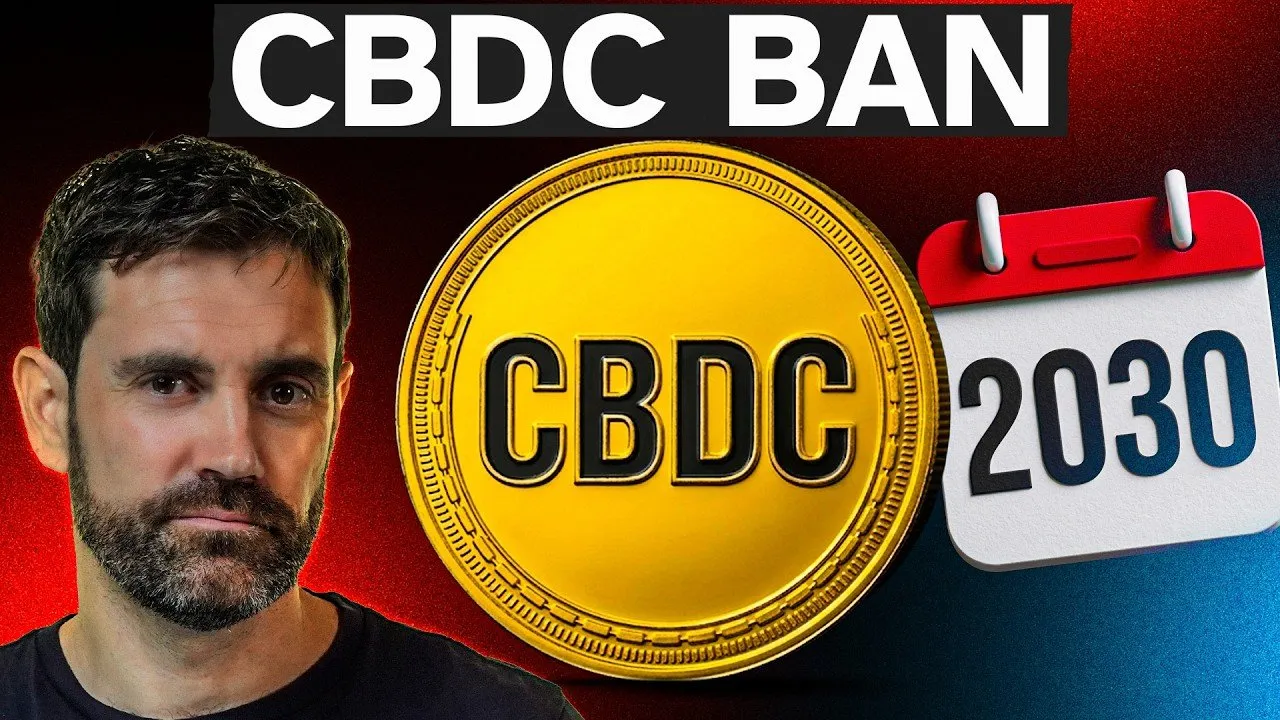
On March 12, 2026, the United States Senate passed HR644, the 21st Century Road to Housing Act, in a decisive 89-to-10 vote. While the legislation is being celebrated by privacy advocates and industry groups as a landmark victory against government-controlled digital currencies, the bill contains a critical, little-noticed provision: a sunset clause that effectively treats the ban as a temporary four-year moratorium rather than a permanent prohibition. By setting an expiration date of December 31, 2030, lawmakers have effectively created a legislative ticking time bomb that allows a future administration to authorize a Central Bank Digital Currency (CBDC) without the need for new congressional action.
Key Points
- HR644 includes a sunset clause in Title 10, Section 1001, which officially expires on December 31, 2030.
- The legislation bans a retail CBDC but leaves a significant loophole for wholesale CBDCs used by financial institutions.
- The 2025 Genius Act mandates that private stablecoin issuers implement "freeze, seize, or burn" capabilities, effectively embedding surveillance into private payment rails.
- Stablecoins currently process over $33 trillion in annual volume, creating a massive, government-regulated digital infrastructure that could eventually serve as the backbone for a state-controlled currency.
The Anatomy of the Legislative Trap
The prohibition against the Federal Reserve issuing a retail digital currency was a hard-fought compromise during the drafting of the housing bill. Senator Elizabeth Warren, acting as the ranking member of the Senate Banking Committee, reportedly refused to support a permanent ban, insisting on the 2030 expiration date as a condition for Democratic support. This maneuver effectively allows current lawmakers to signal opposition to a digital dollar while shifting the political burden of implementation to the next decade.
The prohibition on the Federal Reserve issuing a CBDC is not permanent. It explicitly expires on the 31st of December, 2030.
Attempts by lawmakers such as Senator Ted Cruz to strike the sunset clause via Amendment SA4318 failed, leading to a split in the opposition. High-profile skeptics of the surveillance state, including Senators Rand Paul, Mike Lee, and Ron Johnson, ultimately voted against the final bill, arguing that the legislation’s lack of permanence rendered the "ban" effectively toothless.
Outsourcing the Surveillance Infrastructure
While the focus remains on the Federal Reserve's retail capabilities, the government is simultaneously fostering a private-sector ecosystem that replicates many of the risks associated with a state-issued CBDC. Through the Genius Act signed in 2025, private stablecoin issuers—such as Circle and Tether—are now legally classified as financial institutions. These firms must comply with strict Know Your Customer (KYC) and Anti-Money Laundering (AML) standards and possess the technical infrastructure to execute government orders to freeze or seize assets.
The scale of this infrastructure is already staggering. With a combined market cap exceeding $262 billion, these stablecoins processed $33 trillion in transactions in 2025, rivaling the volume handled by traditional networks like Visa and SWIFT. Critics argue that by forcing private firms to bake "programmable" surveillance features into their code, the government is outsourcing the development of a CBDC-ready architecture.
Global Competition and Future Outlook
As domestic political infighting stalls broader market structure legislation, such as the Clarity Act, the United States faces increasing pressure from international developments. China’s digital yuan (e-CNY) has already processed billions of transactions and is being integrated into cross-border energy trades through the Enbridge project, bypassing traditional dollar-denominated systems. With over 134 countries currently exploring digital sovereign currencies, some observers worry that the U.S. is creating a self-inflicted vacuum in wholesale finance.
If the current regulatory framework remains in place, the path forward appears clear for the government. By the time the 2030 sunset clause hits, the infrastructure will be mature, the KYC protocols will be standardized, and the private sector will have perfected the "plumbing" of a digital dollar. In this scenario, a future government would not need to pass new legislation to launch a CBDC; they would simply need to allow the current ban to expire and co-opt the pre-existing, compliant infrastructure already integrated into the global financial system.