Table of Contents
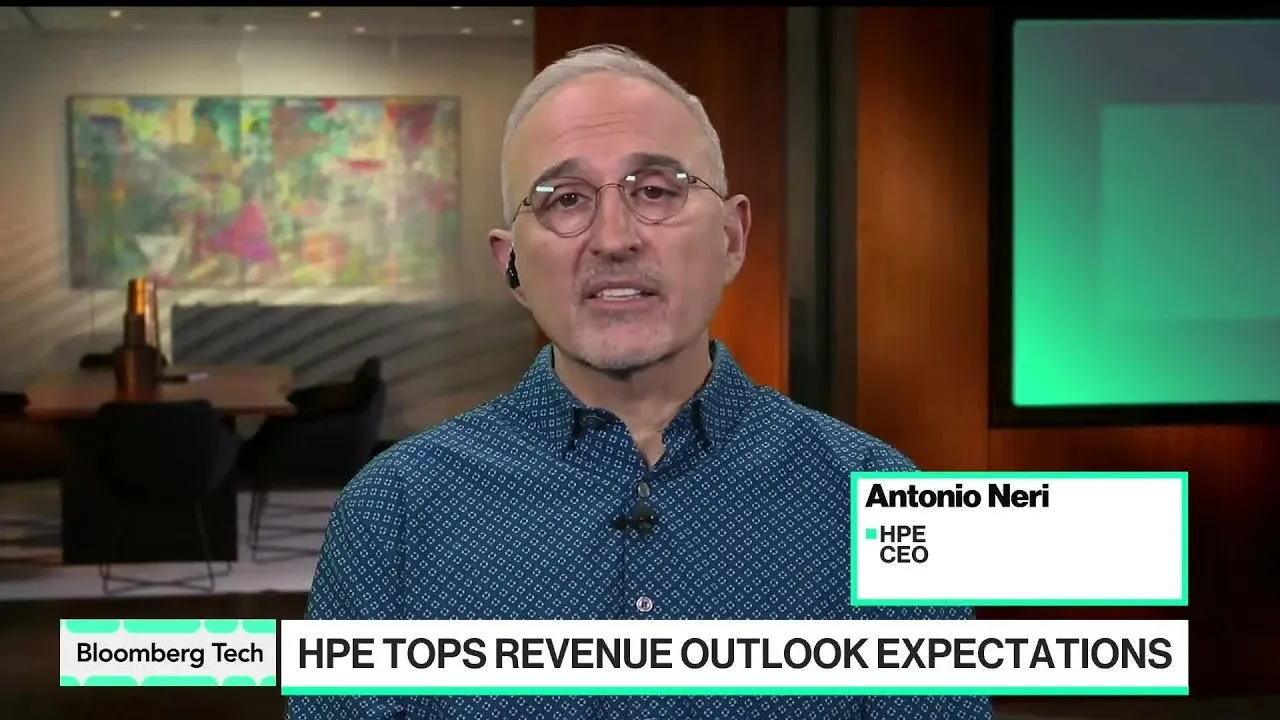
Hewlett Packard Enterprise (HPE) has raised its financial outlook for the remainder of the year, driven by surging demand for AI hardware and a strategic pivot toward high-margin networking solutions. CEO Antonio Neri confirmed that the company's backlog for AI systems now exceeds $5 billion, as enterprises increasingly integrate agentic AI and inferencing capabilities into their workflows.
Key Points
- AI Momentum: The majority of HPE's AI revenue in Q1 originated from the enterprise sector, signaling a shift toward inferencing and practical AI application beyond initial model training.
- Networking Success: The acquisition of Juniper Networks has become a primary growth engine, with order intake for data center switching rising mid-40% year-over-year.
- Supply Constraints: Despite record demand, HPE faces significant constraints in DDR5 memory and NAND flash/SSD supply, limiting the company's ability to fully clear its backlog.
- Pricing Strategy: HPE has implemented agile pricing adjustments to navigate cost pressures and expects this pricing cycle to persist well into 2027.
The Strategic Shift to Networking
While AI hardware serves as the immediate catalyst for revenue, HPE is placing a significant long-term bet on the networking connectivity layer. According to Neri, the core thesis behind the Juniper acquisition was to control the infrastructure that links AI-enabled data centers. By integrating robust routing and switching portfolios, HPE has successfully captured more of the data center budget beyond standard compute hardware.
The next inflection point in terms of disruption will come from the networking connectivity layer. Think about when you build a data center; you have to connect this data center to other data centers through the internet, and that’s what we call data center interconnect.
The networking segment now represents nearly 30% of the company’s total revenue and contributes more than half of its profit. The structural margins of this business, combined with superior working capital efficiency, have allowed the company to raise its free cash flow outlook by approximately $200 million at the midpoint.
Navigating Supply Chain Bottlenecks
Despite strong order intake, HPE continues to struggle with a mismatch between supply and demand, a trend Neri attributes to the ongoing "hypercycle" in AI investment. The company is currently prioritizing transparency with its partners to manage expectations while actively competing for limited components.
When asked to identify the most significant bottlenecks, Neri pointed toward memory technologies rather than high-bandwidth memory (HBM), which has seen substantial capacity allocation to GPU producers. "It’s really the DDR5 and the NAND part, which is SSD, that is most constrained," Neri stated. To mitigate these shortages, HPE is working closely with a core group of suppliers, often swapping components or adjusting system configurations to keep production lines moving.
Future Outlook and Geopolitical Context
Regarding global operations, Neri noted that while the conflict in the Middle East has not directly impacted the company's hardware supply chain, it remains a point of logistical monitoring. HPE continues to prioritize the safety of its approximately 1,000 employees in the region while maintaining operations.
Looking ahead, HPE intends to maintain its disciplined pricing posture. The company views its current financial guidance as "prudent," acknowledging that if supply chain pressures ease, the potential for revenue expansion remains significant. As the company continues to fulfill its $5 billion AI backlog, the focus for the remainder of the fiscal year will center on balancing aggressive demand with the reality of constrained component availability.