Table of Contents
We use zippers dozens of times a day, yet we rarely give them a second thought—until one decides to fail. From the fly of your jeans to the seal of a survival suit in the deep ocean, the zipper is a masterpiece of mechanical engineering. Despite being over a century old, its core design has remained remarkably consistent, outlasting countless other "modern" inventions. To understand why this simple mechanism became the world's most ubiquitous fastener, we have to look back at the persistence and genius that turned a failing concept into a global standard.
Key Takeaways
- The Origins of Failure: Early fastening devices, such as those by Whitcomb Judson, were cumbersome, prone to jamming, and required constant maintenance.
- The Breakthrough: Gideon Sundback transformed the industry in 1914 by designing the interlocking tooth system that defines the modern zipper.
- Industrial Mastery: The shift from the original hook-and-eye design to precise manufacturing allowed for mass production and durability.
- Market Dominance: YKK secured its position as the world leader by vertically integrating every step of production, ensuring unparalleled quality control.
- Practical Maintenance: Most common zipper failures, such as splitting or jamming, can be resolved at home with simple techniques like lubrication or light pressure adjustments.
From Failed Inventions to Modern Precision
Before the zipper, clothing relied on a tedious array of buttons, laces, and hooks. While functional, these methods were inefficient. Whitcomb Judson, an American inventor, recognized this and attempted to create an "automatic" fastener. His design, showcased at the 1893 Chicago World’s Fair, was a commercial flop. The device was fragile, prone to rust, and so unreliable that it often unfastened if the wearer simply bent over. It was a product that promised convenience but delivered only frustration.
The turning point arrived with Gideon Sundback, a Swedish electrical engineer who joined the struggling company. Following personal tragedy, Sundback threw himself into his work, eventually developing the 1914 patent that serves as the blueprint for nearly every zipper we use today. He realized that for a fastener to be reliable, it needed a specific geometry. He engineered a Y-shaped slider that tilted each tooth at the precise angle required to slot into its groove smoothly.
The idea was just to take a bunch of hooks and eyes and try to put them together in some fashion to make them quote, "automatic," unquote.
The Engineering Secret: How It Actually Works
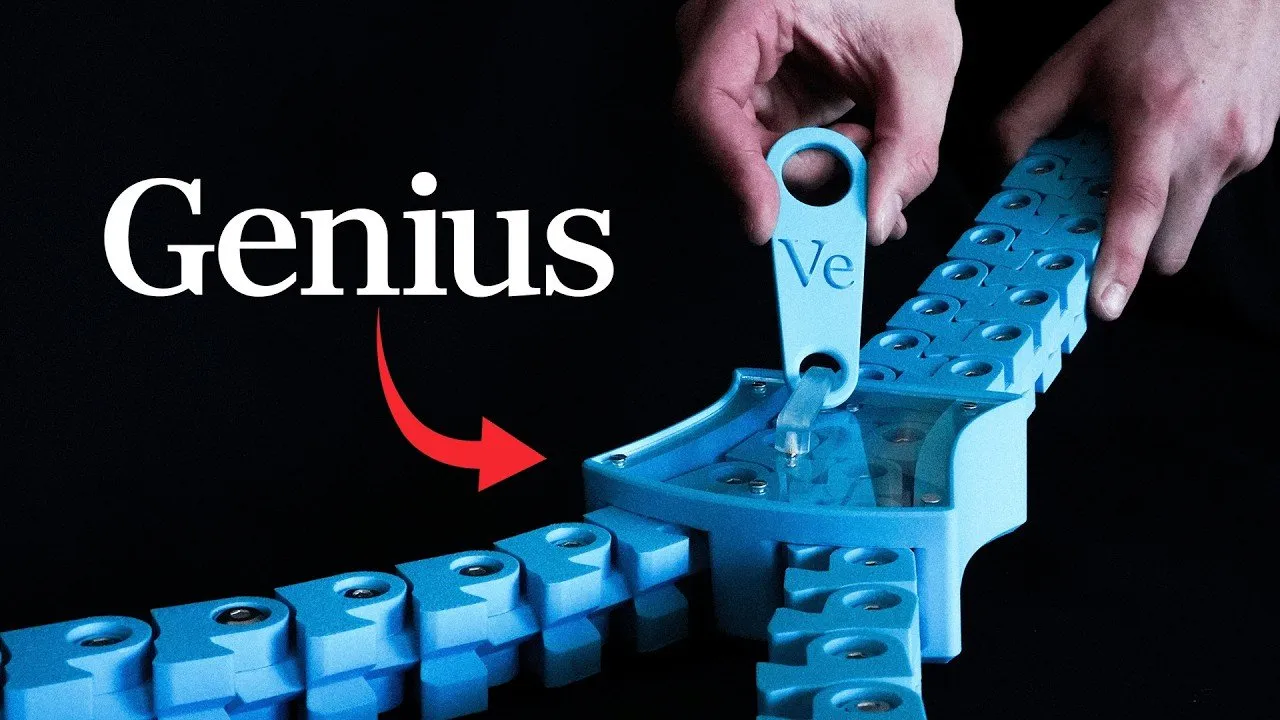
At its heart, a zipper is a masterclass in geometry. The slider is essentially a Y-shaped cavity. As you move the slider up, it tilts the teeth toward each other, forcing the "nib" of one tooth into the "scoop" of the next. When you pull the slider down, the wedge-shaped interior of the device acts as a separator, unlocking the teeth in a continuous motion.
The Rise of the Coil Zipper
While metal teeth defined the early era of zippers, the 1940s introduced the coil zipper. Instead of individual metal teeth, this design uses a single, continuous piece of plastic shaped into a coil. Because these teeth are interconnected, they offer superior flexibility for luggage and backpacks, and they are immune to the "cascading failure" that occurs when a single metal tooth breaks off.
The Battle for Market Dominance: Talon vs. YKK
For decades, the Talon company held the crown, riding the popularity of the "zipper" name—a term coined by B.F. Goodrich for their rubber boots. However, when the original patents expired in 1934, the market opened to new players. Enter Tadao Yoshida and the Yoshida Manufacturing Corporation (YKK). Following the destruction of his factory during WWII, Yoshida rebuilt with a focus on absolute quality control.
YKK’s strategy was unconventional: they decided to manufacture everything in-house, from the zippers and the machines that make them to the very boxes they are shipped in. By 1980, YKK had surpassed Talon, and today, they produce over 10 billion zippers annually. Their success is a testament to the idea that in a world of commodified goods, a commitment to reliability is the ultimate competitive advantage.
YKK emphasizes quality above everything else. So they make a real point of saying that if you have a YKK zipper, you can depend on it utterly.
How to Fix Common Zipper Problems
If you encounter a jammed or splitting zipper, do not reach for the pliers immediately. Most jams occur because fabric or debris has entered the slider. Always move the slider gently; forcing it will only damage the teeth further. If the zipper is simply stiff, rubbing a pencil against the teeth provides graphite, an excellent dry lubricant that can get things moving again.
For zippers that split behind the slider, the issue is often a slider that has widened over time. A common DIY fix involves using pliers to carefully crimp the slider tighter, restoring the necessary pressure to interlock the teeth. Caution is advised: applying too much pressure can crack the metal, rendering the zipper useless. Often, the genius of the zipper lies in its simplicity, meaning the solutions to its problems are equally straightforward.
Conclusion
It is rare for an invention to reach such a state of perfection that it remains virtually unchanged for over a century. Yet, Gideon Sundback’s 1914 design remains the gold standard of fastening technology. From the humble tobacco pouch of the 1910s to the airtight seals on high-stakes space suits, the zipper remains a testament to the power of thoughtful engineering. We may not notice them until they fail, but the quiet, reliable function of the zipper is truly one of the hidden triumphs of the modern world.