Table of Contents
The journey to self-love is often portrayed as a linear path, yet for many, it's a complex dance between deeply ingrained patterns and the yearning for inner peace. A recent coaching session, widely acclaimed on YouTube, offers a profound look into this process, revealing universal patterns and powerful techniques for cultivating genuine self-acceptance. This breakdown delves into the nuances of a young man's struggle with overwhelming emotions and the coach's insightful guidance, illuminating how self-reliance, a fast-moving mind, and the quest for perfection can ironically block the very love we seek.
Key Takeaways
- Self-Reliance Can Mask Deep Care: A strong drive to "get it right" often stems from a history of needing to be self-sufficient, yet it inherently shows immense conscientiousness and devotion.
- The Mind-Body Disconnect: A rapid-fire mind, often a sign of intelligence, can create narratives that bypass genuine emotional and bodily sensations, tricking individuals into believing they aren't truly feeling.
- Worry as a Form of Devotion: Anxiety, though uncomfortable, can be reframed as a deep devotion to something important, shifting perception and offering relief.
- Unconditional Self-Love is Not a Task: Learning to "love" uncomfortable feelings involves sitting with them patiently, without needing them to change, mirroring the care desired from primary caregivers.
- Change is a Pendulating Process: Breakthroughs are not always instant or permanent; self-love is a gradual unfolding, often involving oscillating between awareness and old patterns, but each experience serves as a "north star" for long-term growth.
The Paradox of Self-Reliance
From the outset of the session, the client, a young man who hadn't "felt good in years," presented a vivid example of deep self-reliance. He began by reading a prepared statement, a clear indicator, according to the coach, that his mind was heavily engaged, seeking to articulate his distress "correctly." This immediate observation revealed a critical pattern.
The Quest for Perfection
The client's meticulous preparation and earnest desire to articulate his feelings perfectly underscored a pervasive self-reliance pattern. This often develops when individuals don't receive the consistent care and attunement they need during formative years, leading them to believe they must constantly prove themselves or "get it right" to earn love and approval.
The coach noted, "When you're in a self-reliance pattern, it's very hard to see that when people are enamored by you. Like 'cuz you think you have to keep on proving yourself because you had to as a kid." This dynamic means that even when others appreciate them, individuals in this pattern struggle to internalize it, feeling a continuous pressure to perform.
Worry as a Sign of Devotion
Beneath the client's anxiety and quest for perfection lay a profound sense of care and devotion. His worry about not feeling his emotions correctly, and his diligent preparation, were powerful expressions of his commitment to his own well-being.
Worry is a sign of devotion.
This reframe is transformative: rather than viewing worry as a negative state, recognizing it as a manifestation of deep care for something important can bring immediate relief and a different relationship to the emotion. It suggests that if you worry about something, you are, in essence, devoted to it.
Bridging the Mind-Body Gap
Despite articulating his distress, the client struggled to connect with the raw, visceral experience of his emotions. He reported shaking and tears but quickly moved into narratives about trying to "feel everything" through mindfulness, rather than simply allowing the sensations to be.
The Narrative Trap
The client's rapid thought processes, indicative of high intelligence and potential ADHD traits, caused his mind to jump to stories and explanations before he could fully register the physical sensations of his emotions. He was experiencing real physical discomfort and sadness, yet his mind's swift narrative would trick him into believing he wasn't feeling.
His mind is coming in with narrative so quickly, so hard that it bypasses like it it tricks him into thinking that he's not feeling.
This mental bypassing is a protective mechanism, particularly for those in self-reliance patterns. Feeling the raw emotional pain of unmet needs (e.g., "nobody's there for me") can be so overwhelming that the mind quickly intervenes with stories to create a sense of control or distance.
Slowing Down to Feel
A crucial intervention involved removing external distractions (like the Notion document he was reading from) and guiding him to slow down. The aim was to help him distinguish between intellectual understanding and felt experience. When asked to identify the "worst part" of his body, he struggled, trying to intellectualize the process, despite clearly feeling his body's responses.
The work centered on bypassing the mind's incessant need to narrate and "figure it out," and instead, gently directing awareness to the pure sensation. This is often the most challenging aspect for self-reliant individuals, whose primary coping mechanism has been mental agility and problem-solving.
The Practice of Unconditional Self-Love
The turning point in the session came when the coach asked the client to identify where he felt the pain most acutely in his body. Once located, the instruction was simple yet profound: "I want you to love that thing."
Connecting with Core Pain
The client initially expressed confusion, stating, "I don't know how to do that. I've been listening to all your podcasts and I can't find out how to do that." This highlights a common misconception: that love is a specific action or technique one can learn, rather than a state of being or an act of open attention. The coach gently pushed back, reminding him that he had already demonstrated the ability to feel, and thus to be present with sensation.
The instruction was not just to "feel" but to "love it exactly the way that you want love from your mom and dad. All the patience. Not needing it to change." This immediately brought forth a deeper engagement. The client's natural tendency to bypass or seek an answer was momentarily suspended, revealing his energetic sensitivity and capacity for connection.
The Breakthrough and its Implications
When asked whether he wanted to "feel good" or "love himself," the client honestly chose "feel good," sparking a smile. This authentic response, free from the desire to please the coach, marked a shift. The coach helped him realize that his perceived "nothing to lose" attitude (due to depression) was actually a source of profound freedom.
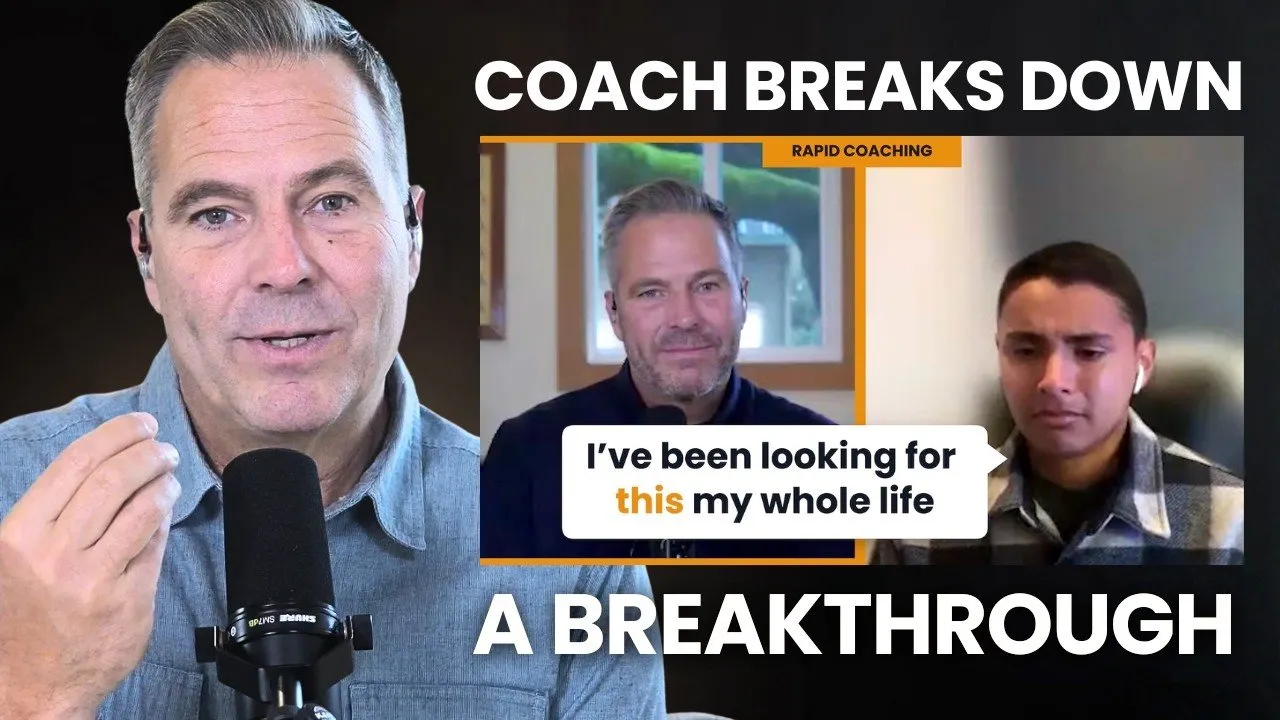
As the client sat with the sensation and offered it love and patience, his demeanor changed dramatically. He exclaimed, "This feels so good! This feels like what I've been looking for my whole life." The shift was undeniable, demonstrating the immediate impact of unconditional self-attention.
Embracing the Journey: No Rush, No Perfection
Recognizing the client's self-reliant pattern, the coach immediately addressed potential pitfalls that could undermine this breakthrough. The client's tendency to turn self-love into another task, another thing to "get right," was preemptively challenged.
The Unloved Parts Emerge
The first concept shared was that "when you start to love yourself, all the unloved parts come up to be loved." This counterintuitive truth explains why initial feelings of relief might be followed by new waves of discomfort. These aren't setbacks, but rather opportunities for deeper healing, as previously suppressed emotions surface, ready for acceptance.
The Power of Pendulation and the North Star
The second concept emphasized: "There's no rush. You'll be there to be loved for a long long time." This statement provided immense relief, directly countering the self-reliant drive for immediate perfection and performance. The client's visible relief indicated a deep-seated pressure to "do it right" and quickly.
The coach acknowledged that the client would likely "pendulate," meaning he would oscillate between moments of self-love and reverting to old patterns of doubt and self-criticism. However, each breakthrough acts as a "north star," providing an undeniable reference point for future orientation. Even if the mind tries to convince him he "didn't feel it," the experience irrevocably alters his trajectory.
Self-love and personal growth are not abrupt transformations but a gradual blossoming, nurtured by enjoyment rather than forced effort. The advice was simple: "If it becomes unenjoyable, take a break." This reorients the process from a burdensome task to an enjoyable unfolding.
Conclusion
This powerful coaching session offers a profound blueprint for understanding and navigating the complexities of self-love, particularly for those shaped by self-reliance. It highlights that true transformation isn't about eradicating difficult feelings, but about approaching them with patience, presence, and unconditional love – the very things we often yearned for but didn't consistently receive.
For parents observing these dynamics in their children, or recognizing past patterns in themselves, it's crucial to remember that this exploration isn't about blame. It's about understanding universal human experiences. Recognizing these patterns offers an incredible opportunity for healing. If you are a parent and resonate with these insights, consider offering an Upright Apology to your children. Acknowledging past imperfections, without shame, can be an incredibly healing and liberating act, not just for them, but for you as well.
Ultimately, the journey to self-love is an ongoing conversation with oneself, supported by moments of breakthrough that act as guiding lights. It's a continuous process of returning to the self with kindness, understanding that even the deepest, most entrenched patterns can yield to the power of unconditional acceptance.