
Table of Contents
In the world of business, "storytelling" has become a pervasive buzzword. Executives love the title of "storyteller," yet few are willing to do what is actually required to earn it. Real storytelling requires vulnerability. It demands that you separate yourself from the herd, risking the safety of blending in for the reward of being memorable. The alternative is remaining "round, white, and flavorless"—delivering presentations filled with pie charts and platitudes that are forgotten by the time your audience reaches the parking lot.
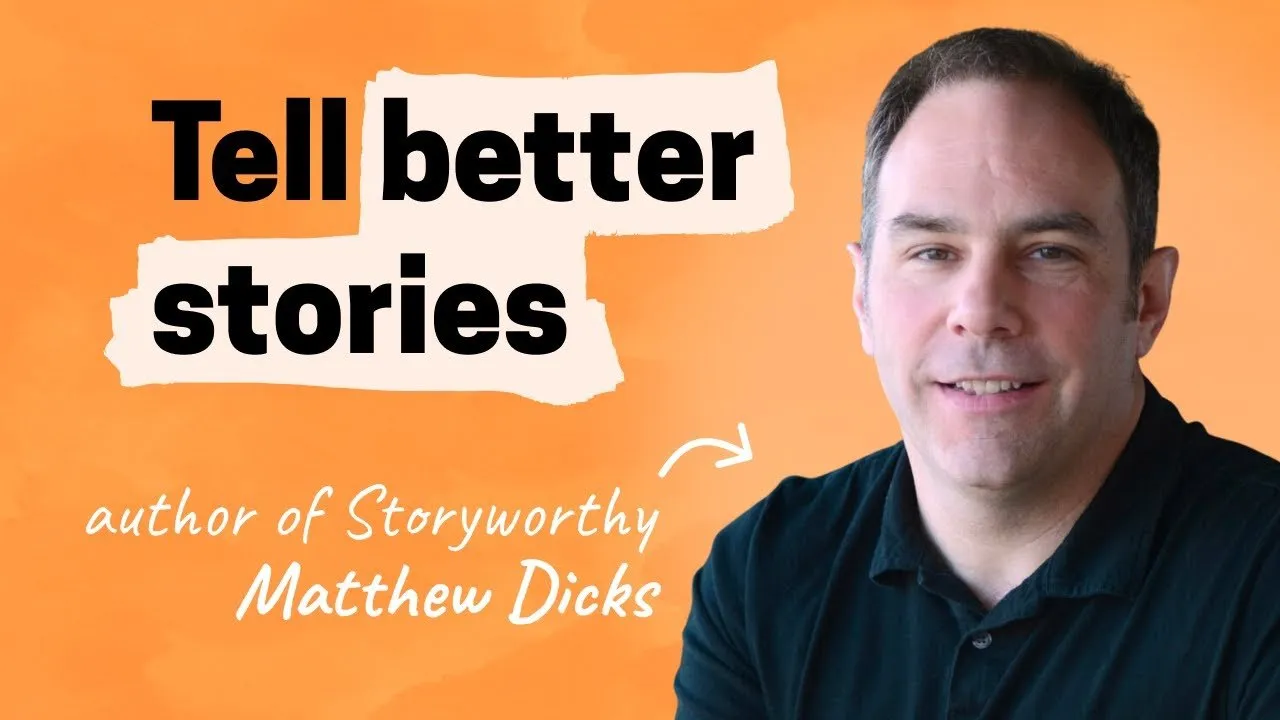
Our brains are not wired to retain raw data or abstract statistics. We are wired for narrative. Whether you are pitching a startup, teaching a class, or leading a team, the risk you take by ignoring story is that you will be ignored. Matthew Dicks, a 59-time Moth StorySLAM champion and author of Storyworthy, has deconstructed the art of performance into tactical, actionable strategies. By shifting your focus from reporting events to crafting meaningful narratives, you can transform the way you communicate and ensure your message sticks.
Key Takeaways
- The 5-Second Moment: Every great story is about a singular moment of transformation or realization. The rest of the story exists solely to give that moment context.
- The Dinner Test: If you wouldn’t say it to a friend at a dinner table (like using "performance voice" or dramatic sound effects), do not use it in a presentation.
- Start at the End: You must know your destination before you begin. The most effective stories start as close to the ending as possible.
- Homework for Life: Building a storytelling habit starts with writing down one story-worthy moment every day, a practice that slows down time and builds a database of material.
- Raise the Stakes: To keep an audience engaged, you must constantly make them wonder what will happen next using tools like "The Elephant" and "The Backpack."
The Anatomy of a Story: Finding the 5-Second Moment
A common misconception is that a story is simply a recounting of events that happened over time. However, a chronological report of your day is not a story; it is a police report. True stories are about change.
Every effective story is built around a singular five-second moment of transformation or realization. This is the moment where you used to be one type of person, and now you are another. Or, you used to think one way, and now you think differently. This change doesn't need to be a cinematic explosion; it can be as subtle as realizing a student trusts you, or changing your mind about a food you hated.
"The purpose of a story is essentially to bring that moment to the greatest clarity possible to the audience so that the audience can experience that flip, that transformation or realization, along with the storyteller."
To craft a compelling narrative, you must work backward. Identify that moment of realization first. Once you know the ending (the new version of you), you implicitly know the beginning (the old version of you). The story becomes the bridge between these two opposing states. If you cannot identify the change, you likely do not have a story yet.
Tactical Rules for Better Storytelling
Once you have identified your moment of change, you must frame it in a way that respects the audience's time and intelligence. Dicks suggests several litmus tests to ensure your story lands effectively.
The Dinner Test
Authenticity is the currency of storytelling. A major pitfall in professional settings is the adoption of a "stage persona." Speakers often use artificial dialogue, dramatic sound effects ("Bang! The door opened!"), or rhetorical flourishes they would never use in real life. The rule of thumb is simple: If you wouldn't tell the story that way to a friend over dinner, don't tell it that way on stage. Remove the performance art and speak like a human being.
Avoid "Vacation Stories"
Most people tell stories about where they were rather than what happened. This leads to the dreaded "vacation story"—a recounting of travel logistics, nice weather, and food that offers no value to the listener. Unless a fundamental transformation occurred on the trip, the location is irrelevant. If a realization happened during dinner in Aruba, strip away the plane ride and the snorkeling. Start the story at the dinner table. If the context doesn't serve the five-second moment, cut it.
Start with the Bear
Ineffective storytellers bury the lead with excessive backstory. The most engaging way to begin is as close to the end as possible. If your story is about a bear attacking your tent, do not start with booking the campsite six months prior. Start when the bear is chewing on the canvas. Immediate action grabs attention; context can be filled in later if absolutely necessary.
Engineering Engagement: How to Raise the Stakes
In business and life, you must operate under the assumption that no one wants to listen to you. You must earn their attention sentence by sentence. You do this by raising the stakes—creating questions in the minds of the audience that they are desperate to have answered.
Dicks outlines several mechanisms to introduce and maintain stakes throughout a presentation:
- The Elephant: Introduce a clear problem or "threat" immediately. Just as Star Wars opens with a massive ship attacking a smaller one, your story needs immediate tension so the audience knows who to root for and what is at risk.
- The Backpack: Tell the audience your plan or your hopes before you attempt to execute them. By "packing your backpack" with your dreams, the audience feels the weight of your potential failure. They can't fear for your plan if they don't know what it is.
- The Crystal Ball: Predict a negative future. If you tell the audience, "If I fail at this, my client will leave and I will lose my job," you have cast a vision of a terrible future. The audience will hang on your every word to see if that prediction comes true.
- The Hourglass: When you reach the pivotal moment of the story—the climax—slow time down. Most nervous speakers rush through the most important part. Instead, expand the details. Describe the silence, the sensory details, and the internal monologue to keep the audience on the edge of their seats.
Business Storytelling: From Band-Aids to Bricks
Many professionals treat storytelling as a "Band-Aid"—a quick fix for a specific problem, such as needing a metaphor to explain a dry product feature. While helpful, this approach is limited. The goal is to become a "brick builder," constructing a library of stories that can be deployed strategically to humanize yourself and your brand.
The Personal Interest Inventory
To connect with an audience, you must be more than a corporate mouthpiece. Dicks recommends creating a "Personal Interest Inventory"—a list of attributes about yourself (e.g., father, marathon runner, elementary school teacher, cat owner). These are hooks for connection.
When answering simple questions like "How are you?", avoid generic answers. Instead, weave in an item from your inventory: "I'm doing well, though my fifth-graders were particularly rowdy today." This signals your humanity and offers the listener a chance to connect on a personal level. In a sales context, being the person who loves 1980s nostalgia or struggles with grocery shopping makes you memorable, whereas the person who strictly discusses Q3 data is interchangeable.
The Power of Adjacency
When trying to sell a boring product, do not tell a story about the product. Tell a story about the theme or value the product represents. Dicks cites an example of a scientist selling lab tubes. Instead of presenting data on the tubes, the scientist told a story about the frustration of buying different apples for every member of his family. He connected the theme—the difficulty of catering to specific, individual needs—to his company's ability to provide customized solutions. The data supports the story, but the story makes the sale.
Homework for Life: Building Your Story Database
The biggest barrier to storytelling is the belief that "nothing interesting happens to me." This is false. Life is filled with stories, but they are often lost because we fail to record them. To combat this, Dicks advocates for a practice called "Homework for Life."
Every evening, ask yourself: "If I had to stand on a stage and tell a five-minute story about something that happened today, what would it be?"
Write down the date and a few sentences about that moment in a spreadsheet. Most days, the moment will seem insignificant—a moment of frustration with a spouse, a funny thing a child said, or a realization at the grocery store. However, over time, this habit creates a massive database of memories. More importantly, it trains your brain to view the world through a narrative lens. You begin to spot stakes, transformations, and humor in real-time. This practice not only makes you a better speaker but also slows down the passage of time by forcing you to value and remember the small moments of your life.
Conclusion
Becoming a storyteller is not about mastering theatrical performance or possessing a golden voice. It is about decision-making. It is the conscious choice to share your vulnerability, to structure your communication around change, and to respect your audience enough to keep them engaged with high stakes.
Whether you are trying to sell a product, lead a team, or simply connect with friends, the ability to tell a story is the ability to be remembered. Start your "Homework for Life" today. Look for the moments where you changed, even slightly, and share those moments with the world. As Dicks advises, "The cave you fear contains the treasure you seek." Step through the door of storytelling, and you will find that the professional and personal rewards are well worth the risk.



)