Table of Contents
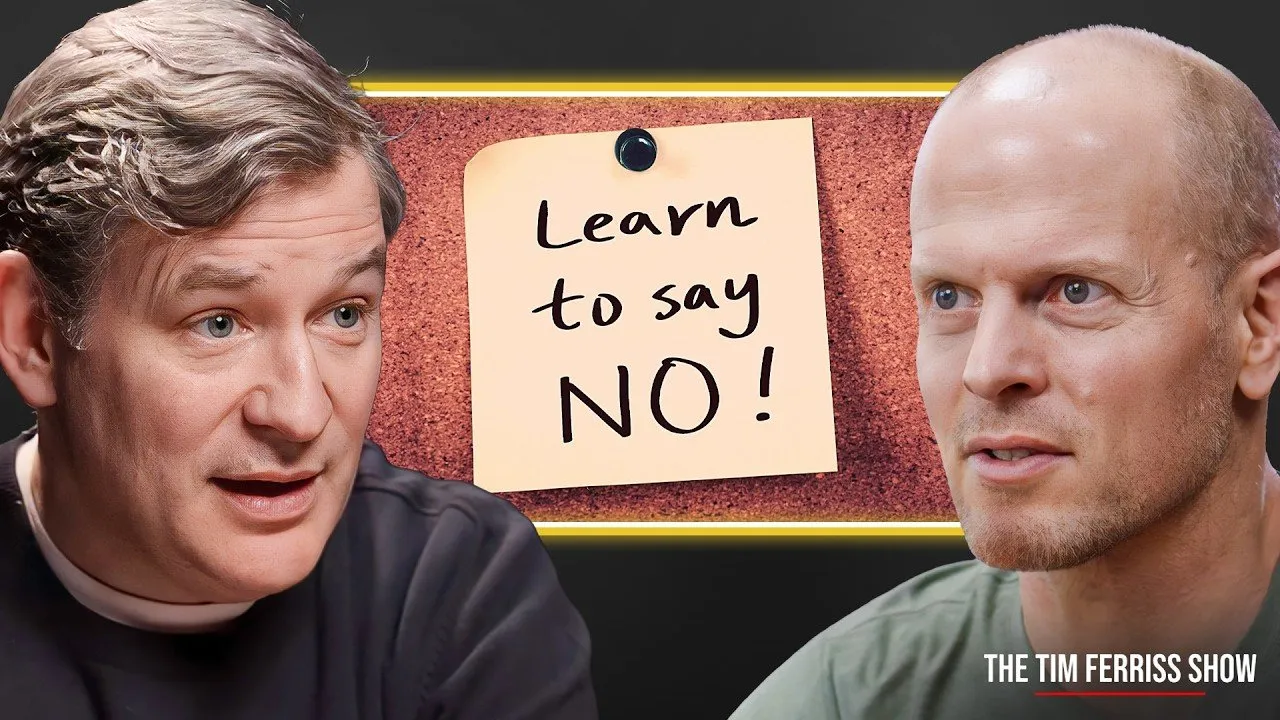
In our hyper-connected era, the pressure to be constantly available has created a culture of compulsive yes. Whether it is social media notifications, endless professional requests, or the fear of missing out (FOMO), our attention is under siege. As the digital landscape evolves, the ability to protect your focus is no longer just a productivity hack—it is a requirement for mental survival. Learning to say no is the ultimate act of self-preservation in a world designed to distract you.
Key Takeaways
- The path to achieving your most important goals is built on saying yes to a select few high-impact activities and saying no to everything else.
- Struggling to say no often stems from a lack of "big yeses"—if you do not have clear, meaningful objectives, you will inevitably fill your time with low-value distractions.
- "Life Tetris" requires you to prioritize your "big rocks" first, leaving space for essential tasks while consciously filtering out the "sand" of extraneous commitments.
- Learning to renegotiate your commitments is a critical skill for when you inevitably overcommit.
- Tools, scripts, and templates are helpful, but long-term success requires identifying and challenging the core beliefs—such as the need to be "nice" or the fear of scarcity—that drive over-commitment.
The Anatomy of Compulsive Over-Commitment
Many of us fall into the trap of promiscuous over-commitment, a state where our calendars are dictated by others rather than our own priorities. This is not just a time-management issue; it is a psychological one. Beneath the surface, people often struggle to decline requests due to deep-seated beliefs—such as the fear that saying no makes you a bad person or the scarcity mindset that insists you cannot generate your own opportunities.
The rise of sophisticated AI and hyper-personalized digital outreach is only accelerating this problem. When inboxes and messaging platforms are flooded with content designed to trigger our curiosity and empathy, the impulse to say yes becomes nearly impossible to resist without a battle-tested toolkit. Without this, you risk becoming a casualty of your own lack of boundaries.
The road to where you want to be in life is the golden brick road of saying yes to a few things. The guardrails for that are no.
Defining Your Big Yeses
If you find yourself constantly saying yes, it is likely because you lack a big yes worth defending. When you are deeply committed to a project, a goal, or a person, saying no to outside distractions becomes effortless. You aren't just rejecting an invitation; you are protecting your priority.
The Mason Jar Principle
To visualize this, consider the classic metaphor of the mason jar. If you fill the jar with "sand" (trivial tasks, social media, minor requests) first, there is no room left for the "big rocks" (your life-changing goals). You must start by placing your largest priorities into your schedule. Once the rocks are in, the "gravel" (necessary but smaller tasks) fits around them, and the sand fills in the remaining gaps. If you start with the sand, you will never fit the rocks.
Beyond Templates: Changing Your Core Beliefs
While scripts for declining invitations are useful—such as the clever "I really wish I could, but I can't do the life Tetris" approach—a script is only a bandage if the underlying belief system remains unchanged. If you are driven by the belief that you must please everyone to be successful, a polite refusal will always feel like a failure.
You really need to have a reliable tool here for saying no. As far as I'm concerned, you have to have a toolkit like this. You're just going to be roadkill.
True transformation occurs when you interrogate why you are afraid to say no. Ask yourself: Is this coming from a place of genuine desire, or is it coming from a fear of missing out? By examining your motivations, you move from reactive behavior to intentional living. You begin to build a benevolent phalanx—a protective barrier of discipline that guards your time and energy from the infinite demands of the world.
Mastering the Art of Renegotiation
Even the most disciplined individuals fall into the trap of over-committing. When you realize you have bitten off more than you can chew, the solution is not to suffer in silence or burn yourself out. Instead, you must master the art of renegotiating commitments. This involves having difficult but honest conversations that address the reality of your capacity.
Learning how to graciously exit an over-commitment without damaging relationships is a vital, albeit uncomfortable, skill. It requires humility and a clear understanding that your time is a finite resource. By prioritizing your own boundaries, you actually provide more value to others in the long run because the work you do choose to commit to will receive your full, undivided attention.
The ability to say no is arguably the most important skill for navigating the future. As technology continues to create more ways for the world to reach out and demand your attention, your commitment to your own focus will determine your trajectory. By identifying your big yeses, dismantling the beliefs that force you to be a people-pleaser, and learning to manage your boundaries, you can reclaim your time and pursue the work that truly matters.
![Bitcoin Is on Sale [How to Buy It in 2026]](/content/images/size/w1304/format/webp/2026/03/how-to-buy-bitcoin-2026.jpg)