Table of Contents
In a world where career paths are often treated like rigid, pre-ordained tracks, many people reach their later years only to be haunted by a specific, persistent form of pain: the regret of inaction. Whether it is an unstarted business, an abandoned creative dream, or a path not taken, these "boldness regrets" often weigh more heavily than the mistakes we make while actively pursuing our passions. Renowned former venture capitalist Bill Gurley suggests that avoiding this fate requires more than just hard work—it demands a fundamental shift in how we perceive risk, personal potential, and the fleeting nature of time.
Key Takeaways
- The Regret of Inaction: Research indicates that at the end of life, people are far more likely to ruminate on what they didn't do rather than the mistakes they made while trying.
- The Conveyor Belt Trap: Modern educational and professional systems often pressure individuals into "safe" career paths early on, which can lead to burnout and a sense of being trapped.
- The Regret Minimization Framework: Popularized by Jeff Bezos, this mental model encourages you to project yourself forward to age 80 and make decisions today that will minimize future regret.
- Flexibility as a Strategy: By avoiding excessive "burn rate" and living expenses, you preserve the personal freedom required to pivot when you identify a more fulfilling path.
- Continuous Learning as a Compass: The best test of a true passion is whether you pursue learning in that field during your spare time, even when it feels like play rather than work.
The Perils of the "Conveyor Belt" Career
For many, the transition from high school to university to a professional role feels like being placed on a high-speed assembly line. Society, parents, and institutions often push young people to commit to specific majors and career trajectories before they have had sufficient time to explore their own interests. Gurley notes that this creates a "resume arms race," where the sheer weight of time and effort invested in a specific path makes it feel impossible to switch gears later on. This is exacerbated by loss aversion; people fear that changing careers means "wasting" their previous education, even though statistics show that a large percentage of graduates move into different fields within a few years of finishing school.
The Myth of the Safe Job
The pursuit of "safe" jobs before the AI era was often marketed as the path to stability. However, when those jobs lack genuine passion, they eventually lead to burnout. Gurley argues that we have become excellent at teaching the perseverance part of work—the grind—but we have neglected the passion component. Without a genuine love for the work, the grind becomes an unsustainable cycle that eventually crushes the spirit.
The purpose of this book is hopefully to give as many people permission to go do what they want in life... if there's a subgroup of people who read this and have the conviction that they can go succeed in this thing they love, I think that'll be a huge impact on the world.
The Regret Minimization Framework
To avoid waking up at 80 with a heavy heart, you must change your temporal perspective. The regret minimization framework is a simple yet profound exercise: imagine yourself as an octogenarian looking back on your life. If you were to ask your 80-year-old self for advice, would they tell you to stay in a comfortable, soul-crushing job, or to take the leap into the unknown? This technique acts as a forced fast-forward button for your decision-making, helping you filter out the noise of short-term anxiety and focus on the long-term arc of your life.
Navigating the Open Loop
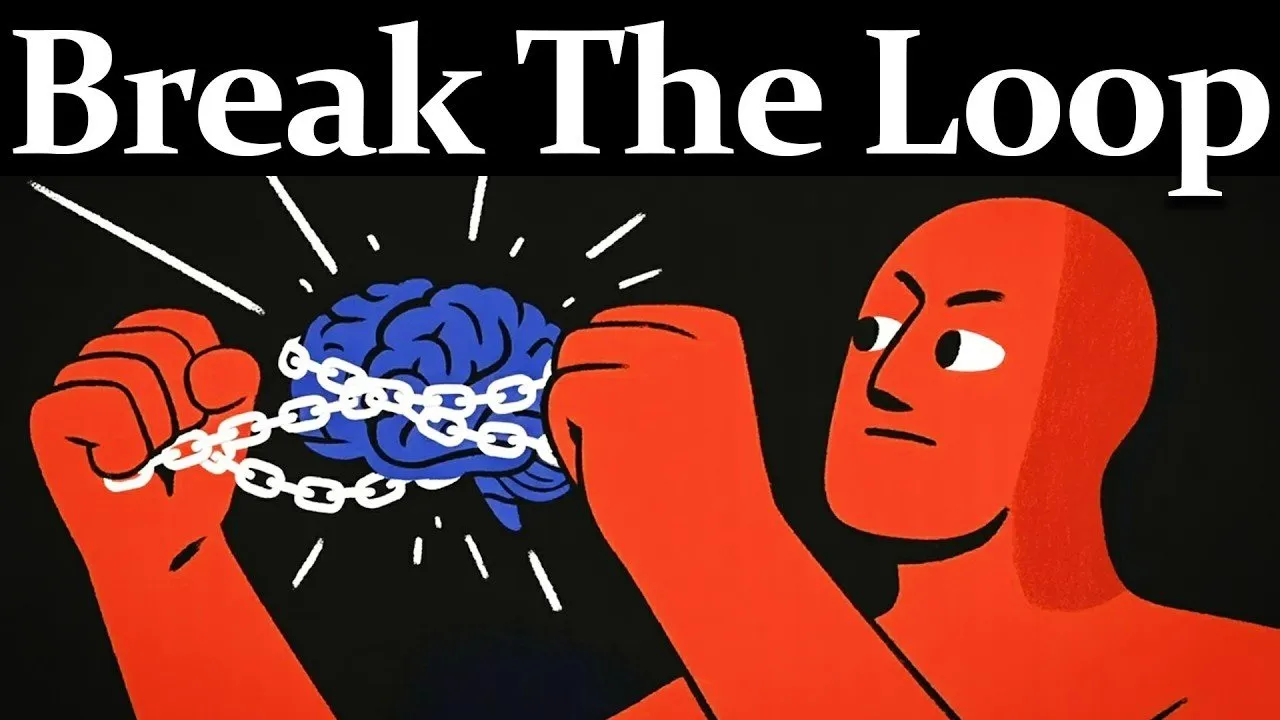
The human mind has a documented aversion to uncertainty—a concept known as the Zeigarnik effect. We dislike "open loops," or tasks left unfinished. When we don't act on a dream, it remains an open loop that plays over and over in our minds, causing anxiety. Often, we would rather imagine a catastrophic outcome than sit with the ambiguity of a bold move, because a catastrophe at least feels like a form of "certainty." By choosing to act, we close the loop and replace the paralyzing "what if" with a tangible reality.
Cultivating Courage and Peer Networks
Starting over in your 30s or 40s is not just possible; it is a recurring theme in the success stories of the truly exceptional. However, this transition is difficult to navigate in isolation. Gurley emphasizes the importance of building a peer group—not for transactional networking, but for genuine, pro-social support. When you surround yourself with others who are also striving to hone their craft, you gain a sounding board that helps you distinguish between fundamental challenges (which can be overcome) and transient ones (which might just be a sign to pivot).
If you can build a peer network of like-minded people that you trust... it's a really special place.
Avoid the Trap of the "Zero-Sum" Game
Many people fail to form meaningful peer groups because they have been taught to view their career through a finite, zero-sum lens—as if there can only be one winner. But most fields, especially in the modern economy, are not like professional sports; there is room for many people to succeed. By moving away from "sharp-elbowed" competition and toward a model of collective learning, you become a hub of positive energy and knowledge, which ultimately accelerates your own growth.
Leveraging AI as a Jetpack
In the modern landscape, AI is frequently viewed as a threat to job security. However, this fear is often concentrated among those who are "grinding" in roles they do not truly love. For the proactive individual who is actively building their craft and using AI as a tool for personal empowerment, these technologies serve as a "nitrous turbo boost."
When you align your work with your passion, you become a continuous learner. You aren't just following a script; you are at the technological edge of your industry. In this context, AI doesn't replace you; it allows you to do more, achieve more, and explore further than ever before. If you are sitting next to a "grinder" who is white-knuckling their way through the day, while you are using these tools to accelerate your creative output, you are essentially competing on an entirely different playing field.
Conclusion
Living a life you won't regret is fundamentally about honoring your own potential. It requires the bravery to recognize that the "conveyor belt" is optional and that your current path is not your final destination. By front-loading the fear and using frameworks like the regret minimization exercise, you can unlock the activation energy needed to pursue what you truly love. Whether you are in your 20s or your 40s, it is never too late to begin prioritizing your own passion, deepening your expertise, and curating a life that feels like an intentional journey rather than a forced march.