Table of Contents
You already know what you need to do. You know you should stop scrolling before bed, hit the gym, or finally finish that project gathering digital dust. Yet, night after night, the gap between your intentions and your actions remains. For years, you have likely blamed your lack of discipline or a fundamental flaw in your character for these recurring failures. However, the evidence suggests you aren't failing because of who you are—you are failing because of how you are trying to change.
Key Takeaways
- Habits are automated loops: They live in the basal ganglia, not the conscious mind, making them immune to sheer willpower.
- Identify the cue and reward: Every habit consists of a trigger, a routine, and a payoff; you must uncover these to effectively replace the behavior.
- The Myth of Willpower: The prefrontal cortex, which handles conscious self-control, is a finite resource that depletes throughout the day.
- Engineering over effort: Sustainable change comes from designing your environment to reduce friction for good habits and increase it for bad ones.
- Never miss twice: A single slip is a data point, but two consecutive misses create a pattern the brain quickly adopts as the default.
The Neuroscience of the Habit Loop
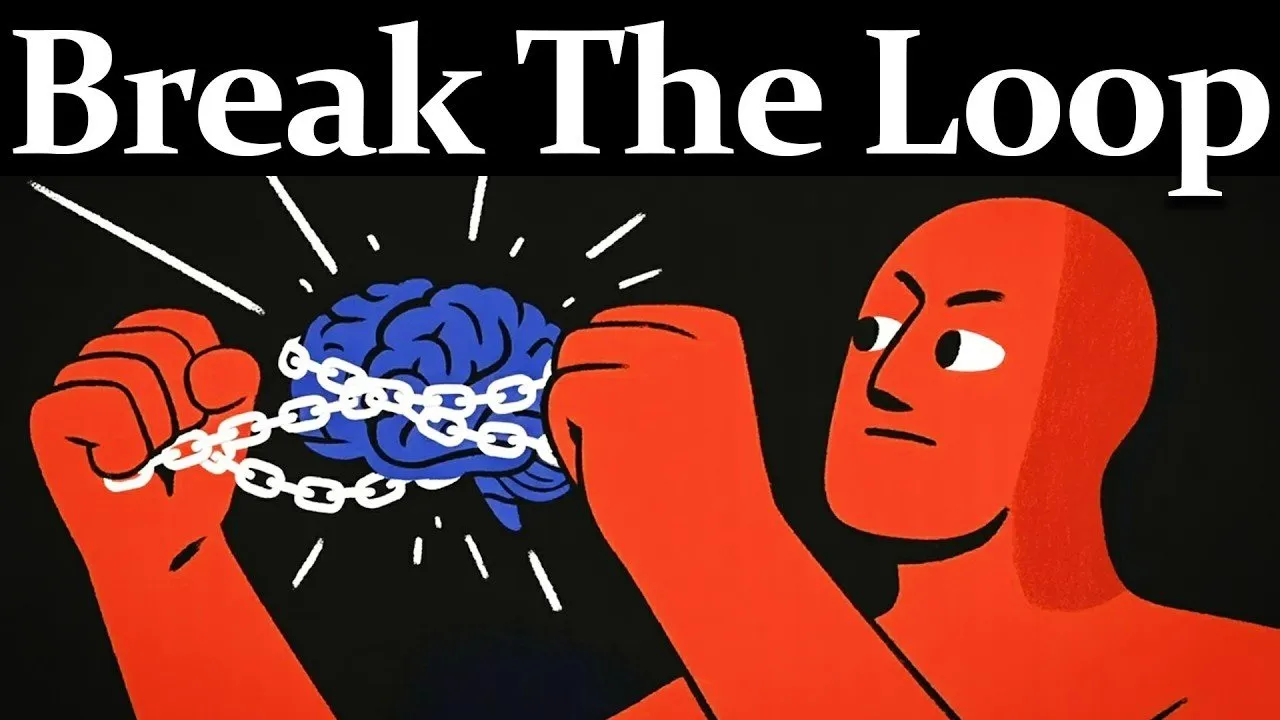
Most people view habits as a sequence of decisions made so often they become automatic. Neuroscience, particularly the research championed by Charles Duhigg, suggests otherwise. Habits are actually a separate neurological system designed specifically to remove you from the decision-making process. When a behavior is repeated in a consistent context, your brain "chunks" the sequence and hands it off to the basal ganglia.
Why Willpower Fails
When you attempt to stop a bad habit through brute force, you are relying on the prefrontal cortex—the part of the brain responsible for rational thought. This system is metabolically expensive and finite. As your day progresses and stress levels rise, this "willpower battery" depletes. Meanwhile, the basal ganglia—the automated system—has no such constraint. It does not get tired. Consequently, when you are most exhausted, your conscious override fails, and the old, automated loop asserts itself with effortless precision.
Habits are not degraded decisions. They are a completely separate system, one that the brain builds specifically to remove you from the process.
Mapping the Architecture of Your Behavior
Because habits operate below the level of conscious thought, you cannot simply "think" your way out of them. Instead, you must become a scientist of your own life. This requires shifting from moral self-judgment—asking, "Why am I so lazy?"—to clinical observation: "What exactly happened right before the urge hit?"
The Five Primary Cues
To dismantle a loop, you must identify its trigger. Research indicates that almost every habit is fired by a combination of these five factors:
- Location: Where are you physically when the urge arises?
- Time: Does the behavior follow a specific daily rhythm?
- Emotional State: Are you feeling bored, anxious, or overwhelmed?
- Other People: Who is present (or absent) during the trigger?
- Preceding Action: What was the very last thing you did before the loop started?
Decoding the True Reward
Many habit interventions fail because they misidentify the reward. You might assume you scroll through social media because you crave entertainment, but the actual reward might be an escape from a feeling of emptiness. If you try to replace a behavior without satisfying the actual underlying need, the brain will reject the new routine.
The reward is almost never what it appears to be on the surface. And until you know what it actually is, you cannot replace it.
To find the real payoff, experiment with different substitutions. If you feel the urge to procrastinate, try taking a walk for five minutes instead of checking your phone. If you feel satisfied fifteen minutes later, you’ve likely identified that your brain was craving movement or a reset, not digital distraction. Once you understand the specific need, you can consciously select a healthier routine that provides that exact same relief.
Engineering Change Through Precision
Once you have identified the cue and the reward, you can rebuild the loop using implementation intentions. Instead of a vague goal like "I will be healthier," use a surgical, if-then statement: "When I feel [Cue], I will [New Routine] to get [Reward]."
The Power of Friction
The brain is pathologically lazy; it will always choose the path of least resistance. You can "hack" this by manipulating your environment:
- Increase Friction: Delete distracting apps, hide junk food, or put your phone in another room.
- Decrease Friction: Place your running shoes by the door or keep a book on your desk.
By making the desired behavior the easiest option, you stop fighting your brain and start working with its innate tendency toward efficiency.
Moving Beyond the Identity of Failure
Perhaps the most significant hurdle is the story you have built around your struggles. Many people cling to the identity of being "undisciplined" because it explains away their frustrations. However, you are not a broken person; you are simply a person who has been operating unexamined, automated loops. By shifting your focus from shame to systems, you reclaim your agency.
Sustainable change is not about hating yourself into compliance. It is about understanding the mechanics of your own mind well enough to redesign your environment. Stop asking if you have enough willpower, and start asking if you have a better plan. The gap between who you are and who you want to be doesn't close on its own; it closes the moment you stop blaming your character and start mapping your loops.