
Table of Contents
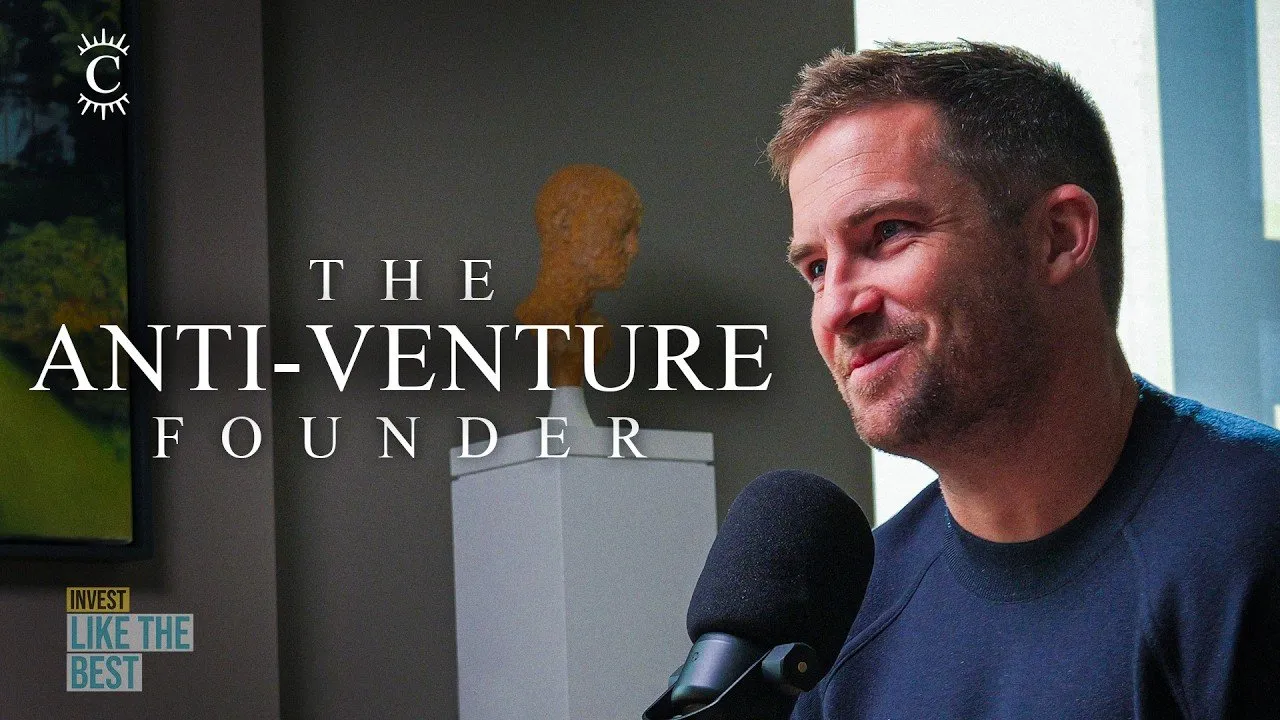
Building a successful startup in the modern era often feels synonymous with the venture capital playbook: raise massive rounds, prioritize growth over profit, and follow the latest consensus-driven trends. However, William Hockey, co-founder of Plaid and current founder of Column, is charting a radically different path. By building a software company that owns a bank and funding it entirely through his own earnings, Hockey is demonstrating that it is possible—and perhaps even advantageous—to build a multi-billion dollar enterprise without the strings of traditional venture capital.
Key Takeaways
- The power of self-funding: Bootstrapping or funding a company through internal earnings allows founders to prioritize long-term stability and employee ownership over the frantic, growth-at-all-costs cycle of VC.
- Niche expertise as a moat: Instead of chasing broad, consensus-driven trends like general AI, success often lies in becoming the world's leading expert in a "boring," complex, and highly regulated niche.
- Global perspective: Silicon Valley often suffers from insular thinking. Spending time in emerging markets reveals how constraints breed unique, high-utility innovation that isn't possible in environments of pure abundance.
- The importance of resilience: Entrepreneurship is inherently risky. Hockey argues that the current "safe" startup ecosystem may be failing to produce truly great founders because it removes the existential necessity of betting everything on one's own vision.
The "Heretical" Approach to Building
Column is an unconventional entity: a software company that owns a regulated bank. While most fintechs act as an abstraction layer over legacy institutions, Column controls the underlying regulatory rails. This gives them a distinct advantage, allowing them to offer API-based financial services that would be impossible for companies solely focused on consumer-facing software. By acting as the infrastructure for major firms, they have built a business that is technically demanding but operationally secure.
The leaprogging that happened in Asia is obviously quite well known. Like China skipped the laptop and went straight to the mobile phone. You’re going to see the same thing in financial services.
Rejecting the VC Hamster Wheel
Hockey draws a sharp comparison between his current experience and his early days at Plaid. He notes that the venture capital model can act like a narcotic; once a founder begins raising, it becomes difficult to stop, forcing the company to pivot constantly to satisfy the expectations of the next funding round. By choosing to rely on earnings, Column has avoided the dilutive effects of standard fundraising and the pressure to adopt strategies that don't align with the company's long-term health.
Finding Opportunity in the Mundane
While the rest of the industry is obsessed with the latest AI hype, Hockey finds his competitive edge in the history of banking. He emphasizes that value rarely hides in broad, well-understood sectors. Instead, he spends his time researching obscure, 200-year-old banking manuals, knowing that even one small, overlooked insight can lead to millions—or hundreds of millions—in value creation.
The "Boring" Advantage
Hockey argues that the best founders possess the ability to find the most boring, tedious problems fascinating. When a task is so difficult or "dry" that it cannot be easily solved by automated research tools, it creates a moat. He challenges the notion that every startup must be a high-flying consumer app, suggesting that true innovation is found in the depths of complex infrastructure that others find too uninteresting to explore.
The Resilience of the Global Perspective
Frequent travel to emerging markets, such as the Democratic Republic of the Congo, has fundamentally shaped how Hockey views innovation. In places like Kinshasa, constraints are not just theoretical; they are a daily reality. This environment forces a type of creativity that the abundant, consensus-heavy culture of San Francisco fails to foster. By stepping outside the "bubble," founders can identify problems that are universal yet unmet, rather than just competing to solve the problems of other affluent tech workers.
San Francisco is probably the most consensus place I've ever been to. And I think that is both a huge crutch for us, but it's also probably our most valuable asset.
The Philosophy of Betting on Yourself
The most profound takeaway from Hockey’s journey is the value of personal risk. He contends that Silicon Valley has become so safe that it has stripped away the necessary "knife-edge" pressure that creates great founders. When the downside of failure is mitigated by a well-connected resume and a seed round, the intensity required to build something world-changing often dissipates. True conviction is proven when a founder puts their own capital on the line, ensuring that their incentives are perfectly aligned with those of their employees and customers.
Designing for the Employee Lifecycle
By using annual share buybacks to provide liquidity to employees, Hockey has created a culture that values the reality of an employee's life—paying for mortgages, supporting families—rather than just the promise of an illiquid "decamillionaire" status in 20 years. This approach reflects his belief that companies should be built to serve the needs of the individuals working within them, not just the short-term metrics required to secure the next valuation spike.
Conclusion
William Hockey’s journey with Column serves as a masterclass in the value of independent, expert-driven entrepreneurship. By embracing the "boring," prioritizing sustainable profitability, and remaining deeply committed to the long-term, he has proven that founders do not need to follow the traditional VC-backed roadmap to build a lasting legacy. In an era of intense distraction and easy consensus, the most successful entrepreneurs are likely to be those who are willing to bet on themselves, go deep into the niche, and solve the critical problems that everyone else is too busy chasing trends to notice.



![My “ALL IN” Trigger For Altcoins! [BTC Pullback First?]](/content/images/size/w1304/format/webp/2026/03/altcoin-all-in-trigger-btc-pullback.jpg)
)