
Table of Contents
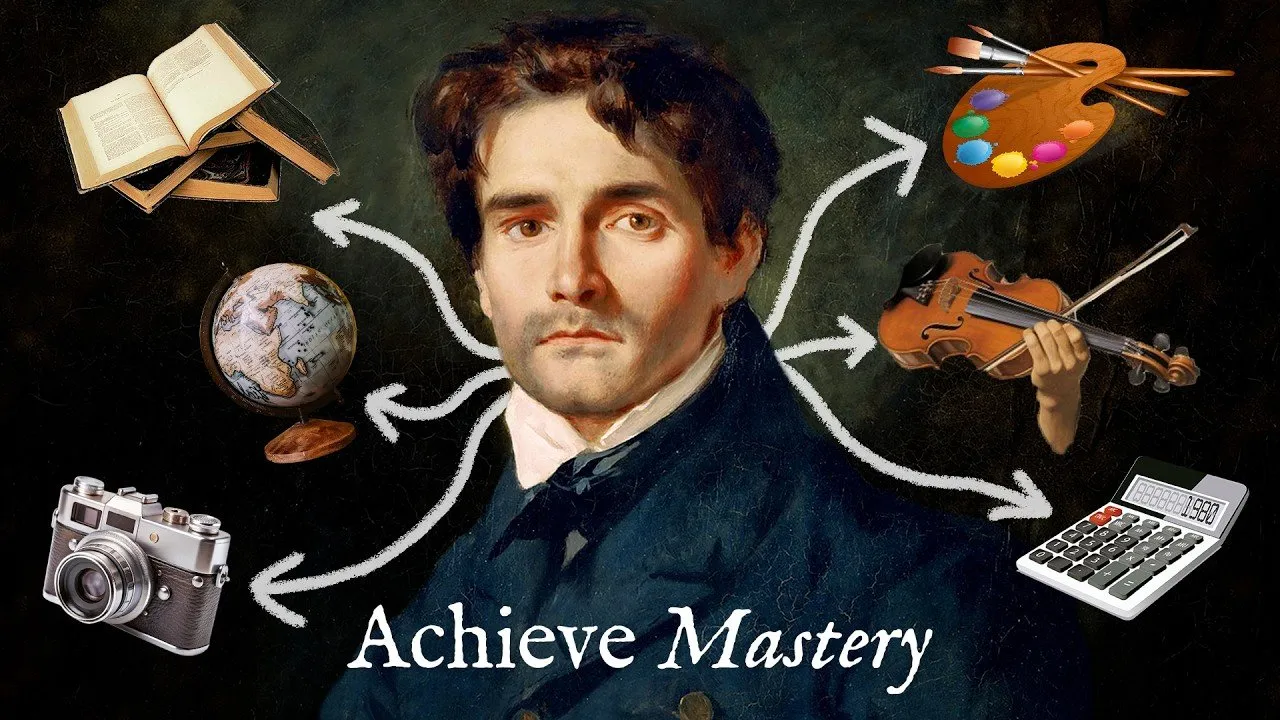
In an era defined by hyper-specialization, the desire to expand one’s horizons beyond a single career path is more than just a hobby—it is a reclamation of human potential. Many of history’s most influential figures were not confined to a single niche; they were polymaths who blended art, science, and philosophy to view the world through a multifaceted lens. Today, with an infinite library of information at our fingertips and AI shifting the landscape of traditional labor, the ability to synthesize diverse skills has become a significant competitive advantage. Transitioning from a specialist to a polymath requires more than just curiosity; it demands a structured approach to learning, a sustainable system for time management, and the courage to explore the vast breadth of human knowledge.
Key Takeaways
- Embrace the Four Aspects: Balance your pursuits across creative, physical, social, and intellectual categories to maintain a well-rounded lifestyle without burning out.
- Prioritize Energy Over Time: Recognize that cognitive fatigue is often a greater barrier than a busy schedule, and use "buffer interests" to recharge.
- Apply On-Demand Learning: Avoid the trap of theoretical stagnation by learning skills as you need them and applying them immediately to real-world projects.
- Build a Sustainable System: Use seasonality and to-do lists rather than rigid time-blocking to allow for natural fluctuations in interest and focus.
The Modern Case for Polymathy
The term "polymath" finds its roots in Ancient Greece, derived from poly (many) and matheis (learned). Historically, it described individuals like Leonardo da Vinci, whose knowledge ranged freely across disparate fields. By the tail end of the Renaissance, philosopher Johan von Voven defined the concept as a knowledge of various matters drawn from all kinds of studies.
"Knowledge of various matters drawn from all kinds of studies ranging freely through all the fields of the disciplines."
Modernity, however, has prioritized the specialist. Following the logic of Henry Ford’s assembly line, economic efficiency often dictates that individuals focus on one specific task to maximize output. While specialization can lead to financial success, critics argue it can also lead to a narrowed perspective. As Aldo Leopold famously suggested, specialization can sometimes mean learning to see one thing by going blind to another. Choosing the path of the polymath is a qualitative decision to cast a wider net and develop a unique outlook that a single discipline cannot provide.
Step 1: Selecting Your Path and the Four Aspects
A common pitfall for aspiring polymaths is the attempt to do everything at once. This often leads to burnout and a lack of tangible progress. Instead of spreading yourself thin, it is more effective to focus on a handful of subjects that provide variety while allowing for genuine proficiency. A helpful framework for this is the Four Aspects:
- Creative: Arts, writing, music, or design.
- Physical: Sports, fitness, or manual crafts.
- Social: Language, leadership, or community building.
- Intellectual: Sciences, philosophy, or history.
Finding Your Rabbit Holes
Rather than choosing subjects based on an idealized image of what you should learn, allow your natural curiosity to lead. Intellectual growth is most rapid when you fall down a "rabbit hole"—a topic that piques your interest so intensely that learning feels like play rather than work. This intrinsic motivation is far more sustainable than discipline alone. To find these subjects, immerse yourself in diverse media, explore forums, and stay open to unexpected sparks of interest.
Step 2: Effective Learning and the Gear Trap
Before diving into a new subject, it is essential to build a mental map. Much like an introductory session in a formal course, brief yourself on the core terminology and the overall structure of the field. This prevents you from getting lost in the details before you understand the bigger picture.
Avoiding Hobbyist Stagnation
Many beginners fall into the trap of "hobbyist masturbation"—the tendency to buy expensive gear and research obscure techniques before mastering the basics. This is often a manifestation of the Dunning-Kruger effect, where overconfidence sabotages actual growth. True proficiency is built on a stable base of fundamental skills that cover the majority of the discipline's practical applications. Humble yourself to the basics before seeking advanced equipment or niche theories.
Practical Learning Techniques
To ensure information retention, utilize a variety of media including books, podcasts, and documentaries. Adding friction through note-taking forces the brain to process information rather than passively consuming it. Furthermore, leverage active recall and on-demand learning. Instead of trying to learn everything before starting, begin a project and learn the necessary skills as obstacles arise. This creates a shorter gap between theory and application, making the knowledge stick.
Step 3: Systems, Seasonality, and Energy Management
Becoming a polymath is a lifelong journey, not a sprint. Therefore, your system must be sustainable. While many productivity gurus suggest rigid time-blocking, this can often feel restrictive and "autistic" in its micromanagement. A more flexible approach involves using a prioritized to-do list, allowing you to choose tasks based on your current mental state.
The Concept of Seasonality
You do not need to practice every skill every day. Seasonality allows you to focus intensely on one or two subjects for a month or a season before archiving them to focus on something else. This provides the breathing room necessary to achieve depth in a subject without the stress of juggling a dozen active pursuits simultaneously.
Managing Cognitive Energy
Time is rarely the primary constraint; energy is. After a long workday, most people lack the mental bandwidth for intense study. To combat this, consider the following strategies:
- Buffer Interests: Engage in "semi-productive" hobbies—like light fiction or casual reviewing—that recharge your energy while keeping you away from mindless scrolling.
- The Pre-Work Session: Dedicate an hour in the morning to your most important learning before the day's obligations drain your reserves.
- Planned Rest: Allow yourself genuine downtime, but set a specific duration to prevent a short break from turning into a wasted evening.
Step 4: Projects and Community
Learning in a vacuum can eventually feel pointless. To provide direction, anchor your studies to a specific project. Whether it is writing a book, building a piece of furniture, or starting a YouTube channel, a project provides a "slow-burning fuel" that pushes you through the inevitable plateaus of the learning process.
"Learning becomes meaningful when it is given direction, when everything that you do feels like it's going towards something that you care about."
Finally, discard the myth of the "lonely polymath." While much of learning is solitary, finding a community or a friendly rivalry can accelerate your progress. Real-life connections and shared goals provide feedback and a sense of healthy competition that the internet alone cannot replicate. Seeing others excel should serve as inspiration to push your own boundaries further.
Conclusion
The journey toward becoming a polymath is a commitment to a life of continuous expansion. By balancing the four aspects of human experience, managing your energy with intention, and grounding your learning in tangible projects, you can transcend the limits of modern specialization. It is a path that values the beauty of a broad perspective and the unique creative opportunities that arise when disparate fields of knowledge intersect. Start with one rabbit hole, build your foundation, and allow your curiosity to navigate the vast landscape of the world.



)