Table of Contents
TiVo, the pioneering digital video recorder (DVR) that turned television from an ephemeral broadcast medium into an on-demand experience, fundamentally altered the media landscape despite never achieving mass-market hardware dominance. In a comprehensive retrospective by The Verge, industry experts analyzed how the device’s Linux-based architecture and intuitive interface shifted consumer behavior from appointment viewing to time-shifted consumption, effectively laying the groundwork for the modern streaming era.
Key Points
- Transformative Utility: TiVo introduced the ability to pause live TV and skip commercials, features that permanently disrupted the traditional advertising-supported television model.
- Niche Market Penetration: Despite its cultural ubiquity as a verb, TiVo’s standalone hardware sales were surprisingly low, peaking at only 1.7 million subscribers in 2008.
- Open Source Controversy: The device ran on a modified version of Linux, sparking a major debate in the software community known as "TiVoization" regarding proprietary restrictions on open-source code.
- Pivot to Litigation: Following its hardware struggles, the company transitioned into a patent licensing entity, generating over a billion dollars in settlements from cable providers and tech companies.
The End of Appointment Viewing
Before the arrival of TiVo in 1999, television was strictly linear; viewers had to be present when a show aired or rely on cumbersome VCR technology. Founded by former Silicon Graphics employees Mike Ramsay and Jim Barton, TiVo originated from a failed interactive TV initiative known as the "Orlando Project." The founders pivoted to a home media server concept, driven by a singular, genius insight: the desire to pause live television for bathroom breaks.
The device utilized a hard drive to buffer live signals, allowing users to pause, rewind, and fast-forward in real-time. For early adopters, this functionality was viewed as a technological miracle that liberated them from broadcast schedules.
"It actually genuinely felt like a miracle, like a life-changing device... I immediately knew I had to have this because I hated the VCR so much. It tempted you because it said that it could record in advance... but it was incredibly difficult." — Emily Nussbaum, Television Critic
This shift had profound implications for content creators. The ability to rewatch and analyze complex narratives supported the rise of "prestige TV" shows like The Wire and Lost, which demanded closer viewer attention than traditional episodic television.
Hardware Design and the "Peanut" Remote
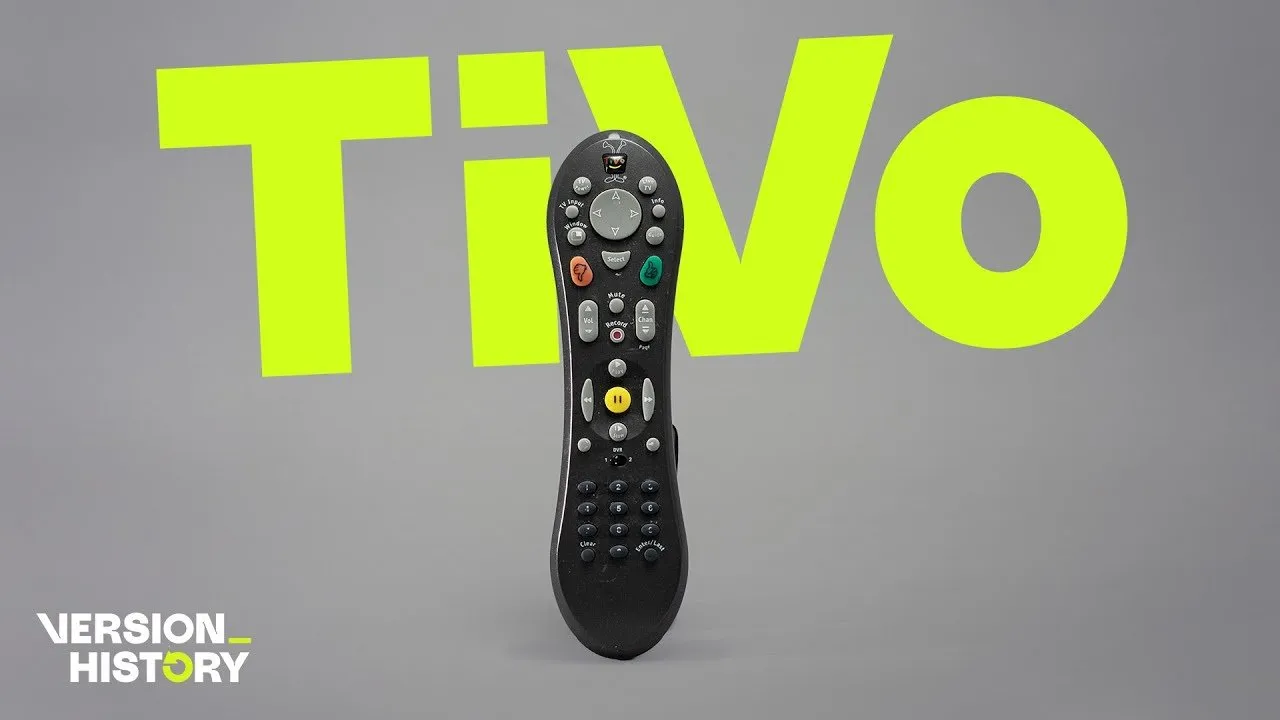
While the internal hardware was a computer running Linux, TiVo’s success as a consumer product relied heavily on its user interface and physical design. The company partnered with the legendary design firm IDEO to create the remote control, affectionately known as the "peanut."
Unlike the button-cluttered remotes of the era, the TiVo remote featured a distinctive shape and a prominent yellow pause button in the center. It also introduced the "Thumbs Up" and "Thumbs Down" buttons, which fed data into an early recommendation algorithm. This system attempted to predict viewer preferences, recording content automatically based on viewing habits—a precursor to the algorithmic suggestions now standard on platforms like Netflix and TikTok.
The device also introduced controversial features that antagonized the television industry, specifically the 30-second skip. While TiVo officially marketed a fast-forward function to avoid legal repercussions, users quickly discovered a cheat code (Select-Play-Select-30-Select) that converted the button into an instantaneous commercial skipper.
Business Missteps and the Cable Wars
Despite its critical acclaim and cultural impact, TiVo struggled to scale its hardware business. The device faced a significant barrier to entry: a high upfront cost combined with a monthly subscription fee. Furthermore, the company found itself in a direct war with cable providers.
As cable companies transitioned from analog to digital signals, they began deploying their own set-top boxes with built-in, albeit inferior, DVR capabilities. This allowed providers to centralize control and maintain their advertising models. TiVo’s architecture, which relied on local storage (hard drives in individual homes), ultimately lost out to the centralized "cloud DVR" model adopted by the industry.
"When the cable companies looked at this, they said, 'Why on earth are we going to have literal copies of Friends on people's hard drives throughout our entire customer base that we can't see, that we can't monetize, we can't measure?'... TiVo was just not architected for this from the beginning." — Nilay Patel, Editor-in-Chief, The Verge
Sales figures reflect this struggle. In its first year, TiVo sold approximately 48,000 units. Even at its zenith in 2008, the service only commanded 1.7 million concurrent subscribers, a fraction of the total television market.
Legacy and Intellectual Property
Unable to win the hardware war, TiVo pivoted its strategy toward intellectual property enforcement. The company held seminal patents on time-shifting technologies, specifically the "Time Warp" patent allowing simultaneous recording and playback. TiVo aggressively litigated against cable companies and device manufacturers, securing over $1 billion in damages and settlements.
Eventually, the company ceased to be a hardware innovator. It was acquired by Rovi Corporation (formerly Macrovision) for $1.1 billion, effectively transforming the brand into a patent licensing firm. Today, while the hardware is obsolete, the "TiVo" brand remains a generic trademark for DVR technology, famously referenced even in political discourse as a symbol of high-end television consumption.
The core technologies pioneered by TiVo—time-shifting, algorithmic recommendations, and the bypassing of linear advertising—have become the standard infrastructure of the streaming economy. While the physical box has largely vanished, its functional DNA exists in every modern streaming app and smart TV interface.