Table of Contents
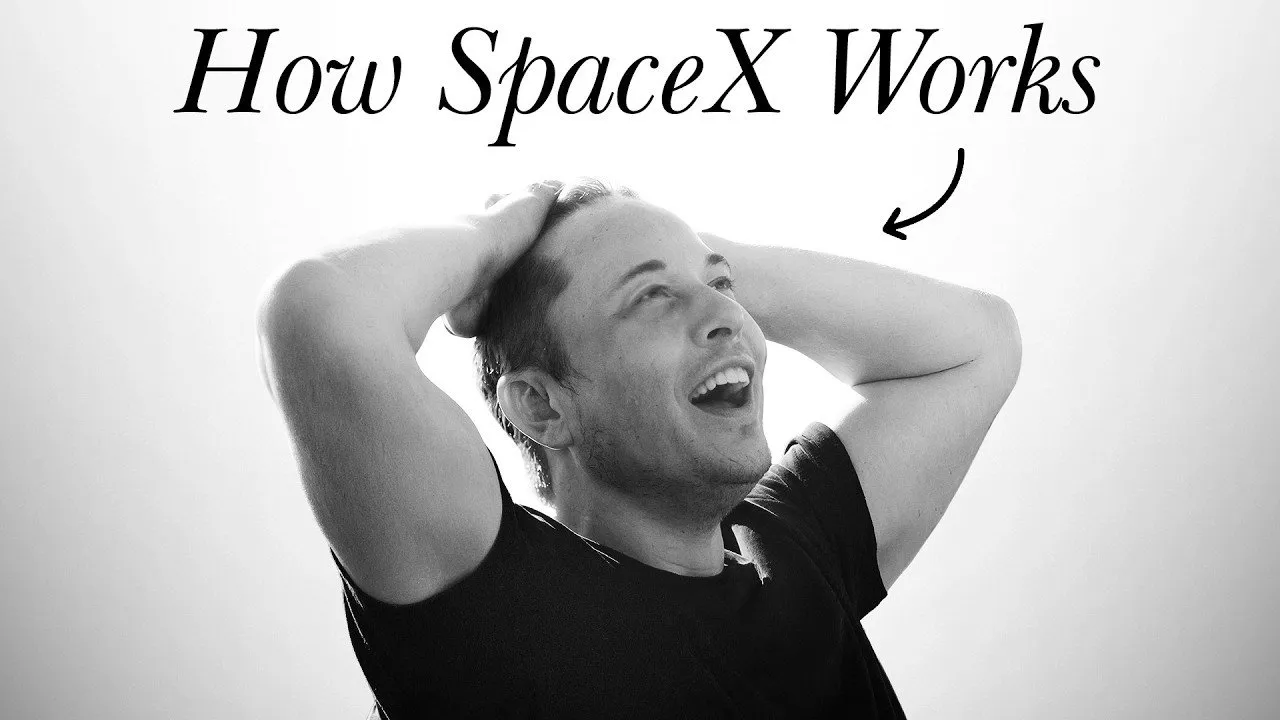
SpaceX’s rise from a near-bankrupt startup to the world’s most dominant launch provider is often framed as a product of Elon Musk’s singular vision. However, the true story lies in the specific, repeatable mechanics of how the company operates. By treating the rocket industry’s long-standing inefficiencies as variables rather than fixed laws of physics, SpaceX has fundamentally rewritten the rules for building complex hardware. Their success is not a result of secret technology, but of a rigorous, systemic approach to cost, engineering, and culture.
Key Takeaways
- First Principles Thinking: SpaceX strips products to their raw material costs, aiming to eliminate the 98% "process tax" typical in aerospace.
- Vertical Integration: By bringing manufacturing in-house, SpaceX gains the control necessary to iterate rapidly and collapse the traditional supply chain.
- Standardization and Volume: The company treats its rockets as a standardized platform, creating an automotive-style learning curve that makes reusability economically viable.
- Failure as Data: Unlike traditional aerospace, which prizes exhaustive upfront analysis, SpaceX uses rapid prototyping and "rapid unscheduled disassemblies" to learn from reality.
The Economics of First Principles
Most aerospace companies operate under the assumption that high costs are a fixed constraint. SpaceX operates on the belief that they are a variable. By analyzing a rocket's raw material costs—aluminum, titanium, and carbon fiber—Musk discovered that materials accounted for only about 2% of the final price. The remaining 98% was consumed by supplier markups, custom designs, and bureaucratic overhead.
Rethinking the "Idiot Index"
Musk introduced the Idiot Index, a metric used to compare the cost of a finished part to the cost of its raw materials. If the ratio is too high, the design process is failing. This led to a culture where engineers routinely reinvent components using off-the-shelf parts, such as replacing expensive aerospace-grade hardware with modified bicycle shocks or catalog-available valves. When a supplier smirked at SpaceX’s aggressive budget for a critical engine valve, the engineering team simply built it themselves.
"The best part is no part. The best process is no process."
Vertical Integration and the Manufacturing Flywheel
SpaceX concluded early on that "atoms were cheap, but process was expensive." To capture the value lost to external suppliers, they vertically integrated nearly 80% of their hardware production. This move was not an ideological preference for internal work, but a practical response to vendors who could not meet SpaceX's cost or speed requirements.
Building the Platform
Vertical integration only pays for itself if you achieve volume. By standardizing the Falcon 9 as a single, consistent platform, SpaceX forced customers to adapt to their specs rather than building bespoke, mission-specific rockets. This standardization enables the manufacturing "flywheel":
- Lower costs allow for lower prices.
- Lower prices capture more market share.
- Higher volume drives down manufacturing costs through learning curves.
- Operational data from frequent flights enables successful reusability.
Engineering Through Reality, Not Analysis
Traditional aerospace firms invest heavily in planning, freezing requirements early to avoid failure. SpaceX inverts this approach. They recognize that complex systems have emergent properties that cannot be fully analyzed on paper; you have to build them to understand them.
Failure as a Data Point
At SpaceX, a test flight that ends in a "rapid unscheduled disassembly" is not a disaster—it is a high-fidelity data point. By producing a fleet of low-cost prototypes rather than one expensive, perfect machine, the company pushes its designs to the absolute limit. Each failure narrows the gap between their theoretical models and the physical reality of the hardware.
"Starship does not have anyone on board, so we can blow things up. It is really helpful."
The Cultural Engine
The strategies above are essentially useless without a culture that can execute them. SpaceX does not just hire skilled engineers; they build a system that acts as a filter for missionaries who are comfortable with visibility and intensity.
Structural Behavioral Memes
The company relies on specific cultural habits, or "memes," that guide decision-making at every level:
- Tip of the Spear: Focus resources exclusively on the single biggest bottleneck that, if removed, unlocks the most progress.
- Question Everything: Treat requirements as hypotheses. If a requirement cannot be justified by an owner, it gets deleted.
- Direct Communication: By collapsing the chain of command, information travels from the factory floor directly to the CEO, minimizing signal loss.
Conclusion
The SpaceX model proves that building "hard things" is less about finding a lone genius and more about designing a system of feedback loops. By prioritizing speed of iteration and creating a culture that treats failure as a prerequisite for innovation, the company has created an advantage that is exceptionally difficult for competitors to replicate. The lesson for other industries is clear: if you want to push the boundaries of what is possible, focus on how quickly your team can move from a design to a physical test. Reality, not a manual, is the only true validator of a complex system.