Table of Contents
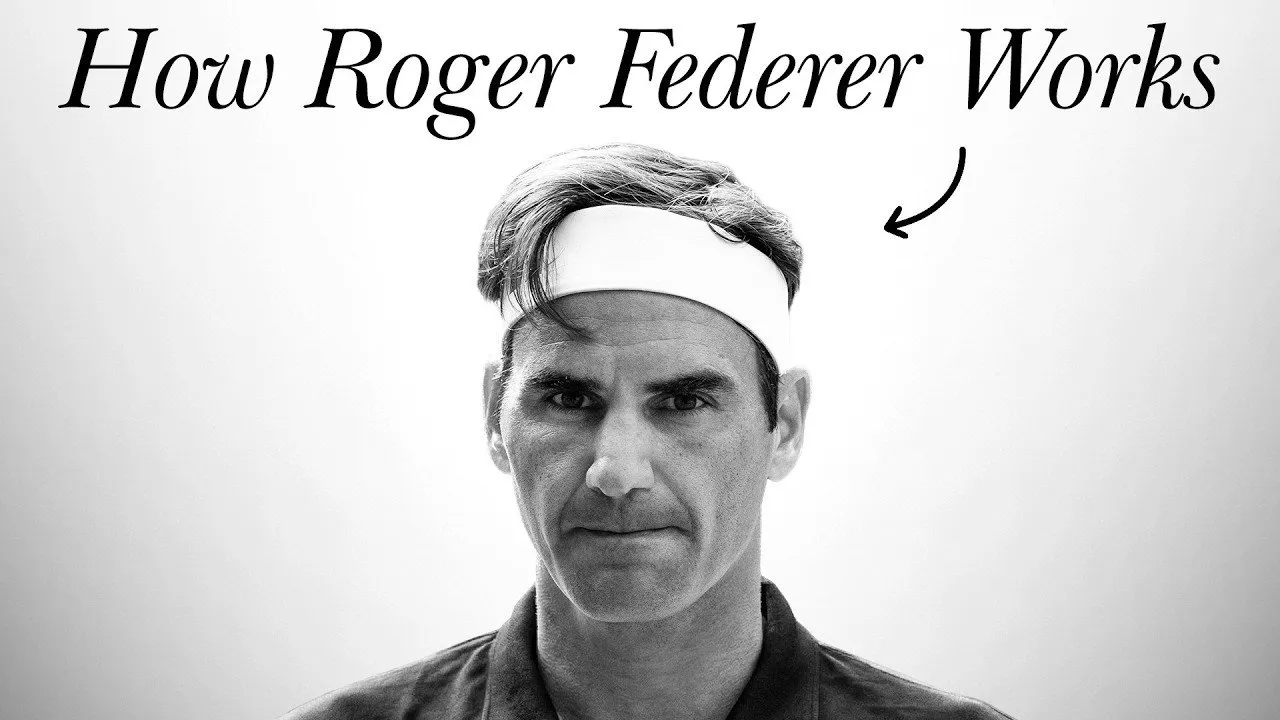
For the first part of his life, Roger Federer was not the picture of calm elegance the world came to adore. He spent years whining, swearing, and throwing his racket. His wake-up call didn’t come from a trophy, but from an opponent who publicly questioned his mental discipline, suggesting Federer would be the favorite for the first two hours, but a liability afterward. That critique forced Federer to realize that physical talent creates an advantage, but mental discipline secures the legacy.
In his post-retirement commencement address at Dartmouth, and through the lens of Christopher Clarey’s biography, The Master: The Long Run and the Beautiful Game of Roger Federer, we gain access to the specific operating system that allowed Federer to transition from a temperamental teen into a global icon of longevity. It wasn’t just about a beautiful forehand; it was about the strategic construction of a life designed to last.
Key Takeaways
- The 54% Rule: Even as a dominant champion, Federer won only 54% of the total points he played. Mastering the ability to move past a lost point immediately is the hallmark of a champion.
- Effortlessness is a Myth: Federer’s perceived ease was the result of meticulous planning, rigorous routine, and a refusal to stagnate.
- Rest as Discipline: Influenced by his fitness coach Pierre Paganini, Federer viewed rest not as laziness, but as "intelligent restraint" required for a multi-decade career.
- Trusting the Team: Success in an individual sport is actually a team effort; Federer excelled at surrounding himself with experts and trusting their judgment implicitly.
- Business Longevity: Federer’s massive financial success (Federer Inc.) was a direct downstream effect of his longevity, allowing him to secure equity deals like On Running two decades into his career.
The Mental Game: "It's Only a Point"
One of the most profound insights from Federer’s career is the mathematical reality of dominance in tennis. In his commencement address, Federer shared a statistic that shocks most casual observers: across 1,526 singles matches, he won almost 80% of those matches. However, he won only 54% of the points.
"In other words, even top-ranked tennis players win barely more than half of the points they play. When you lose every second point on average, you learn not to dwell on every shot. You teach yourself to say, 'Okay, I double faulted. It's only a point.' ... This mindset is really crucial because it frees you to fully commit to the next point and the next point after that with intensity, clarity, and focus."
This statistic is the antidote to perfectionism. In business and life, we often assume that winning requires a nearly flawless execution rate. Federer’s career proves that you can fail 46% of the time in the micro-moments and still be the undisputed champion in the macro-outcome. The differentiator is not the absence of failure, but the speed of recovery. Negative energy is wasted energy; the best in the world are the best because they know they will lose again and again, yet they have learned how to deal with it instantly.
From Fragility to Stoicism
This mindset was not innate. As a junior player, Federer was described by coaches as emotionally fragile. He had a "devil and angel" on his shoulders, often exploding in rage when he missed a shot. His father was arguably so embarrassed by these outbursts that he would refuse to speak to Roger during the car ride home.
Recognizing this weakness, Federer engaged a mental coach, Christian Marcolli, at age 17. This was a contrarian move at the time; consulting a psychologist was viewed as a sign of vulnerability. However, this decision allowed Federer to convert his "inner flames" into slow-burning fuel rather than a bonfire of distraction. He realized that emotional outbursts were not just bad for his game—they were bad for his brand.
The Myth of Effortlessness
Federer’s play style was often described as "effortless," a label he had a complicated relationship with. While it was a compliment to his fluidity, it masked the "tremendous toil and ample self-doubt" that occurred behind the scenes. Federer believed that stagnation is regression.
Much like his rival Novak Djokovic, Federer operated under the belief that maintaining your current level is actually falling behind. This drove a rigorous, detailed schedule plotted well in advance. He didn't just show up; he planned his peak.
Intelligent Restraint
A critical component of Federer’s longevity was his partnership with fitness coach Pierre Paganini. Paganini was an unconventional figure who viewed rest and recovery as equal partners to exertion. This philosophy mirrors that of legendary track coach Bill Bowerman, who taught that training is a loop: Stress + Recover = Improve.
"Work too hard plus rest too little equals injury... Rest [is not] laziness. [It is] intelligent restraint in service of long-term consistency."
Paganini’s goal was never just to win the next tournament; it was to ensure Federer could express his potential for 70 matches a year, for decades. This "long game" approach meant skipping tournaments when necessary and prioritizing the body’s long-term health over short-term rankings. This restraint allowed Federer to be the last man standing from the 128 players who debuted at the 1999 French Open.
Building a Seamless Web of Trust
While tennis is an individual sport, Federer’s career is a case study in high-performance management. He understood early on that he could not achieve his goals alone. He built a "seamless web of deserved trust" around himself, comprising coaches, fitness trainers, and his wife, Mirka.
Federer possessed a unique trait for a superstar: the ability to listen and apply advice rapidly. One of his youth coaches noted he had never seen a player apply feedback so quickly. Whether it was Peter Carter, who shaped his technique, or Paganini, who shaped his body, Federer selected "A-players" and then let them do their jobs.
He also protected his environment rigorously. In a humorous but telling anecdote, a young Federer switched dentists because his original dentist questioned his decision to pursue tennis over school. Federer realized he could not afford to be surrounded by naysayers while chasing an ambitious dream. He sought people who would facilitate his vision, not shrink it.
Life is Bigger Than the Court
Burnout is the enemy of longevity. Federer avoided the fate of many peers—who grew to resent the sport—by ensuring his life was bigger than tennis. He famously stated, "Tennis could show me the world, but tennis could never be the world."
Compartmentalization as a Superpower
Federer developed the ability to switch roles instantly. He could cry in the locker room after a crushing Wimbledon loss, and hours later be laughing at dinner with friends. This wasn't denial; it was necessary compartmentalization.
"If you're constantly [clenched like a fist], then that's how you burn out... I truly believe this is a secret for a lot of the players... is to be able when you leave the court to say, 'Okay, I'm leaving it behind.'"
He protected his "therapy time"—late nights alone—and ensured his family traveled with him, creating a mobile support system that kept him grounded. Unlike Nadal, who transformed into a "caged animal" before a match, Federer could be discussing real estate or family matters minutes before walking onto the court. This relaxation wasn't a lack of focus; it was energy conservation.
Federer Inc.: The Business of Longevity
The strategic decisions Federer made regarding his mental and physical health paid massive dividends in the business world. By 2020, he was the world’s highest-paid athlete, earning over $100 million, with only $6 million coming from tennis prize money. The vast majority came from "Federer Inc."
His business success was inextricably linked to his longevity. Had he retired at 30 due to burnout or injury, he would not have been in the position to sign a 10-year, $300 million deal with Uniqlo at age 36. Furthermore, because the Uniqlo deal did not cover footwear, it opened the door for Federer to invest in the Swiss running shoe company, On Running.
When On Running went public, Federer’s stake was reportedly worth $300 million. This was a direct result of playing the long game—staying relevant, maintaining a pristine reputation, and having the patience to wait for the right equity opportunities rather than just cash sponsorships.
Conclusion
Roger Federer’s career is often romanticized as a display of natural talent, but the reality is that he was a meticulous architect of his own success. He built a mental framework that could withstand failure (the 54% rule), a physical regimen that prioritized longevity over intensity, and a business empire that leveraged his enduring relevance.
Ultimately, Federer was driven by an inner scorecard. He wasn't just competing against Nadal or Djokovic; he was competing against his own potential. As he noted in his commencement speech, trusting yourself is a talent. By trusting his own judgment, surrounding himself with the right team, and refusing to let the sport consume his entire identity, Federer didn't just play a beautiful game—he lived a beautiful life.