Table of Contents
Polymarket, a decentralized prediction market platform, has surged in prominence as trading volumes regularly approach $130 million per day. Following its relaunch in the United States with CFTC approval and a significant $2 billion investment backing from major financial entities, the platform has transitioned from a niche Web3 experiment into a mainstream tool for financial forecasting. As users look to capitalize on real-world events, understanding the mechanics of these markets is essential for those seeking consistent returns.
Key Points
- Prediction Mechanics: Markets operate on a binary yes-or-no basis, where share prices (ranging from 1 cent to 99 cents) represent the crowd-sourced probability of an outcome.
- Strategic Flexibility: Traders are not required to hold positions until resolution; buying shares at low probability and selling during price fluctuations allows for profit without waiting for the final event.
- Risk Management: Due to potential volatility and market manipulation in low-liquidity sectors, experts advise against "all-in" strategies and emphasize the importance of monitoring resolution criteria.
- Data-Driven Trading: The platform is increasingly viewed as a barometer for market sentiment, with major financial outlets like the Wall Street Journal and Barron’s integrating Polymarket data into their reporting.
Understanding Market Mechanics
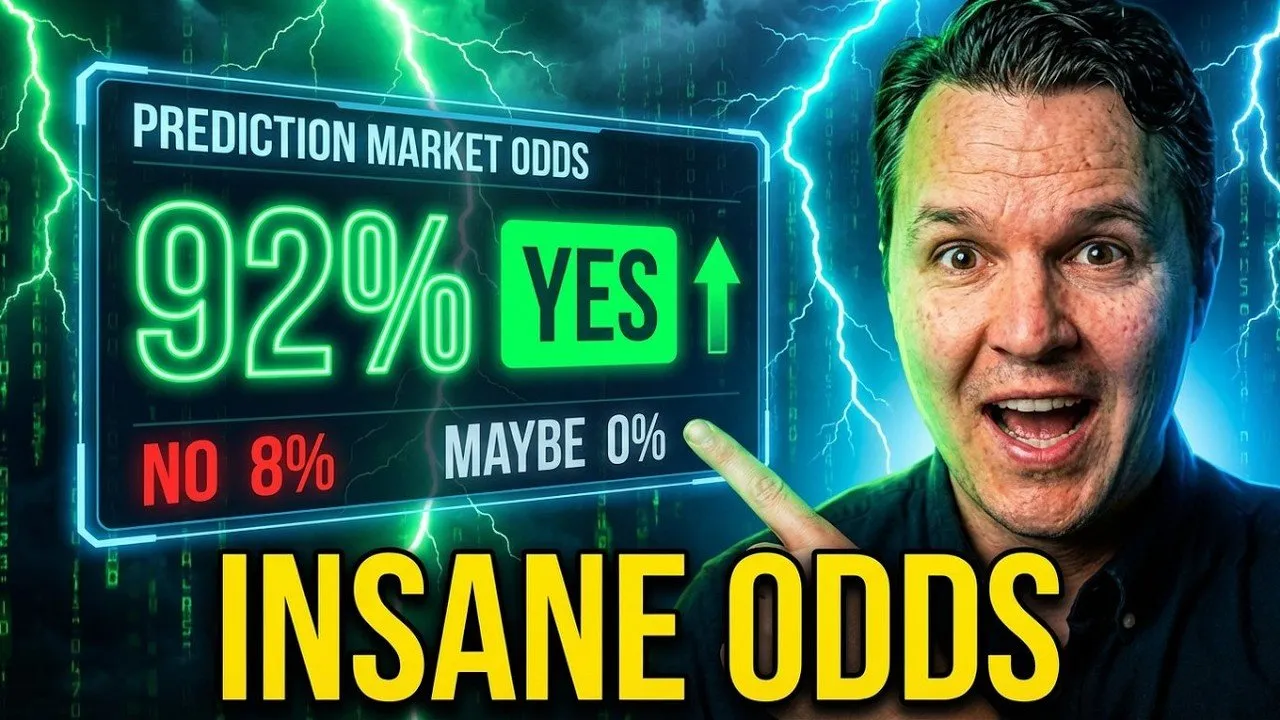
Unlike traditional gambling, Polymarket functions as a decentralized exchange where participants trade shares in future outcomes. Whether betting on Federal Reserve interest rate decisions, global sports results, or geopolitical developments, the pricing mechanism acts as an aggregator of the "wisdom of the crowds." When thousands of independent actors commit capital based on their expectations, the resulting share price often mirrors real-world probability, with the platform historically demonstrating high prediction accuracy.
The primary profit motive for professional traders involves exploiting price fluctuations. Because shares can be traded before the underlying event resolves, an investor who purchases a "yes" position at 15 cents can liquidate that position if the market price spikes to 30 cents, effectively doubling their capital without ever reaching the actual conclusion of the event.
"The price of a share tells you how likely the crowd thinks the outcome is to be. If you are right, your share pays out a dollar. If it doesn't happen, all your money is gone."
Strategic Approaches to Prediction Markets
Profitable trading on Polymarket generally requires a structured approach that avoids the pitfalls of emotional overreaction. Successful strategies often focus on three specific pillars:
The Niche Edge
New traders often flock to high-visibility markets, such as presidential elections, where competition is intense and information is saturated. Conversely, seasoned participants identify "niche edges"—specific sectors like technology, regional politics, or obscure financial indices—where their specialized knowledge allows them to identify mispricings that the broader market has yet to correct.
Contrarian Sentiment and Arbitrage
Market volatility triggered by sensationalist headlines often creates buying opportunities for contrarians. By betting against the "panic," traders can acquire shares at significant discounts. Additionally, savvy participants utilize arbitrage by identifying price discrepancies for the same event across different prediction platforms. By purchasing competing outcomes on disparate exchanges, traders can sometimes secure a risk-free profit margin, provided the price gap is sufficient to cover transaction costs.
Tracking Smart Money
As an on-chain platform, Polymarket allows users to monitor the activity of large-volume wallets. Tools like PolyWhaler and Predictfolio provide real-time insights into the movements of successful traders. However, analysts warn that blind copy-trading is a significant risk; large wallets may be hedging against other positions or intentionally attempting to influence market perception.
Operational Risks and Best Practices
Navigating prediction markets requires rigorous attention to technical detail. First, traders must examine the resolution criteria for every market. A contract may be named after a high-level concept, but the specific legal or technical definition—such as whether a court case is "docketed" rather than "won"—determines the payout. Misunderstanding these fine-print rules is a frequent cause of capital loss.
Liquidity also plays a critical role in market health. Markets with low trading volumes are susceptible to price manipulation and may leave a trader unable to exit a position. Maintaining a diversified portfolio and never committing more than a fraction of one’s total bankroll to a single outcome remains the primary safeguard against the inherent uncertainty of global events. As the platform matures, those who prioritize compounding small, consistent gains over speculative long-shot bets are finding the most sustainable paths to profitability.