Table of Contents
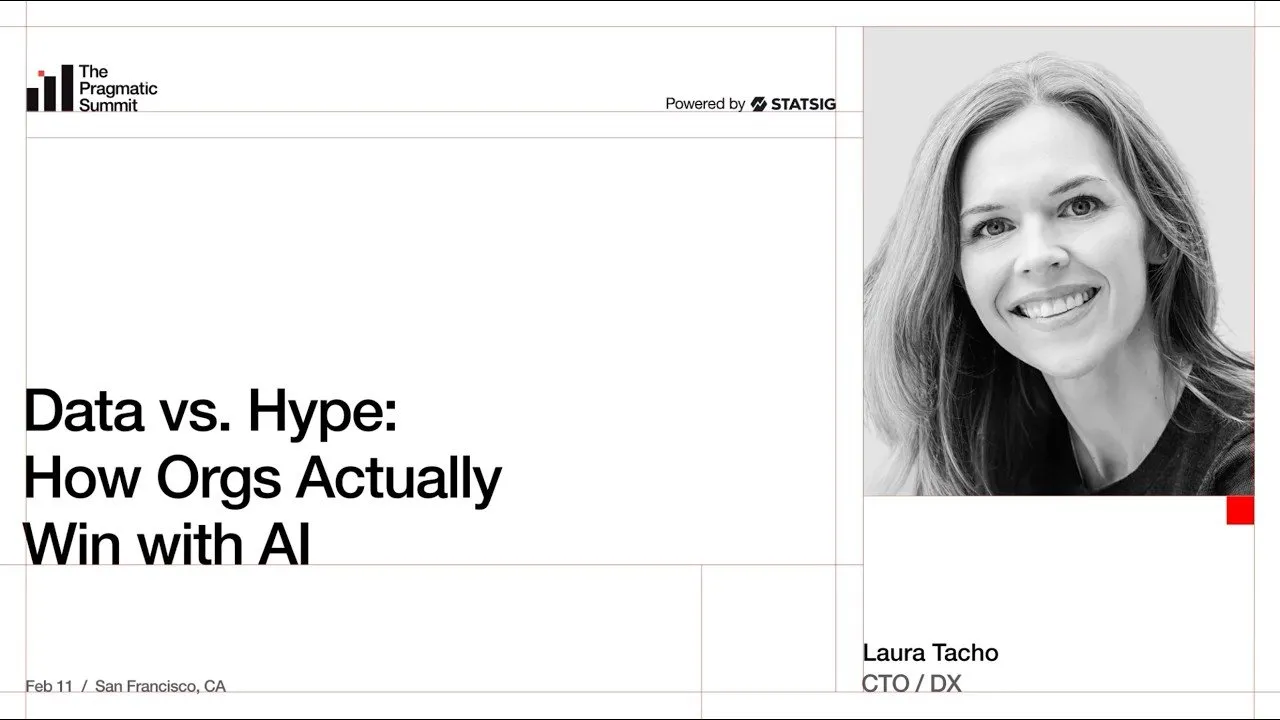
The dawn of the AI age feels remarkably similar to the mid-20th-century space race. It is a period defined by a sense of boundless wonder, intense experimentation, and a healthy dose of skepticism. While the hype promises "100% productivity boosts" and "single-person billion-dollar startups," the reality on the ground is far more nuanced. Organizations are discovering that AI is not a magic silver bullet but a powerful accelerator that multiplies existing strengths and exposes hidden weaknesses. To win in this new era, leaders must balance their curiosity for the "moonshots" with a pragmatic, data-driven approach to solving problems back here on Earth.
Key Takeaways
- Adoption is high, but impact varies: While over 92% of developers use AI tools, the average time savings hover around four hours per week, suggesting a "productivity ceiling" for individual tasks.
- AI as a Multiplier: AI accelerates existing organizational cultures; it helps high-performing teams reduce incidents by 50% but can double the trouble for dysfunctional organizations.
- The Shift to Agents: The industry is moving from individual coding assistants to agentic workflows that can handle complex, multi-step processes like migrations and prototyping.
- Systems Over Syntax: True organizational transformation requires addressing human and systemic constraints—AI cannot fix a broken process if the process itself isn't understood.
The Current State of AI Adoption: Beyond the Hype
Recent industry benchmarks provide a sobering yet optimistic look at how AI is actually being used. Data collected from over 121,000 developers across 450 companies reveals that AI adoption has effectively reached a saturation point. Approximately 92.6% of developers use an AI coding assistant at least once a month, with 75% utilizing these tools weekly. However, the reported time savings have remained relatively static, hovering around 4.08 hours per week—roughly a 10% gain in productivity.
The Rise of AI-Authored Code
While time savings are a leading indicator, the more significant metric is the volume of code hitting production that was written by AI without significant human intervention. This "AI-authored code" now accounts for 26.9% of industry-wide commits, up from 22% in previous quarters. Among daily users, this number often exceeds 30%. This trend indicates that AI is no longer just a "search replacement" but a primary tool for content generation in the software development lifecycle.
Accelerated Onboarding
One of the most concrete wins for AI has been in developer onboarding. Historically, the time it takes for a new hire to reach their tenth pull request (PR) has been a benchmark for integration. Between early 2024 and late 2025, AI usage has helped cut this onboarding time in half. This is a critical gain, as research suggests that early performance milestones often dictate an engineer's productivity for their first two years of tenure.
The "Big Bang" Effect: AI as an Organizational Multiplier
The emergence of AI acts much like the Big Bang—a massive release of energy that pushes objects further apart. In an organizational context, AI is an accelerator that moves companies toward extreme ends of the performance spectrum. It does not normalize performance; it amplifies what is already there.
Somewhere, something incredible is waiting to be known.
For organizations with healthy systems, AI has reduced customer-facing incidents by up to 50% by enhancing code maintainability and change confidence. Conversely, dysfunctional organizations are finding themselves "dysfunctional faster." Some teams have seen incidents double because they are using AI to pump more low-quality code into already fragile systems. This uneven impact proves that AI is not a substitute for engineering excellence or organizational health.
The Evolution of Agentic Workflows
As the "individual task" ceiling becomes more apparent, the industry is shifting toward agentic workflows. These are systems where AI "agents" operate with more autonomy, handling multi-step processes rather than single prompts. This shift expands the universe of what is possible, moving from simple code completion to complex system orchestration.
Real-World Agentic Applications
- Healthcare Innovation: Startups like Haven Headache and Migraine Center are using agents to transform patient care. By training HIPAA-compliant models on symptom logs, they route patient needs to follow-up appointments or medication refills automatically, resulting in clinical outcomes that exceed industry averages.
- Enterprise Migrations: At Cisco, 18,000 engineers utilize agentic tools for complex migrations and code reviews, leading to a 50% reduction in review cycle times.
- Multi-Agent Consensus: Financial giants like JP Morgan Chase are experimenting with multi-agent frameworks (MAFA) where different agents specialize in annotation, ranking, and validation. These systems use consensus algorithms to ensure high-fidelity outputs.
The Blueprint for Winning with AI
If "spray and pray"—the practice of handing out licenses and hoping for profit—does not work, what does? Winning organizations share three common traits: they measure rigorously, they prioritize Developer Experience (DevX), and they focus on systemic problems.
Insufficient facts always invite danger.
Measurement and Goal Setting
Successful AI implementation requires moving beyond usage metrics to impact metrics. The AI Measurement Framework, co-authored by leaders at DX, suggests tracking the "Core Four": speed, quality, developer experience, and innovation ratio. Without these benchmarks, it is impossible to determine if the investment in expensive AI tokens is actually yielding a return on the bottom line.
Developer Experience is Agent Experience
A surprising reality of the AI era is that the "boring" basics of software engineering—solid testing, clear documentation, and fast CI/CD pipelines—are now the most critical factors for AI success. An agent is only as good as the context it is given. If your documentation is poor, your agent will fail. Many organizations are finding success by rebranding "DevX" initiatives as "Agent Experience" to secure the necessary executive buy-in and funding.
Solving Human Constraints
At the recent Future of Software Development retreat, industry veterans like Martin Fowler and Kent Beck concluded that AI cannot solve organizational systems problems. If a company suffers from excessive meetings, unclear requirements, or lack of executive sponsorship, AI will simply automate those frustrations. To see real transformation, AI must be pointed at the systemic bottlenecks that prevent humans from doing their best work.
Staying Grounded in the Age of Exploration
The goal of the original space race wasn't just to put a man on the moon; it was to improve life on Earth. The quartz watches, barcodes, and telecommunications we enjoy today are the terrestrial benefits of that celestial ambition. Similarly, the point of AI experimentation isn't just to build "unhinged" apps or live in a purely automated world. It is to use these tools to solve real customer problems and improve our existing systems.
To win with AI, leaders must remain skeptical of the hype while remaining curious about the possibility. By grounding experimentation in data and focusing on systemic change rather than just individual tasks, organizations can navigate this age of exploration successfully. The most successful teams will be those that stay human, stay pragmatic, and keep their feet firmly planted on the ground—even as they reach for the stars.