Table of Contents
Understanding the Mechanics of Manipulative Personalities
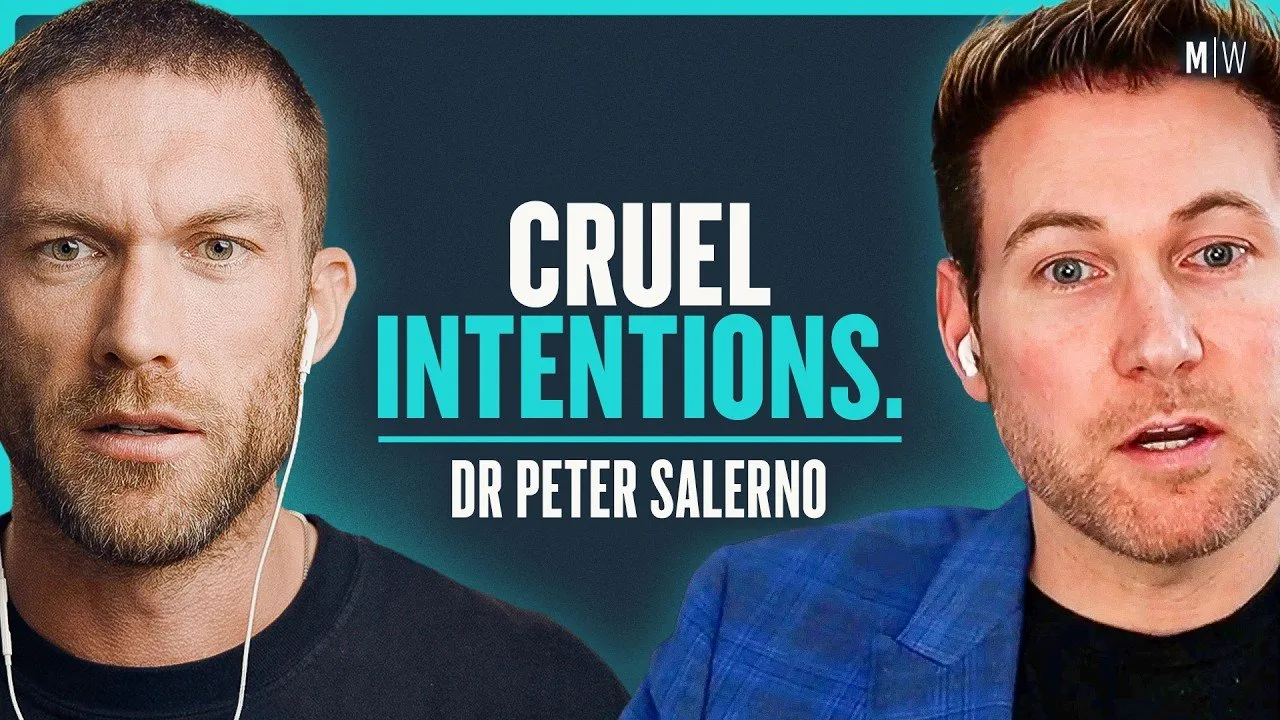
In social settings, we often assume that those around us share a basic, unspoken commitment to empathy, honesty, and mutual benefit. However, Dr. Peter Salerno, a licensed psychotherapist, warns that individuals with Cluster B personality disorders operate under a fundamentally different framework. These individuals often utilize sophisticated, covert tactics to maintain control and exploit the natural trust of others. Recognizing these patterns is not about labeling people for the sake of judgment; it is about restoring your own "reality confidence" after being caught in the orbit of someone who views relationships as transactions rather than partnerships.
Key Takeaways
- The Biology of Behavior: Personality disorders like narcissism and psychopathy are heavily influenced by genetics and neurology, rather than being solely products of childhood trauma.
- The Cluster B Framework: These disorders—including Narcissistic, Borderline, Histrionic, and Antisocial—share traits like antagonism, manipulation, and a lack of collaborative capacity.
- The Myth of "Hurt People Hurt People": Many individuals with these disorders lack the biological "braking system" for impulse control, regardless of their upbringing.
- Protecting Your Reality: Victims often suffer from "traumatic cognitive dissonance," where they are forced to hold two contradictory realities because of a manipulator’s deception.
- Defensive Awareness: The most effective protection is recognizing that some individuals are not playing by the same social rules of cooperation, and maintaining healthy boundaries is essential.
The Anatomy of Cluster B Disorders
Cluster B personality disorders are grouped together because they share common, maladaptive interpersonal features. Dr. Salerno highlights antagonism as the "big bucket" that contains many of these harmful traits. Antagonism isn't just about occasional irritability; it is a chronic strategy of putting people at odds with one another to gain an advantage.
Grandiosity and the Lack of Equality
At the heart of narcissistic behavior lies a deep-seated belief in one's own superiority. Because the narcissist does not view others as equals, they cannot engage in genuine collaboration. Any apparent cooperation is usually performative—a tool used to maintain their status at the top of a perceived hierarchy.
"The only way you can be in a relationship as a narcissist and to maintain that position is if you antagonize people." – Dr. Peter Salerno
This behavior is often ego-syntonic, meaning it is in harmony with the individual's self-image. Unlike those who suffer from anxiety or depression and seek therapy to change, individuals with severe personality disorders are often satisfied with their behavior, only experiencing distress when they are held accountable by others.
Nature vs. Nurture: Beyond Childhood Trauma
A prevalent narrative in popular psychology is that "hurt people hurt people"—suggesting that all abusers were once abused. Dr. Salerno challenges this, pointing to decades of behavioral genetic research that indicates personality traits are highly heritable, often exceeding 50% in twin studies. This does not mean these traits are deterministic, but rather probabilistic.
The Failure of Punishment
For individuals at the extreme end of the Cluster B spectrum, traditional methods of correction often backfire. Research suggests that these individuals do not learn from punishment; in fact, increasing consequences can sometimes make them more proficient at manipulation. They are essentially "heat-seeking missiles for effectiveness," navigating life without the internal social mores that typically regulate human behavior.
The Hidden Cost of "Love Bombing"
The initial stage of a relationship with a manipulative personality is often referred to as "love bombing" or the seduction phase. During this time, the individual mirrors your interests, trauma, and goals perfectly. They excel at mimicking pro-social emotions, making it nearly impossible to detect the deception until you have already invested heavily in the relationship.
How Reality Becomes Distorted
As the relationship progresses, victims begin to experience traumatic cognitive dissonance. They are forced to reconcile the "perfect" person they met with the increasingly toxic behaviors they are now witnessing. Dr. Salerno suggests that when the "mask slips," individuals must resist the urge to rationalize the behavior. Instead, they should treat these incidents as data points to be investigated rather than isolated mishaps to be ignored.
Navigating the Professional Interaction
When working with clients who exhibit these traits, therapists often experience "counter-transference"—a profound, sudden sense of incompetence or dread. This is not a failure of the therapist's skill; it is a byproduct of the patient's need to devalue the expert and reclaim control of the narrative. Recognizing these internal feelings of insecurity is a key tool in identifying when you are being manipulated.
Can These Traits Be Treated?
While intervention is possible for some, psychopathy and severe antisocial personality disorder remain notoriously difficult to treat. There is currently no "cure" for psychopathy; clinical efforts are instead focused on behavioral containment. The difficulty, as Dr. Salerno notes, is that the very nature of these personalities—specifically the lack of self-reflective capacity—precludes the desire for change.
Conclusion
Understanding these personality structures is not a path to cynicism, but a necessary step in protecting one's mental and emotional health. By accepting that some individuals operate outside the traditional social contract, you empower yourself to set firmer boundaries and trust your own perceptions again. If you find yourself consistently feeling diminished, confused, or drained in a relationship, prioritize your own reality. Recovery starts when you stop trying to fix the other person and begin the work of reclaiming your own confidence, truth, and peace of mind.

![Will The Crypto Rally Actually Continue? [These Are My Picks]](/content/images/size/w1304/format/webp/2026/03/will-the-crypto-rally-continue-my-picks.jpg)