Table of Contents
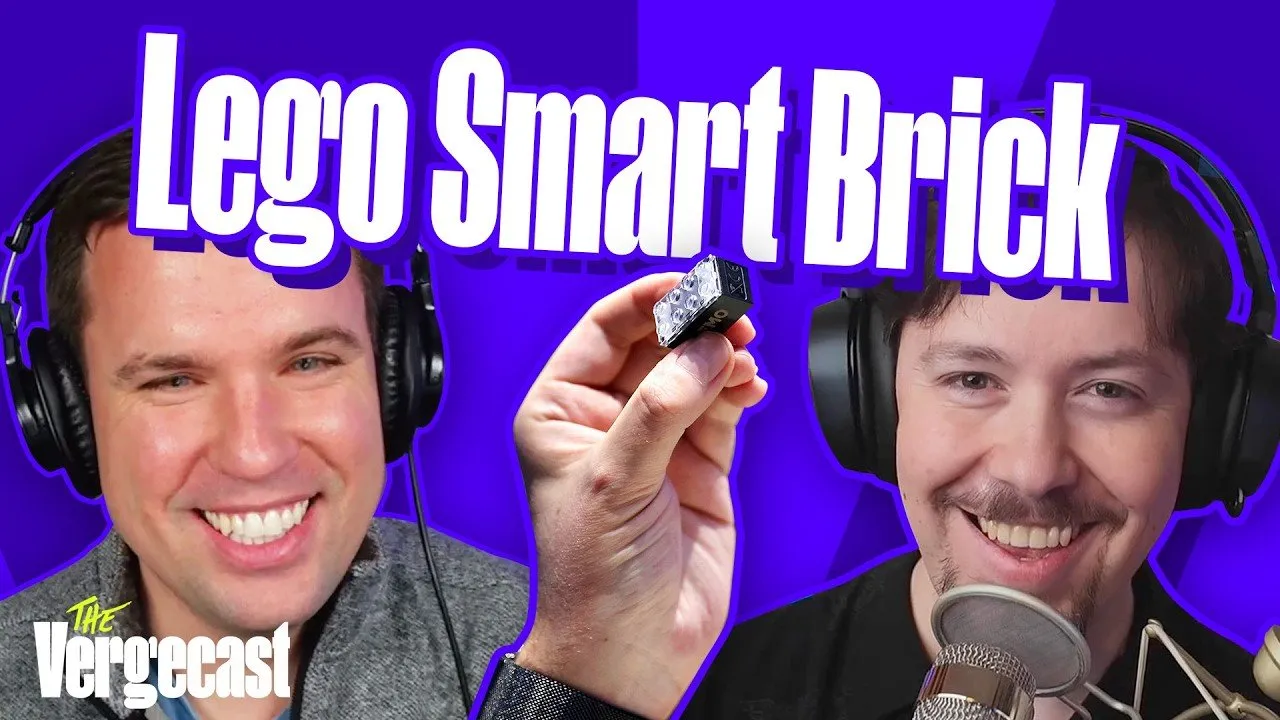
LEGO has fundamentally reimagined its iconic building block with the introduction of the "Smart Brick," a high-tech component that integrates computing power, motion tracking, and wireless connectivity into the classic 2x4 plastic form factor. Emerging as a standout technology from recent industry showcases, the device promises to bridge the gap between tactile play and digital interaction without relying on screens, though its current lack of user programmability has sparked debate regarding the future of creative freedom in toys.
Key Points
- Hardware Innovation: The Smart Brick contains a custom ASIC chip, 6-axis inertial measurement unit (IMU), Bluetooth mesh networking, and color sensors within a standard 2x4 brick shell.
- Screen-Free Interactivity: The system relies on NFC tiles to load programs, allowing bricks to identify their role (e.g., an X-wing engine) and interact physically with other bricks.
- Closed Ecosystem: LEGO currently restricts the hardware to pre-defined interactions, delaying user programmability to address safety and "hack-resistance" concerns.
- AI Productivity Shifts: New workflows using tools like Claude Code are allowing non-technical users to build complex software and websites in minutes, signaling a shift in digital creation.
The Architecture of the Smart Brick
According to reports from The Verge, the new Smart Brick represents a significant miniaturization of robotics technology. Unlike previous iterations of "smart" toys which often utilized large, specialized molded parts, this device maintains the dimensions of the ubiquitous 2x4 brick. It is semi-transparent, housing a suite of electronics including a battery, a custom Application Specific Integrated Circuit (ASIC), and an NFC reader.
The device operates on a "program-by-tile" system. Users place an NFC-embedded LEGO tile onto the Smart Brick, which triggers specific behaviors. For example, placing a Star Wars-themed tile might cause the brick to emit engine sounds or react to motion consistent with a spaceship. Crucially, the brick utilizes a Bluetooth mesh network, allowing multiple Smart Bricks to locate each other in 3D space. This enables complex interactions, such as a turret tracking the movement of a separate spaceship model in real-time.
Sean Hollister, a senior editor at The Verge, noted the technical sophistication required to achieve this:
"It knows exactly where they are in relation to the other brick. It knows that it is this number of centimeters away. It knows which direction it is pointed... There's a lot going on here that we've not seen, not only in LEGO, but in tiny computers this size that talk to each other."
The device also integrates color sensors, allowing standard plastic bricks to trigger digital responses—such as using red bricks to simulate "refueling" an engine—thereby maintaining the relevance of LEGO’s legacy plastic inventory.
The Debate Over Programmability
While the hardware has been praised, LEGO’s software strategy has drawn criticism from adult enthusiasts. Currently, the Smart Brick is a "read-only" experience regarding programming; users cannot write their own code to the chip. Instead, they must purchase specific sets or NFC tiles to unlock new functionalities.
This approach contrasts with the open-ended nature of traditional LEGO play, where a generic bucket of bricks can become anything the user imagines. Critics argue that by locking functions behind NFC purchases, LEGO is prioritizing a "collect-them-all" business model over creative engineering.
LEGO executives have stated that user programmability is on the roadmap but is currently delayed due to concerns over safety and security. Tom Donaldson, SVP of LEGO’s Creative Play Lab, indicated the company intends to ensure the hardware is "hack-resistant" before opening the ecosystem.
"He wants to figure out how to make it very safe and hack-resistant... I figure maybe they're going to see what kinds of legs it has first, see how much money they can make off the collect them all mentality before they allow something like that to happen."
Industry analysts suggest this caution may stem from the LEGO Dimensions era, where users quickly found ways to clone NFC tags to bypass purchasing expensive figurines.
The Evolution of Personal Productivity
Beyond hardware, the tech landscape is seeing a rapid evolution in how individuals manage digital workflows and software creation. Casey Newton, editor of Platformer, highlights a shift toward "augmented thinking" using database tools like Capacities combined with Artificial Intelligence.
The modern productivity stack is moving away from simple to-do lists toward systems that utilize "spaced repetition." By feeding daily information—news links, journal entries, and nascent ideas—into a database, users can leverage AI queries to resurface connected concepts randomly. This prevents information from disappearing into a digital void and helps users identify trends over time.
The Rise of AI Coding
A significant development in this sector is the accessibility of coding via Large Language Models (LLMs) such as Anthropic’s Claude. Newton reported successfully building and deploying a fully functional, aesthetically complex website in under an hour using natural language prompts, without writing a single line of HTML or CSS manually.
This "no-code" revolution suggests a future where the barrier to entry for digital creation collapses. Users can now export entire archives of work, format them into searchable databases, and build custom front-end interfaces by simply describing the desired outcome to an AI agent.
"I have been making websites for more than 20 years. It has always been hard for me... I have that website now. I did not write a single line of code. I have no idea how anything that you see on my website is happening. But I can tell you I made the most important parts of it in an hour without even really trying."
As these tools mature, the distinction between non-technical users and software developers is likely to blur, allowing for a surge in personalized, bespoke software utilities created by individuals for their own specific needs.