Table of Contents
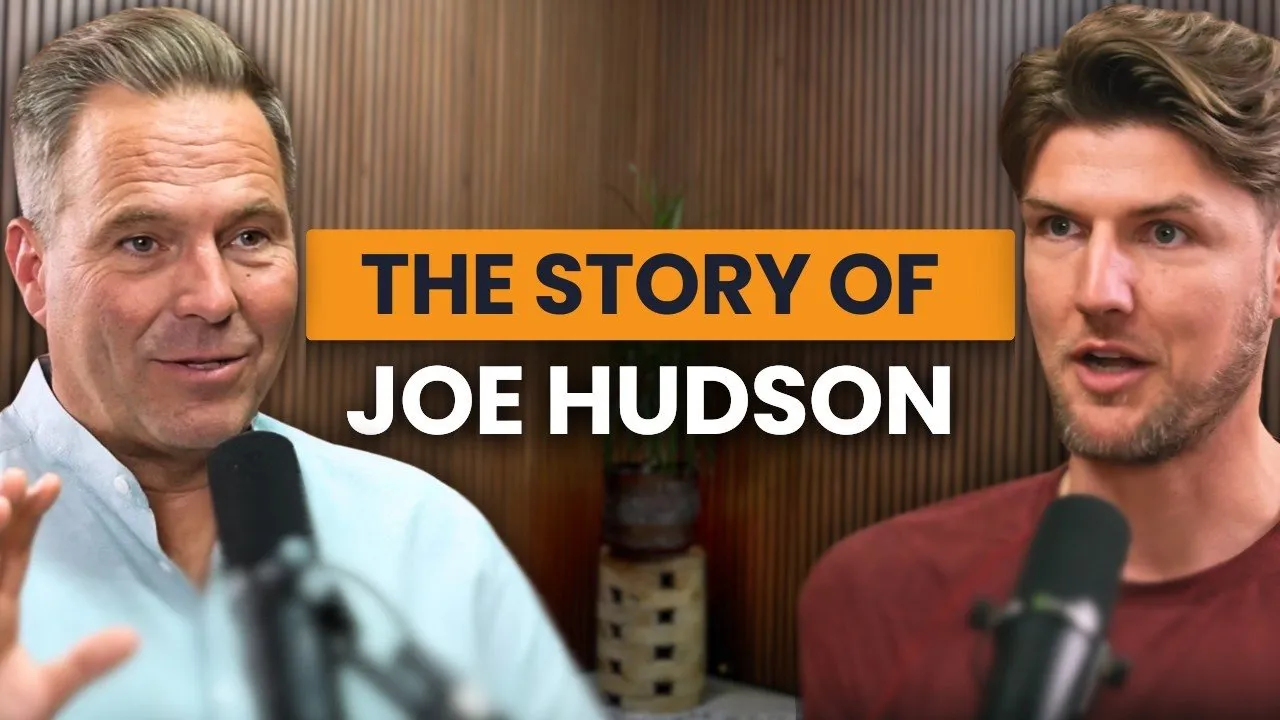
How does a person go from being a self-proclaimed rebel with a “brutal” inner critic to a leader guiding others toward accomplishment with ease? Joe Hudson’s journey is a powerful testament to the messy, non-linear, and deeply rewarding process of self-discovery. It’s a story that moves from hitchhiking across the country to navigating the high-stakes world of venture capital, all while waging an internal battle for peace. This isn't a simple tale of overnight transformation; it's a deep dive into the practical, emotional, and embodied work required to stop fighting yourself and start living a life of authentic connection and purpose.
Key Takeaways
- Internal Liberation: True transformation begins with recognizing the voice in your head, understanding its patterns, and consciously choosing not to believe or react to its self-abusive narratives.
- Embodiment is Essential: A purely intellectual or "head-up" awakening is incomplete. Lasting change requires embodied practices like breathwork to release stored trauma and unlock emotional fluidity.
- Experience is the Best Teacher: Broad, unstructured exploration of humanity—from cowboys in a trailer bar to billionaires—builds a deep, intuitive understanding of what is fundamentally human versus what is cultural conditioning.
- Failure as a Catalyst: Professional setbacks can be powerful catalysts for finding your true calling. Joe's struggles as a traditional venture capitalist directly led him to coaching, where his real talents could flourish.
- Evolving Leadership: As influence grows, the work shifts from dissolving the ego to developing a "permeable self" that can personally and intimately engage with one's impact without losing empathy or becoming rigid.
The Spark of Awareness: From Unconscious Living to a Conscious Path
For many, the journey of self-development is a slow burn, an unconscious drift that only snaps into focus with a moment of profound clarity. Joe describes his early years as a period of simply living, unaware of the relentless inner critic that governed his life. His initial curiosity was sparked by abstract ideas—the parables of Jesus, the Tao Te Ching, and Fritz Perls' concepts of the "upper dog and underdog," which first hinted at a complex internal relationship.
The Eight-Second Awakening
The transition from casual interest to a dedicated path came at age 26, during a meditation retreat. There, he experienced a fleeting, eight-second moment of oneness—a profound connection that shattered his existing reality. Suddenly, the ambiguous exploration had a clear, tangible goal: get back to that feeling. This set him on a determined path, a focused mission to recapture an experience he now knew was possible.
When the Path Dissolves
However, the most significant shift occurred later, with the realization that the state of oneness he was chasing wasn't a destination to be reached but a reality that was always present. This insight, though difficult to articulate, fundamentally altered his approach. The rigid, goal-oriented "path" dissolved, replaced by a more fluid and present-moment awareness. The chase was over, and the real work of integration could begin.
Confronting Core Wounds: The Role of Emotion and Embodiment
Even with profound spiritual insights, old patterns persist. Joe found that his most significant struggles—feelings of not being seen, fears of abandonment, and uncontrolled anger—were deeply rooted in childhood experiences. These core wounds didn't simply vanish; they resurfaced continually, demanding attention and a new approach to healing.
The Breakthrough Formula: Welcoming Grief
The breakthroughs, he explains, almost always followed a similar pattern. It started with welcoming a difficult emotional experience instead of pushing it away. This required faith that things could change and a willingness to sit with discomfort. A crucial, often-resisted element in this process is grief. There's a moment of seeing the past with painful clarity and recognizing the unnecessary suffering.
Oh man, I didn't have to be living like this.
Allowing this grief to wash over you is essential for release. Initially, this process is terrifying, accompanied by fears of dissolving one's identity. But with practice, it becomes a familiar and welcome part of the journey toward freedom.
Beyond the Mind: The Turn to Embodiment
Joe's initial awakening was largely intellectual—a "head awakening." He could access peace but felt that joy and a deep love for the world were missing. His body, he realized, was an unsafe place where he’d been taught to ignore feelings and suppress tears. The turning point came from observing others who possessed a deep emotional fluidity. This led him to seven years of intense breathwork and bodywork inspired by figures like Alexander Lowen and Wilhelm Reich. This work was physically and emotionally demanding, involving practices that released muscular tension and unlocked years of stored emotions. It was this deep, embodied work that moved him from a state of detached peace to one of vibrant, joyful engagement with life.
The Rebel's Quest: Collecting Experiences to Understand Humanity
Long before he was on a formal spiritual path, Joe was on a mission to understand humanity. His twenties were a whirlwind of collecting experiences, driven by a deep-seated curiosity. He hitchhiked to Alaska to work in a fish cannery, sought out obscure trailer bars to talk with cowboys, and spent time with everyone from homeless individuals to the Walton family. It was an unstructured, agenda-free investigation into the human condition.
The "Black Sheep" Advantage
This relentless exploration was fueled by his identity as a rebel and the "black sheep" of his family. His modus operandi was to defy authority and reject the mainstream. If society deemed something acceptable, he wanted nothing to do with it. This rebellious streak, while born of pain, gave him the freedom to explore unconventional paths like Taoism and Buddhism at a time when they were far from mainstream.
I was just doing whatever was not the acceptable thing.
This anti-authoritarian stance created the space for him to gather a wide range of data on human behavior, culture, and consciousness, forming the foundation for his later work.
From Rebellion to Self-Love
How did this rebellious, anti-establishment explorer transform his "brutal" inner world? The process was slow and methodical. It involved sitting quietly, observing the voice in his head, and learning to react differently. He stopped believing its stories, stopped buying into its criticisms, and stopped obeying its commands. By ripping open the identity he thought he had to be, he discovered the freedom that lay underneath. This was the painstaking work of learning to love himself by first learning to disidentify from the voice that said he was unlovable.
From Meditation Cushion to Venture Capital: Integrating Consciousness and Business
Joe’s entry into the business world was as unconventional as the rest of his journey. While installing large-scale video art, he casually gave financial advice to a wealthy collector. The advice proved highly profitable, leading to an unexpected offer: "Come and work for me." After three months of reflection, Joe agreed, but on his own terms. He wanted to use capital to explore two things he was passionate about: elevating human consciousness and healing the environment.
A New Thesis: Consciousness as a Business Model
This led to a 12-year period of running environmental venture funds and non-profits for youth consciousness. He operated on a core belief that just as environmentalism and business became compatible, so too would consciousness and capitalism. He saw that the two didn't have to be at odds.
You can evolve consciousness and make money at the same time.
His work in the environmental space revealed a crucial insight: the biggest obstacle to solving ecological crises wasn't a lack of technology, but the limitations of the human ego. He realized that helping people understand and love themselves was the most powerful leverage point for changing the world.
When Failure Becomes a Calling
As it turned out, Joe was not a great traditional investor. His desire to be needed and to contribute led him to back entrepreneurs who depended on him—the exact opposite of what a venture capitalist should look for. As his investments faltered, the only tool he had left was to coach the founders through their own internal blocks. This "failure" revealed his true calling. His unique ability to apply principles of self-awareness to business challenges was far more valuable than his investment thesis. Word spread, and soon he was coaching top leaders in Silicon Valley, which eventually evolved into the group work he does today.
The Evolving Edge of Leadership: From Dissolution to Permeability
As his work gains more visibility, Joe faces a new set of challenges common to leaders and influencers. The phenomenon of "audience capture"—where a creator is unconsciously shaped by the attention and expectations of their followers—is a significant risk. Navigating this requires a constant and subtle inner recalibration.
A Shift in Perspective
For years, his primary practice was the dissolution of self: recognizing that teachings came through him, not from him. This helped him stay present and unattached to his ego. Now, however, the work is evolving. He’s finding that to remain healthy and empathetic as his platform grows, he must re-incorporate the personal. Instead of dissolving the self, he is cultivating a permeable self—one that is vast enough to hold the weight of others' experiences without collapsing.
The Power of a Broken Heart
A recent experience at a hot spring crystallized this new understanding. After being recognized by fans, he later had a conversation with a man who wept while recounting a single moment of helping someone. Joe realized you can't have that kind of deep, heartfelt connection if the experience isn't personal. With messages of gratitude arriving daily, he sees that his new work is to let that impact in, to allow it to break his heart on a consistent basis. This, he believes, is the key to avoiding the loss of empathy that often comes with power. It’s a practice of staying human, staying connected, and remaining intimately engaged with the dream he never knew was possible.
Conclusion
Joe Hudson's journey is a powerful reminder that the path to a fulfilling life isn't about achieving perfection or reaching a final destination. It's a continuous process of turning inward, embracing our deepest wounds, and finding the courage to bring our whole selves to every aspect of our lives. From a rebel searching for truth in the corners of the world to a leader helping others find it within themselves, his story illustrates that our greatest failures can become our most profound callings. The work is never truly done, but with each step, the relationship with ourselves becomes less of a fight and more of a partnership in creating a life of genuine accomplishment and ease.