Table of Contents
In the late 15th and early 16th centuries, the Italian peninsula underwent a profound transformation that redefined Western history. Led by the intellectual curiosity of figures like Petrarch, the Renaissance was not merely a rebirth of art, but a massive, multi-generational project to reconstruct the civic stability of ancient Rome. Historian and novelist Ada Palmer argues that this era was defined by a complex interplay of politics, propaganda, and a desperate search for order in an age of instability. What began as an idealistic quest to educate better princes through the study of classics eventually laid the groundwork for modern scientific inquiry, fundamentally altering how humanity interacts with information and authority.
Key Takeaways
- The Roman Revival: Renaissance thinkers sought to emulate Roman civic virtues to replace the erratic, selfish rule of medieval lords with stable, enlightened governance.
- Propaganda and Power: Leaders like the Medici used the trappings of antiquity—classical architecture, Greek philosophy, and Roman aesthetics—to legitimize their rule and project authority to rival states.
- The Evolution of Information: The development of the printing press and the spread of paper were not immediate revolutions; they required a century of economic and logistical adaptation, similar to modern digital transitions.
- The Scientific Shift: True progress arrived when the Renaissance focus on "absorbing" ancient wisdom shifted to the systematic testing and sharing of observations, as advocated by figures like Francis Bacon.
- Resistance Leaves a Legacy: Even when political resistance to tyranny failed, the persistent demand for rights during the Renaissance ensured that subsequent monarchs were constrained by precedent and tradition.
The Drive for Civic Stability
The clustering of Italian city-republics—Florence, Venice, and Genoa—was a survival strategy born of necessity. When the centralized Roman government in the West collapsed, cities were forced to provide their own infrastructure and security. This created a stark divide: successful, resource-rich cities could sustain republican governance, while weaker towns often fell under the control of local strongmen or noble families offering protection.
Petrarch, living through the devastation of the Black Death and constant civil war, looked to the ancient Roman Republic for solutions. He argued that the era’s chaos stemmed from selfish leadership. By reading the biographies of Roman leaders like Brutus, who prioritized the state over his own family, intellectuals hoped to create an educational environment that would breed selfless, virtuous princes. This belief in "osmosis"—that surrounding leaders with the classics would naturally make them noble—was the idealistic engine of the early Renaissance.
Propaganda, Legitimacy, and the Medici
As the movement progressed, the adoption of classical aesthetics became a sophisticated tool of political survival. Many of Italy’s rulers were, in reality, upstarts who had seized power through coups. To mask their lack of traditional legitimacy, they "cosplayed" the Roman Empire. By commissioning architecture with Roman pediments, surrounding themselves with Platonists, and speaking in the language of antiquity, these rulers forced visiting ambassadors to view them as the heirs of Caesar rather than mere merchant tyrants.
"If I make myself look like Julius Caesar, then people will like and respect me."
The Medici family in Florence perfected this strategy. Though they lacked the noble bloodlines of their peers, they used their wealth and patronage of the arts to flip power dynamics. By creating a space that felt like a return to the grandeur of antiquity, they transformed themselves from perceived "merchant scum" into essential allies for the great powers of Europe.
The Long Road to the Scientific Revolution
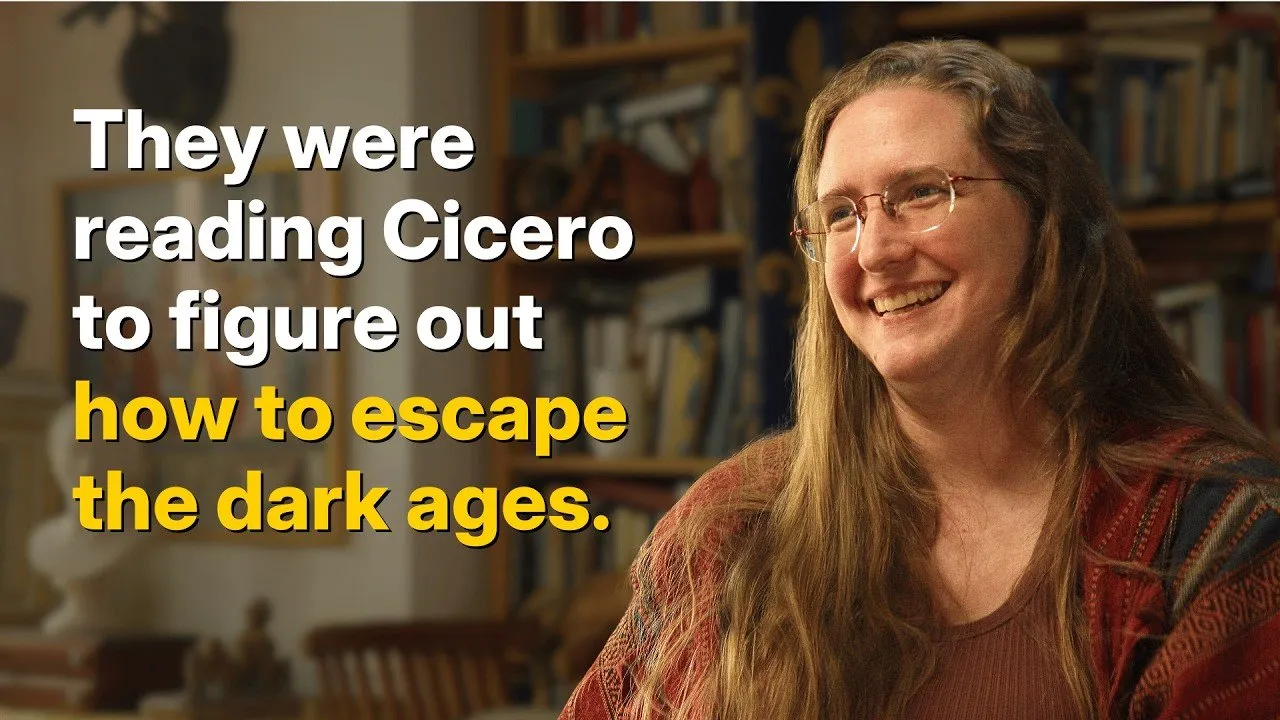
While Petrarch envisioned a world where reading Cicero would create perfect rulers, the reality was bloodier. The failure of these "philosopher-princes" to avert massive conflicts led figures like Niccolò Machiavelli to propose a more clinical approach. Machiavelli moved away from mere imitation and toward a case-study method, observing historical examples to determine which political choices actually produced successful results.
This shift in thinking—from blind imitation to systemic analysis—eventually moved beyond statecraft and into the natural world. As printing technology made books, footnotes, and glossaries more accessible, a wider range of people, including medical and law students, began to engage with ancient texts. This democratization of information eventually enabled the generation of Francis Bacon and Galileo, who moved from reading the past to testing the present.
"He proposes that we use history as a casebook of examples of what worked and what didn't."
Information Revolution: From Parchment to Print
The transition to mass communication was far slower and more painful than historical textbooks often suggest. The invention of the printing press, for example, bankrupted Gutenberg because there was no existing infrastructure to distribute mass-produced commodities. It took decades for the "hub" model of distribution and the Frankfurt Book Fair to make printed materials economically sustainable.
This history mirrors our modern digital landscape. We often view the rise of computers, social media, and AI as separate events, but they are successive applications of a single underlying technological shift. Just as the printing press led to pamphlets, then newspapers, then magazines to fact-check those newspapers, the digital age continues to evolve through new applications of existing technology. Each iteration brings new crises of trust and new methods of control, but the underlying drive for rapid information exchange remains constant.
Conclusion
The Renaissance teaches us that historical change is rarely the result of a single moment of genius; it is a slow, messy process of building infrastructure, refining networks, and navigating the unintended consequences of our own ideas. Petrarch and his successors did not create the world they envisioned—they did not eliminate human selfishness, nor did they restore the Roman Republic. Instead, they built a world capable of fostering the scientific method, which would eventually yield advancements that would have been miraculous to the people of the 1400s. Their legacy reminds us that even when our specific goals fail, the pursuit of knowledge and the defense of civic structures can leave behind a foundation for a better, more resilient future.