Table of Contents
One year after the launch of Claude Code on February 24, 2025, the software development landscape has reached a critical inflection point characterized by the rise of "vibe coding." In a recent retrospective on The Vergecast, Anthropic engineer Boris Cherny and industry analysts examined how AI agents have shifted from simple completion tools to autonomous entities capable of managing 100% of production codebases. As these tools expand into the consumer "co-work" space, the industry is now reckoning with the dual challenges of data privacy and a looming hardware supply crisis that threatens to spike smartphone prices.
Key Points
- Boris Cherny, creator of Claude Code, reveals he no longer writes manual code, stating that AI agents now handle 100% of his development tasks following the release of Opus 4.5.
- AI adoption is expanding beyond engineers; Anthropic’s "Co-work" surface is seeing high usage among non-technical roles like product managers and sales teams for tasks ranging from data analysis to administrative automation.
- Privacy experts warn of a "teenager mode" in AI adoption, where users trade sensitive personal and corporate data for short-term convenience despite ambiguous training terms.
- A global RAM shortage is projected to drive up the cost of flagship smartphones, prompting a debate over whether consumers should accelerate upgrade cycles to "future-proof" against price hikes.
The Evolution of "Vibe Coding" and Claude Code
Since its release in early 2025, Claude Code has evolved from a niche terminal tool for developers into a dominant force in software engineering. According to Boris Cherny, the shift in developer workflow is fundamental. The role of the programmer has transitioned from a granular focus on syntax to high-level orchestration. This shift became absolute with the release of Opus 4.5 in November 2025, which introduced autonomous testing and "computer use" capabilities that allow the model to verify its own work in real-time browsers.
Cherny notes that while earlier iterations like Sonnet 3.5 handled only a fraction of coding tasks, the current generation of models has achieved a level of reliability that renders manual text editors nearly obsolete for experienced users. The transition, however, requires a psychological shift in how professionals view their craft.
"The way I would think about it is like you used to play the violin and now you're like you're conducting the orchestra."
This "conducting" involves giving the AI context and high-level instructions rather than lines of code. The efficiency gains are measurable; Anthropic reports that Claude Code now contributes to a significant percentage of global GitHub commits, with growth accelerating as the tool integrates deeper into private enterprise environments.
Beyond Engineering: The Rise of AI-Driven Productivity
While originally designed for terminal-heavy development, Claude Code’s underlying agentic technology is being repackaged for the general workforce through Co-work. This desktop application targets "busy work"—tasks like organizing screenshots, managing project statuses, and navigating government websites. Cherny highlighted instances where the tool was used for genome analysis, paying parking tickets, and even applying for clamming licenses.
The Democratization of Software Creation
The "Co-work" initiative represents Anthropic’s attempt to make agentic AI less "foot-gunny" for non-technical users. By shipping tools within virtual machines and implementing deletion protection, the company is allowing non-engineers to interact with their file systems through natural language. At companies like Spotify, Netflix, and Shopify, product managers and data scientists are utilizing these agents to run parallel data analyses that would have previously required a dedicated engineering ticket.
This democratization, however, brings a new set of expectations. Users are increasingly expecting AI to be proactive. Cherny suggests that the UI of the future has not yet been discovered, but it will likely involve agents that "jump in" when they detect a user is struggling with a repetitive task, though he warns of the risks of creating a modern-day "Clippy."
The Privacy Paradox: "Teenager Mode" and Data Security
As AI agents gain deeper access to personal file systems and Google or Slack integrations, The Verge senior AI reporter Hayden Field warns of a looming privacy crisis. Many users are currently operating in "teenager mode"—prioritizing immediate productivity gains over long-term data security. The primary concern is the "double parenthetical" in terms of service: while many companies claim they do not train on integration data, they often reserve the right to train on any content copy-pasted into the chat or generated in response to that data.
"You need to treat AI tools the exact same as you would treat any other service that was requesting a lot of data from you and maybe even with a sharper eye because these companies are newer."
Field notes that the "anonymization" of data is often an imperfect science. Sensitive identifiers like social security numbers or private health records can sometimes be de-anonymized or inadvertently ingested into training sets. This creates a competitive advantage for incumbents like Google. Because Gemini already resides within the Google Workspace ecosystem, users are not crossing a new corporate barrier to utilize AI, whereas connecting Gmail to Claude or ChatGPT creates new vectors for data exfiltration.
Market Impact: Hardware Constraints and the RAM Crisis
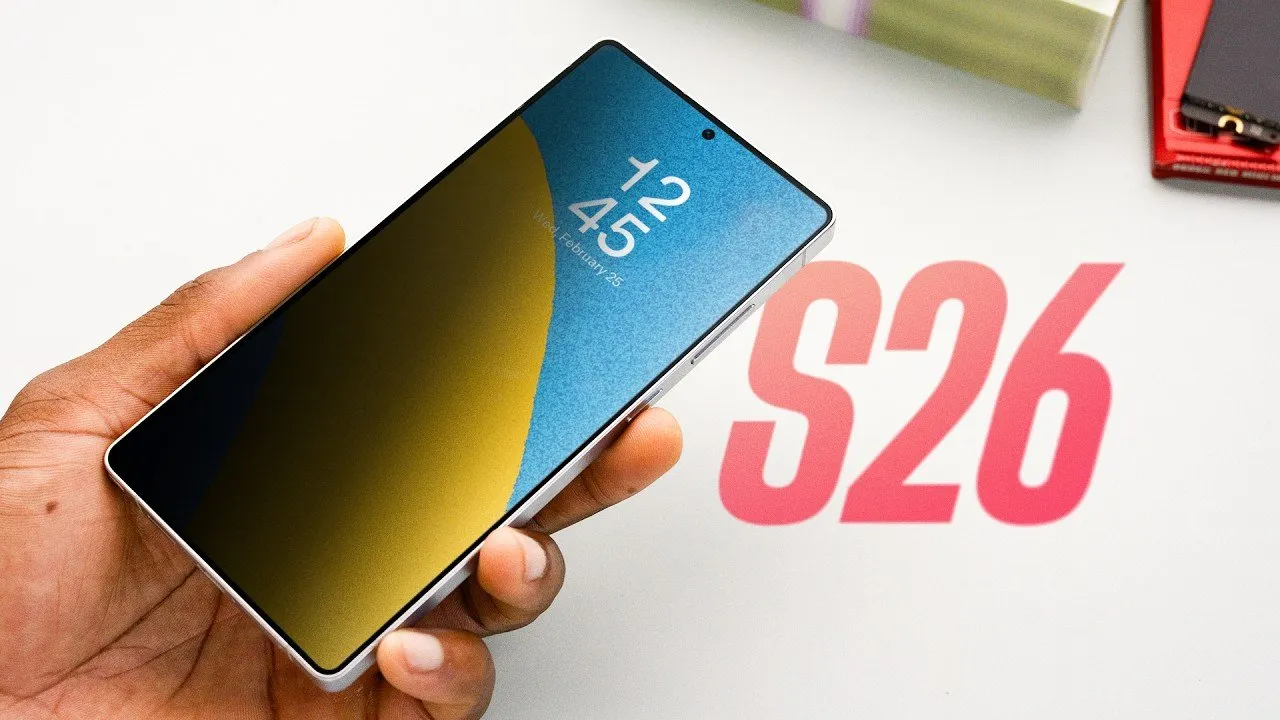
The technological leap in AI software is colliding with a harsh reality in the hardware supply chain. AI models require significant RAM to run locally or efficiently, and a global shortage of memory components is beginning to affect consumer electronics pricing. Analysts suggest that the "RAM crisis" could lead to significant price hikes for the iPhone 17 and 18 series, as well as upcoming Samsung Galaxy flagships.
Strategic Upgrading in 2026
For consumers holding older devices like the iPhone 15 Pro Max, the decision to upgrade has become a financial calculation. While the hardware remains capable, the threat of tariffs and rising component costs may make a mid-cycle upgrade more attractive than waiting for a more expensive future model. However, The Verge senior phone reviewer Allison Johnson suggests that manufacturers may combat rising costs by making upgrades more iterative rather than raising the "sticker price" of flagship phones.
- Refurbished Markets: Increased prices for new flagships may drive a surge in the secondary market, potentially stabilizing the value of current-gen devices.
- Iterative Design: Expect manufacturers to limit RAM increases in base models to maintain current price tiers, potentially slowing the rollout of on-device AI features.
Looking ahead, the success of the AI transition will depend on the industry’s ability to balance these hardware limitations with the growing software capabilities of agents. As Anthropic prepares to launch Opus 4.6, the focus will likely shift toward making these models more "aligned" against prompt injection attacks, ensuring that as agents take over more of our digital lives, they do so within a secure and economically viable framework.