
Table of Contents
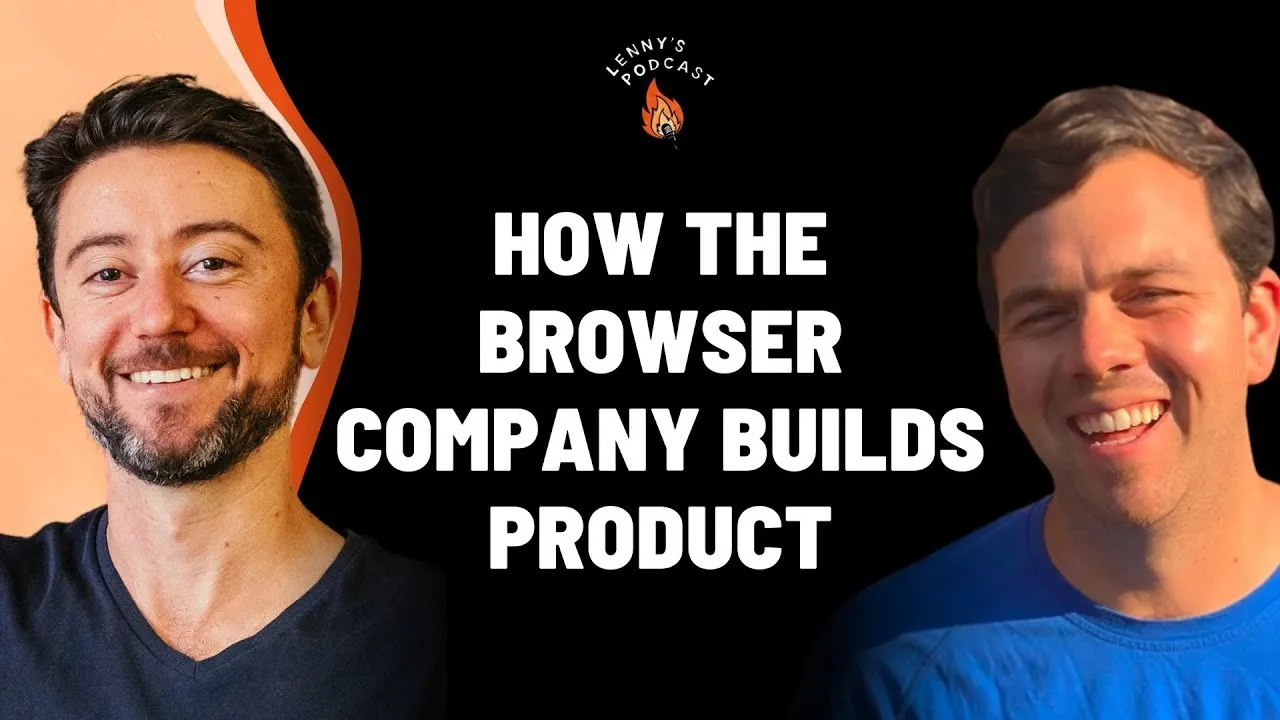
Silicon Valley has long operated under a dogma of data. The prevailing wisdom suggests that if you can measure it, you can manage it, and if you can manage it, you can grow it. However, Josh Miller, CEO of The Browser Company, argues that this obsession with graphs and optimization often misses the very essence of product creation: the human experience. In building Arc, a browser challenging giants like Chrome and Safari, Miller is betting that the next generation of software won't be won by the team with the best metrics, but by the team that evokes the strongest feelings.
In a candid conversation with Lenny Rachitsky, Miller opens the hood of The Browser Company to reveal a culture built on "heartfelt intensity," radical transparency, and a rejection of traditional corporate structures. From eliminating Product Manager roles to treating software updates like storytelling events, their approach offers a provocative blueprint for building consumer products in a commoditized market.
Key Takeaways
- Optimize for feelings, not just metrics: While data keeps a company honest, true product differentiation comes from optimizing for emotions like joy, surprise, and focus rather than just click-through rates.
- The "Heartfelt Intensity" hiring filter: The Browser Company prioritizes candidates who show up with a fire in their belly and a desire to do work that defines their career, rather than just filling a role.
- The D5/D7 Retention Metric: Instead of tracking daily active users (DAU), they measure how many people use the product 5 days out of 7, ensuring they are building a daily habit rather than just maximizing logins.
- Reimagining organizational structure: By eschewing traditional "Product Managers" and renaming departments like "Support" to "Membership," the company forces employees to rethink their roles from first principles.
- The "Internet Computer" Vision: The long-term goal is not just a better browser, but a new operating system for the cloud era, where the device is merely a vessel for the internet.
Moving Beyond the Metric Obsession
Modern product management often revolves around the dashboard. During his tenure at Facebook, Miller observed an environment where success was defined by quantitative outcomes—graphs going up and down. While effective for scaling, he argues that this approach leaves significant value on the table, particularly during the zero-to-one phase of creation.
The Browser Company flips this model by asking a qualitative question: How do we want the user to feel? Whether the desired emotion is "fast," "organized," or "joyful," the feature development process centers on evoking that specific sensation.
What do you think Walt Disney was optimizing for when he was crafting Disneyland? What do you think Steve Jobs was imagining and daydreaming about when thinking about the iPhone? At the moment of creation... we think it's much more important for us to think about the human the person at the other end and how we really want to make them feel.
The D5/D7 Metric
Despite the focus on emotion, the company does not ignore data. However, they have narrowed their focus to a single, difficult-to-game metric: D5/D7. This measures the percentage of users who utilize the browser five days out of a seven-day week. This specific metric captures retention, engagement, and growth simultaneously. It forces the team to build a product that is integral to the user's daily life, rather than optimizing for vanity metrics or sporadic usage.
Company Values as an Operating System
Observers often note the speed at which The Browser Company ships features. According to Miller, this velocity is not the result of strict management or crunch culture, but a downstream effect of their core values. They operate on the belief that you "ship your values."
Heartfelt Intensity and "The Mutt" Profile
The primary trait looked for in hiring is "heartfelt intensity." This goes beyond professional competence; it looks for an intrinsic drive—a chip on the shoulder or a point to prove. This intensity allows the leadership to set ambitious goals and then step back, trusting the team to execute.
This philosophy extends to the type of talent they attract. Miller describes their ideal employees as "mutts"—multi-disciplinary individuals who don't fit neatly into a single box. This has led to a controversial organizational decision: The Browser Company does not have a formal Product Management (PM) department.
Instead, leadership roles on projects are fluid. A project focused on infrastructure might be led by an engineer, while a user-facing feature might be led by a designer or a member of the "Membership" team. The belief is that people should be "makers" first, picking up the necessary coordination tasks (the "verbs" of product management) as needed to ship their work.
Notes on Road Trips
To codify these values without succumbing to corporate clichés, the company avoided a standard employee handbook. Instead, they published "Notes on Road Trips," a semi-fictional essay that uses the metaphor of a road trip to explain their operational philosophy: assume you don't know, just get going, and embrace the detour.
Radical Transparency and Building Trust
In an era where trust in technology companies is eroding, The Browser Company has adopted a strategy of radical transparency. They publish unpolished videos of board meetings, product failures, and internal debates. This is not merely a marketing tactic but a prototype in trust-building.
Miller suggests that because web browsers handle sensitive personal and professional data, trust is the currency of the realm. By showing the humans behind the software—imperfections and all—they aim to humanize the brand.
Building in public... is an act in if we were them why should they trust us? We have your most sensitive personal data... our hypothesis is that if you get to know us... and you really feel like you get to know as this person and all of our imperfections... you might trust us.
This extends to their "Storytelling Team." Unlike a traditional marketing department focused on conversion, this team includes filmmakers and journalists tasked with documenting the company's journey holistically. The goal is to create a narrative connection with users that transcends the utility of the software.
Winning in a Commoditized Market
Building a web browser in the 2020s involves competing with free, dominant products owned by the largest companies in the world (Google, Apple, Microsoft). Miller acknowledges that the browser market is fundamentally a commodity market—most browsers use the same underlying Chromium engine and render pages identically.
However, consumer history suggests that in commodity markets, brand and experience are the winning differentiators. Just as Nike sells shoes and Starbucks sells coffee, Arc is selling a specific relationship with the internet.
Miller argues that for consumer software, "optimizing for feelings" is not a romantic notion but a ruthless business strategy. If a product cannot win on price (it’s free) or underlying technology (it’s standardized), it must win on user affection. Features that induce delight, such as high-quality animations or personalized touches, become the primary growth levers.
The Vision: The Internet Computer
While Arc is currently a browser, the company's ambition is to build an "Internet Computer." Miller predicts a continued shift toward cloud computing where local files and applications disappear entirely, replaced by URLs. In this future, the physical device (the laptop or phone) becomes a commoditized shell, and the interface to the internet becomes the true operating system.
Arc as a Platform
The vision posits that Arc will be to the browser what the iPhone was to the cell phone—a device that technically fits the category but expands its utility so broadly that it redefines the medium. The long-term play is to create a development platform on top of the web, enabling web apps to feel as immersive and responsive as native applications.
Currently, major OS providers (Apple, Microsoft) have incentives to keep web apps inferior to native apps to protect their app store revenues. The Browser Company sees an opening to build the "first-party software" and "multi-touch gestures" of the web era, eventually enabling a new ecosystem of developers to build directly for the "Internet Computer" rather than for Windows or macOS.
Conclusion
The Browser Company represents a swing of the pendulum away from the hyper-optimized, A/B tested culture of the last decade of Silicon Valley. By prioritizing "heartfelt intensity" in hiring, replacing corporate departments with creative teams, and defining success through emotional resonance rather than just engagement metrics, Josh Miller is testing a hypothesis: that even in the most utilitarian categories of software, humanity is the ultimate competitive advantage.



)