Table of Contents
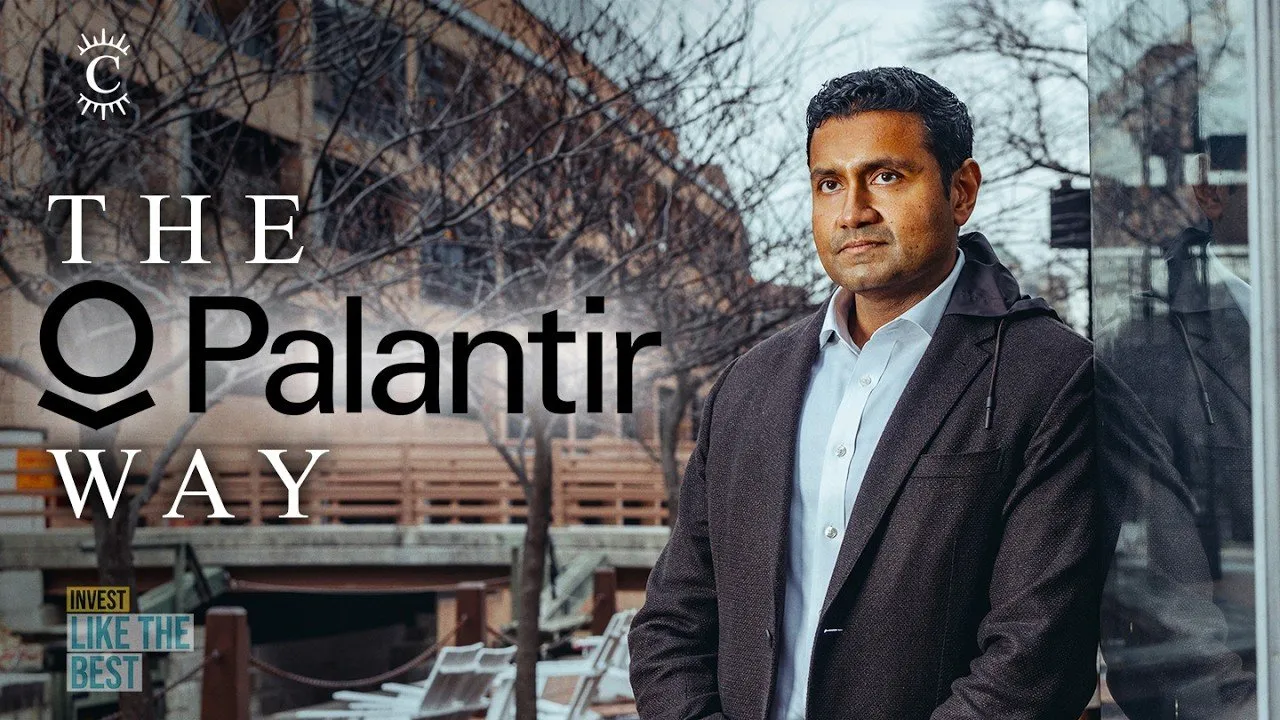
In an era defined by rapid technological shifts, the intersection of software and statecraft has never been more critical. Shyam Sankar, CTO of Palantir Technologies, argues that the future of global security and industrial prosperity depends on a new generation of "heretics"—visionary builders willing to challenge stagnant bureaucracies and prioritize results over legacy processes. By re-examining military history and the role of innovation, Sankar provides a roadmap for how modern institutions can regain their competitive edge through aggressive, mission-driven engineering.
Key Takeaways
- The Necessity of Heretics: Major military and industrial breakthroughs are rarely produced by the "machine." Instead, they are driven by outlier individuals—heretics—who possess a pathological obsession with solving real-world problems despite institutional resistance.
- The Power of Forward-Deployed Engineering: Effective innovation requires closing the gap between the developer and the end-user. By building software in the "foxhole" rather than in a distant headquarters, engineers can solve actual pain points rather than hypothetical ones.
- The Urgency of Re-industrialization: The U.S. has dangerously outsourced its production capabilities. Restoring national security and economic prosperity requires rebuilding a robust industrial base that leverages AI to empower the American worker.
- Talent as a Competitive Advantage: True greatness in organizations is achieved by identifying individual superpowers, shielding talent from "kryptonite" weaknesses, and fostering an environment where failure is treated as a necessary step toward mastery.
The Legacy of Military Heretics
Sankar identifies specific historical figures who fundamentally reshaped the U.S. military through sheer force of will. Figures like Hyman Rickover, who pioneered the nuclear submarine program, serve as the archetypal heretics. Rickover faced immense bureaucratic hostility, yet his refusal to accept standard, inefficient processes resulted in a submarine force that remains a critical asymmetric advantage today.
The only things that ever worked—the things that helped us win all the wars—were the things that the heretics actually did. Nothing that went through the machine delivered anything.
The lesson for modern builders is clear: the most impactful contributions often come from individuals who are willing to be "disagreeable." In the context of national defense, this means rejecting the status quo of cost-plus contracting and bureaucratic box-checking in favor of products that actually function in the field.
Building Through Back-Propagation
A core tenet of Palantir’s philosophy is the "forward-deployed engineer" model. This approach moves beyond traditional sales-led development, which relies on the assumption that if a customer pays for a product, it must be valuable. Instead, Sankar advocates for building software through a process of back-propagation: working directly with the operator to understand the decision chain and iterating rapidly based on real-world outcomes.
Unstable Equilibrium in Engineering
Sankar distinguishes between two types of engineers: the "MacGyvers" who are obsessed with solving problems and the "artists" who prioritize architectural elegance. A successful technology company must manage this tension as a "dictator," ensuring that these two cultures do not drift apart. If the artist side dominates, the company builds beautiful, useless tools; if the hacker side dominates without vision, the system fails to scale.
The Case for Urgent Re-industrialization
The transition from a manufacturing powerhouse to an IP-focused economy has left the United States vulnerable. Sankar warns that the reliance on overseas production for essential goods—from military components to basic medicine—is a state of emergency. He argues that AI serves as a powerful "slingshot" that can enable the American worker to reach productivity levels that make domestic manufacturing economically viable once again.
We’ve been staring at this rare earths problem for the better part of 15 years, and we more or less have solved it for like two billion bucks. It’s roughly a rounding error relative to everything that we’re doing.
Re-industrialization is not just about bringing factories back; it is about rebuilding a culture of physical competence. By integrating R&D with production and leveraging AI to streamline operations, the U.S. can move away from the "managerial revolution" that has long stifled genuine progress.
Cultivating a Founder Factory
For an organization to maintain its edge, it must avoid the entropy of large-scale corporate stagnation. Sankar believes that culture is not self-sustaining; it must be actively defended. At Palantir, this is achieved by modeling the company as an "artist colony" rather than a traditional software firm, where talent is recruited for its raw potential and "gamma ray" moments—high-stakes, high-autonomy projects that force rapid growth.
If you’re going to do something really impactful, there has to be something true about the world that you believe that other people disagree with you on.
Ultimately, Sankar emphasizes the distinction between wanting to "be somebody" versus "doing something." He challenges his team and the broader tech community to embrace the discomfort of difficult, high-stakes work, arguing that the intrinsic reward of actual accomplishment is the only path to both national and personal greatness.
Conclusion
The path forward for American innovation relies on a return to first principles: clear-eyed diagnosis of threats, the empowerment of heretics, and an unwavering commitment to results over process. Whether dealing with the challenges of global deterrence or the complexities of building enterprise-grade AI, the lesson from Sankar’s experience is that institutions are only as strong as the people within them. By fostering a culture of truth-seeking, agency, and high-stakes problem solving, the U.S. can ensure it remains a force for stability and progress in an increasingly uncertain world.