Table of Contents
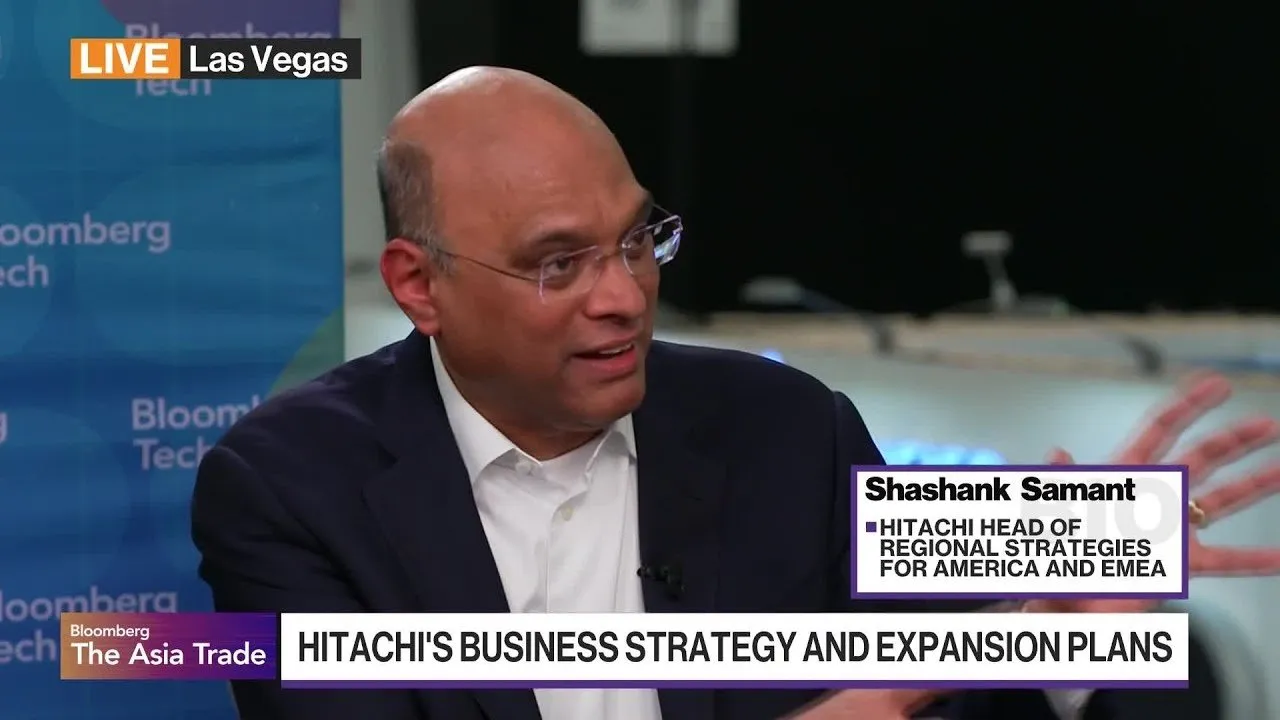
Hitachi is accelerating its integration of artificial intelligence with physical infrastructure, targeting a significant strategic shift where 50 percent of sales will originate from its digital platform by fiscal 2028. In a comprehensive update on the conglomerate’s direction through 2026 and beyond, senior leadership outlined a roadmap focused on marrying operational technology (OT) with IT, leveraging partnerships with Nvidia and Google, and deploying humanoid robotics to mitigate skilled labor shortages.
Key Points
- Strategic Pivot: Hitachi aims for 50% of revenue to come from its Lumada digital platform by fiscal 2028.
- AI Integration: The company is launching next-generation initiatives to combine 110 years of industrial data with advanced AI algorithms.
- Market Resilience: Leadership dismissed concerns regarding data center cooling disruption, citing Hitachi’s dominant role in energy transmission and chip manufacturing equipment.
- Labor Automation: The company is actively scouting humanoid robotics to perform complex manual tasks, such as transformer winding, to address global talent gaps.
Merging Physical Infrastructure with AI
Hitachi’s primary strategy focuses on the convergence of the digital and physical worlds across its core business segments: energy, mobility, and manufacturing. According to the company, the goal is to leverage over a century of physical operational data alongside modern AI capabilities. This initiative involves deepening partnerships with major technology players, including Nvidia, Google, and OpenAI.
The company is evolving its flagship digital platform, Lumada. Moving beyond earlier iterations, the new cycle—referred to as Lumada 3.0 or "H-Max"—aims to transition the company from software assets to comprehensive AI-driven industrial assets. This digital transformation is powered significantly by GlobalLogic, the digital engineering firm Hitachi acquired, which now serves as a core component of its business structure.
Addressing Infrastructure and Hardware Concerns
Following recent market reactions to Nvidia’s announcement regarding "Rubin" chips—which may require less traditional water cooling—Hitachi addressed skepticism regarding its data center cooling business. Leadership emphasized that cooling is only one component of a broader infrastructure portfolio.
The company argues its value proposition lies in the critical energy infrastructure required to power the AI boom. Hitachi holds a strong position in power transmission, distribution, and transformers—sectors essential for the high-energy demands of generative AI.
"If you see the five-layer cake... we are all about energy, which is number one in the areas which you operate... [and] the chip manufacturing equipment. Out of five layers, in three of them, we are essential."
Regarding cooling technology specifically, Hitachi acknowledged the industry trend toward liquid and immersion cooling. The company confirmed it is adapting its R&D to align with these shifts, operating on innovation cycles that look 10 to 15 years into the future rather than short-term three-year windows.
Workforce Automation and Global Growth
A critical bottleneck for Hitachi’s industrial ambitions is the shortage of skilled labor required for complex manufacturing tasks. Unlike sectors fearing AI displacement, Hitachi is seeking to augment its workforce. The company is currently exploring the use of humanoid robots in electronics manufacturing, specifically for intricate tasks like winding transformers that require dexterity previously exclusive to humans.
Geographically, while China remains a vital market comprising a significant portion of business, growth vectors are shifting. The Americas and Europe are becoming increasing priorities due to the demand for AI infrastructure and expanding national defense budgets, which require robust digital systems.
To support this transformation, Hitachi is undertaking a massive talent acquisition drive, aiming to secure 50,000 digital strategists and engineers globally. This initiative relies heavily on training internal manpower and leveraging its GlobalLogic arm to meet client demands for digital transformation.