
Table of Contents
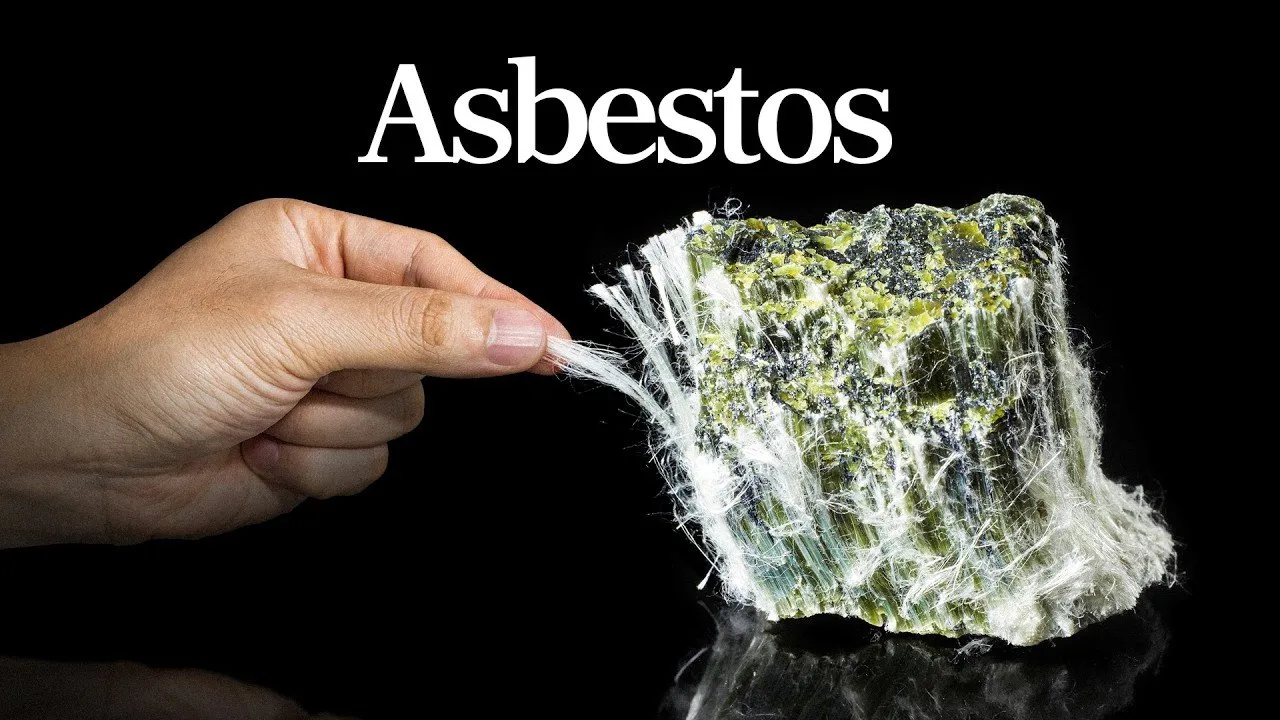
There is a story about the ancient Greeks from around the second century AD involving a golden lantern that would burn for a whole year without extinguishing. The secret wasn't magic; it was a special wick that simply wouldn't burn down. They found this material poking out of the ground—fluffy fibers that looked like cotton but behaved like rock. They named it asbestos, meaning "inextinguishable."
For centuries, this mineral was hailed as a miracle. It insulated our steam engines, fireproofed our growing cities, and was woven into everything from theater curtains to tablecloths. Yet, behind the industrial utility lay a microscopic danger that would eventually kill hundreds of thousands of people. Today, despite what many believe, asbestos is not a relic of the past. From the dust of the World Trade Center to makeup kits sold in modern malls, the legacy of this "miracle" rock continues to haunt public health.
Key Takeaways
- Chemical Invincibility: Asbestos is composed of silicon-oxygen tetrahedra that form incredibly stable structures, making the fibers impervious to heat and chemical breakdown.
- The Biological Trap: When inhaled, the fibers lodge deep in the lungs where the body’s immune system cannot break them down, leading to chronic inflammation, scarring (asbestosis), and cancer (mesothelioma).
- A Century of Deception: Major manufacturers knew of the health risks as early as the 1930s but conspired to hide medical data and suppress research to protect profits.
- Regulatory Loopholes: Due to legal technicalities and testing limitations, asbestos remains legally present in the environment and consumer products, including crayons and cosmetics.
- The 9/11 Failure: Inadequate testing methods led officials to declare the air around Ground Zero safe, exposing thousands of first responders and residents to toxic levels of pulverized asbestos.
The Chemistry of an Indestructible Fiber
To understand why asbestos is so dangerous, we first have to understand why it was so useful. At its core, asbestos is a naturally occurring mineral built on a simple block: a silicon atom surrounded by four oxygen atoms. This forms a pyramid shape called a silica tetrahedron.
Because oxygen is more electronegative than silicon, it pulls shared electrons closer, creating a strong electrostatic attraction that binds the atoms tightly. These units link together to form sheets or chains that are chemically inert. Oxygen in the air has nothing to react with in the mineral, which is why the material cannot burn. It is, quite literally, a rock that can be woven.
The Two Deadly Families
Asbestos isn't a single mineral but a commercial term for a group of minerals that form fibers. They generally fall into two categories:
- Serpentines (Chrysotile): This is the white, fluffy variety that accounts for the majority of commercial use. Structurally, it consists of mismatched layers of silica and magnesium that curl up into tiny scroll-like tubes. These fibers are flexible and heat-resistant up to 600 degrees Celsius.
- Amphiboles: These form rigid, needle-like chains. Varieties like brown asbestos (amosite) and blue asbestos (crocidolite) are exceptionally strong and resistant to acids. Blue asbestos fibers are particularly thin and sharp, allowing them to penetrate deep into human tissue.
From Urban Savior to Public Health Crisis
In the 19th century, urbanization turned cities into fire traps. Following massive fires in New York, London, and Chicago, the world was desperate for a solution. Henry Ward Johns, a young entrepreneur, patented a method to use short asbestos fibers—previously considered waste—to create fireproof roofing. This sparked an industry boom.
By the mid-20th century, asbestos was ubiquitous. It was in brake pads, hair dryers, surgical dressings, and even the fake snow used in The Wizard of Oz. It was marketed as a safety essential. During this era, fire-related deaths dropped by nearly 80%, leading many to argue that asbestos saved millions of lives. However, a new, silent killer was emerging in the factories and shipyards.
The Mechanism of Disease
When microscopic asbestos fibers are inhaled, they bypass the body's natural filtration systems and lodge in the alveolar sacs of the lungs. The body sends macrophages—specialized white blood cells—to engulf and digest the intruders. However, asbestos fibers are often too long and chemically stable to be digested.
This leads to a phenomenon researchers call "frustrated phagocytosis." The immune cells die releasing inflammatory chemicals that damage surrounding tissue and DNA. Over decades, this cycle of inflammation and scarring destroys lung capacity (asbestosis) or triggers mutations that lead to cancers like mesothelioma.
"The macrophages keep trying and failing, and in the process, they release inflammatory chemicals that damage the surrounding lung tissue. So workers breathing in asbestos dust day after day, accumulated more and more damage."
The Conspiracy of Silence
The tragedy of asbestos is not just that it is toxic, but that the industry knew it was toxic and chose to bury the evidence. As early as 1924, medical literature described "asbestosis." By the 1930s, major companies like Johns Manville and Raybestos Manhattan were conducting internal studies.
When these studies confirmed that asbestos caused cancer and fatal lung disease, the executives suppressed the findings. In a now-infamous exchange revealed during litigation decades later, industry executives agreed that their policy should be to not tell workers if their medical exams showed signs of disease.
One witness testified about a meeting in the 1940s where the president of Johns Manville was asked why they didn't warn the workers. His alleged response captures the cold calculus of the era:
"Yes, we save a lot of money that way."
It wasn't until Dr. Irving Selikoff began tracking mortality rates among shipyard workers in the 1960s that the undeniable link between asbestos and cancer was publicly solidified. Selikoff found that insulation workers were dying of lung cancer at seven times the expected rate. His work broke the dam, leading to a flood of litigation that exposed the industry's cover-up.
Regulatory Failures: Why It Is Still Here
Many people assume asbestos was banned decades ago. While the EPA attempted a full phase-out in 1989, the asbestos industry sued. In 1991, a court ruled that the EPA had not proven that a total ban was the "least burdensome" solution required by law. Consequently, the ban was overturned.
While a partial ban on chrysotile asbestos was finally introduced in the US in 2024, it leaves significant gaps. It does not address legacy asbestos in millions of buildings, nor does it cover all fiber types found in nature.
The "Grace Rule" and Consumer Products
For years, regulations were influenced by companies like W.R. Grace, which lobbied for a threshold where products containing less than 1% asbestos were unregulated. This loophole allowed contaminated materials to circulate widely. Because minerals like vermiculite and talc often form geologically alongside asbestos, mining these harmless minerals frequently brings deadly fibers to the surface.
This is why asbestos continues to be found in modern consumer goods. Independent testing has detected asbestos in:
- Children’s makeup kits sold at Claire’s.
- Crayons.
- Toy crime lab kits.
- Play sand.
The Tragedy of 9/11 and Testing Blind Spots
The collapse of the World Trade Center towers on September 11, 2001, released massive plumes of pulverized building materials over Lower Manhattan. The towers had been constructed using asbestos fireproofing. In the aftermath, the EPA assured New Yorkers that the air was safe.
This declaration was based on a testing method called Polarized Light Microscopy (PLM). While PLM is cheap and fast, it struggles to detect thin fibers or concentrations below 1%. The force of the collapse had pulverized the asbestos into microscopic particles far too small for PLM to reliably detect.
Independent researchers using Transmission Electron Microscopy (TEM)—a much more powerful method—found asbestos levels far exceeding safety standards. Sadly, thousands of first responders and residents have since died from cancers and illnesses linked to the dust, a death toll that now surpasses the number of victims killed on the day of the attacks.
The Naturally Occurring Threat
Asbestos is not just an industrial product; it is a geological reality. In places like Libby, Montana, a vermiculite mine contaminated the entire town with amphibole asbestos, leading to a public health emergency. But the threat isn't isolated to mining towns.
In Nevada, scientists have discovered naturally occurring asbestos in the soil across millions of acres, including popular off-roading areas near Las Vegas. When cars drive over this dry earth, they kick up dust clouds containing millions of carcinogenic fibers. Because these fibers don't always fit the narrow commercial definition of regulated asbestos, they are often ignored by authorities.
Current regulations focus on six specific commercial types of asbestos. However, nature creates a spectrum of fibrous minerals. A single fiber can be regulated on one end and unregulated on the other due to slight geological variations, yet the human lung makes no such legal distinction.
Conclusion
The story of asbestos is a stark reminder of the tension between industrial utility and public health. It is a narrative of a miracle material that built the modern world, only to poison the people who lived in it. While commercial use has declined, the legacy of asbestos remains in our attics, our lungs, and even our geology.
The danger is not merely historical. With imports continuing in many developing nations and loopholes persisting in Western regulations, asbestos remains a global health crisis. Awareness is the first line of defense. Understanding that "legal" does not always mean "safe" is crucial for navigating a world where this deadly rock is still very much present.



%20Poisoned%20The%20Entire%20Planet)